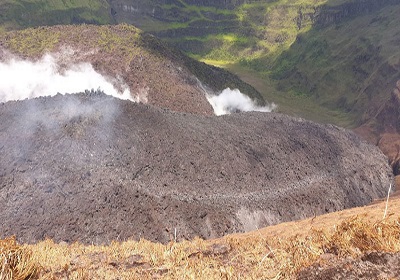
The thermal anomaly detected at La Soufrière volcano has dissipated, based on recent observations by monitoring experts. Initially spotted by NASA’s FIRMS hot spot detection system on October 6, the anomaly did not persist beyond October 8, as reported by the National Emergency Management Organisation (NEMO). After a field visit from the NEMO Soufrière Monitoring Unit (SMU), no unusual activity was observed in the crater. Additionally, data collected on October 4 indicated no significant changes in gas composition from the vents.
Officials have offered several potential explanations for the heat detection recorded at La Soufrière volcano on Sunday. They suggest that this anomaly is “likely associated with temporal changes in the summit,” which could include several phenomena. These might involve a sulfur fire occurring within the crater, an increase in gas emissions from fumaroles, or a small phreatic (steam) eruption that may have uncovered hotter underlying rocks.
While the thermal readings have returned to normal, authorities are still issuing warnings about the ongoing risks. The National Emergency Management Organisation (NEMO) has emphasized that potential hazards linked to the presence of gas emissions at the crater vents could remain for an extended period. As the volcano goes through periodic fluctuations in background activity, these risks need to be taken seriously.

To ensure the safety of the public, officials are reinforcing the message that unauthorized visits to the summit of the volcano are strictly prohibited. This is a critical measure to prevent any accidents, as the area can be unpredictable and hazardous.
Ongoing monitoring efforts are being carried out by NEMO’s Soufrière Monitoring Unit in collaboration with the Seismic Research Centre (SRC). Their work involves thorough visual inspections of the crater to identify any ongoing changes, such as landslides or more vigorous fumarolic activity. Additionally, they are utilizing instrumentation from all seismic stations to track any significant developments. This comprehensive approach aims to ensure that any changes in the volcanic activity are detected promptly, allowing for timely alerts and necessary safety measures.