


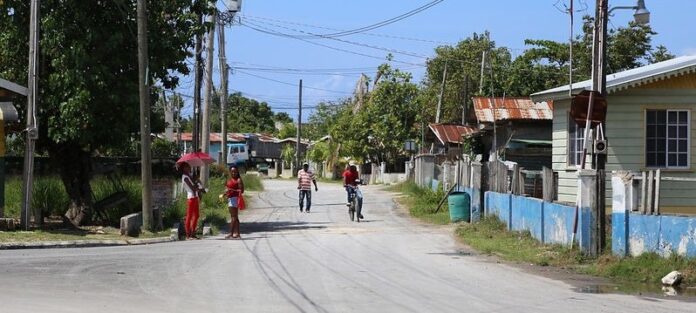
As Jamaica marks significant development gains over the past five decades, the United Nations Development Programme (UNDP) says one of its proudest contributions has been supporting the country’s efforts to reduce poverty to a 50-year low.

According to the Planning Institute of Jamaica (PIOJ), Jamaica’s poverty rate fell to 7.8 per cent in 2024, the lowest level recorded in half a century. The figure represents a decline from 8.2 per cent in the previous year and was confirmed by PIOJ Director General Dr. Wayne Henry at a press conference last November.
At the same time, the proportion of Jamaicans living in extreme poverty stood at 2.7 per cent, unchanged from 2023 but notably the lowest level since 1989, Henry said.

The PIOJ, which reported the milestone, was established in 1984 with support from the UNDP. It was preceded by the National Planning Agency, founded in 1972, and earlier by the Central Planning Unit, created in 1955.
“We have played a big part in Jamaica’s poverty eradication programme,” UNDP Resident Representative in Jamaica Kishan Khoday said in an interview with the Jamaica Observer on Friday, as he outlined plans to mark the UNDP’s 50th anniversary in the country.
The UNDP formally established its Jamaica office on January 26, 1976, and has maintained a continuous presence since then.

“Poverty eradication and addressing inequality is job number one for UNDP—it is at the core of our global mandate,” Khoday said. He noted that when the UNDP began operations in Jamaica in 1976, approximately 30 per cent of the population—about one in every three Jamaicans—was living in extreme poverty.
“That rate has steadily declined over the decades and is now in single digits,” he added.
Reacting to the poverty reduction figures in 2025, Prime Minister Andrew Holness credited deliberate government policies aimed at economic inclusion and social development.

“This remarkable reduction in poverty is a direct result of our deliberate policies aimed at empowering Jamaicans through economic opportunity, education, skills training and social support,” Holness said at the time. He added that the government had stabilized the economy following the COVID-19 pandemic and expanded opportunities for broader participation in economic activity.
While welcoming the achievement, the prime minister acknowledged that challenges remain.
“While we celebrate this historic achievement, we recognize that there is more work to be done,” Holness said. “Our mission is to ensure that every Jamaican, especially our most vulnerable, has access to opportunities and pathways to prosperity.”
He reaffirmed the government’s commitment to investing in people and institutions as part of its broader goal of building a more inclusive and resilient Jamaica.





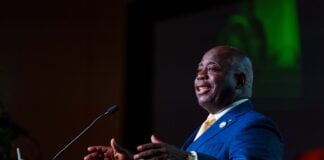


 says one of its proudest contributions has been supporting Jamaica's efforts to reduce poverty.)