The Dutch island of St. Eustatius has signed a Euro2.9 million (One Euro=US$1.29 cents) agreement with the European Union in efforts to strengthen the island’s agricultural sector.
The sustainable agriculture agreement will ensure basic food security, create economic opportunities, and increase the country’s resilience against external threats such as extreme weather exacerbated by climate change.
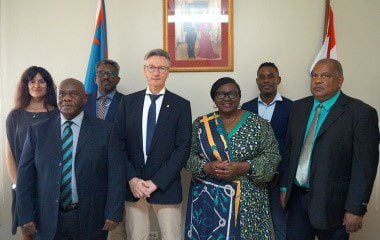
The agreement was signed Thursday by Government Commissioner Alida Francis in the presence of European Union Ambassador Rene van Nes and EU Delegation Program Manager Kristina Sevastou.

Officials say the agreement will also contribute to the sustainable management of the island’s natural resources, leading to a healthy natural environment and increased biodiversity. It will run for four years from 2023-2026.
“The United Nations World Food Program estimates that nearly 350 million people face acute food insecurity worldwide due to climate change and global conflicts. As a small island with few resources, Statia is extremely vulnerable to these conditions,” said Francis.
“Statians are currently feeling the impact of escalating food prices and the rise in the cost of living, which makes this agreement with the European Union even more necessary and vital for the future of our island and its residents,” she added.

The EU diplomat said the impact of climate change is worldwide and the European Union is making major steps forward toward climate change resilience and carbon neutrality.
“We do not leave our partners behind. The EU is the biggest funder in the world on actions related to climate mitigation and adaptation, including food security. This agreement is a crucial step for Statia on the road to sustainability and climate change resilience, and we are proud to support this program, which will benefit ordinary citizens and improve their livelihoods,” van Nes said.
One of the key objectives of this financial agreement is to increase sustainable production and productivity of agriculture, husbandry, and fisheries with a series of expected results such as the reconstruction of the rural infrastructure, increased access to productive tools and equipment, and strengthening of agricultural, rural, and maritime services.

The project will improve food stock management systems, implement dedicated policies, legislation, and action plans, and make available up-to-date information, and reliable data and statistics.
“An island such as Statia is very vulnerable. This program gives us the opportunity to grow our agriculture, husbandry, and fisheries and to implement a sustainable long-term approach,” said the director of Economy, Nature and Infrastructure (ENI) Anthony Reid.
“We urgently need to build a more solid foundation which will protect our natural environment and increase our food production.”
CMC/