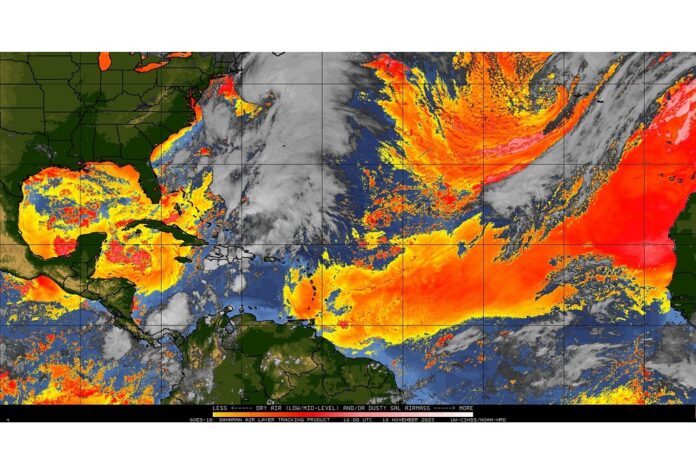
Residents across some Caribbean Islands have become acutely aware of the presence of Saharan dust, with individuals suffering from respiratory ailments and sinus problems feeling its impact firsthand.
This meteorological phenomenon has prompted heightened awareness and action among regional meteorological offices.
Caribbean meteorological services monitor conditions
Meteorological offices across the Caribbean region have been closely monitoring and reporting on the Saharan dust’s influence on local weather conditions.

The St Vincent and the Grenadines Meteorological Services (SVG Met) released its 72 Hours Weather Outlook on November 18, indicating that SVG’s atmosphere is expected to remain dry with moderate haze. This intrusion of haze is limiting significant shower activity.
Barbados, too, is grappling with the effects of the Saharan dust. The Meteorological Services in its November 18 forecast warned of a layer of moderate dust haze that is reducing visibility, particularly across the marine area and, to a lesser extent, across the island.
Dominica’s Meteorological Service, in its weather outlook for November 18, made note of the presence of a layer of dust haze, indicating the widespread reach of this atmospheric intrusion.

The Meteorological Department in St Maarten has observed a plume of Saharan dust that is not only limiting shower activity but also impacting air quality across the region. They issued a warning, advising individuals with allergies or respiratory illnesses to remain vigilant and take necessary precautions.
The Trinidad and Tobago Meteorological Service reported a mild to moderate concentration of Saharan dust in the atmosphere on November 18.
They, too, advised individuals sensitive to these atmospheric changes to take appropriate precautions.