Ninety-six-year-old Queen Elizabeth II died on Thursday at Balmoral Castle, the royal family’s estate in Aberdeenshire, Scotland, where she had spent the summer.
The queen ruled the realm for 70 years after taking the throne on February 6, 1952.
In February 1952 Elizabeth II ascended to the throne following the death of her father, George VI. While the role of Head of the Commonwealth is not hereditary, she also assumed the position.

When she acceded to the throne, her empire — once the largest on Earth — was collapsing. Country after country voted for independence and many saw it as the beginning of the end of the entire institution of monarchy.
Elizabeth, then still in her 20s, stopped the rot by throwing herself behind a fledgling group her father had overseen for post-colonial nations. The Queen made the Commonwealth a priority and, under her stewardship, it has grown from eight members to 54 today.
Why does that matter? Because it changed the narrative. As quickly as she was losing authority with a collapsing power base, she was regaining it as the figurehead of an association of independent states. She kept her international footprint and modernized at the same time.
The Queen has played a largely neutral role as Commonwealth Head, staying out of its major crises. However, she reportedly feared a Commonwealth split if tougher measures were not taken against apartheid-era South Africa.
The London Declaration set out no specific role for the Commonwealth’s Head. As the historian Philip Murphy wrote, it has become a more substantial position “very much due to the Queen’s efforts.”
In her role, the Queen pushed to attend CHOGMs when her governments have feared them potentially too controversial. From 1971 to 2015, the Queen missed only two of these biannual meetings.

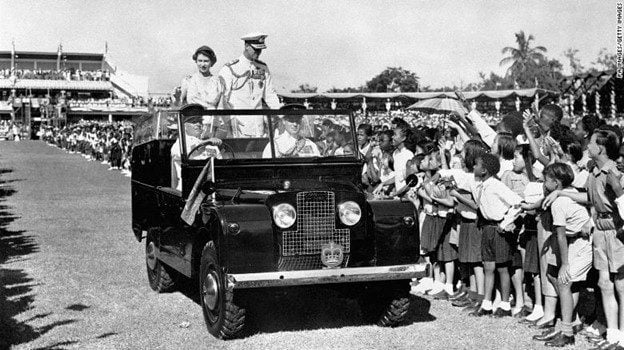
Between February 1952 and 2015, when the Queen last made an overseas visit, she also visited all but two Commonwealth countries (Cameroon and Rwanda) making near 200 trips and visits to Commonwealth and UK Overseas Territories. With many undertaken in the context of Cold War rivalry and tensions over decolonization, these visits aimed to sustain the Commonwealth despite its racial and ideological divisions.
The Queen has visited Jamaica on six occasions, the last in 2002 to mark her Golden Jubilee.
There are still fourteen Commonwealth realms where the Monarch retains a ceremonial role as head of state. More states may follow the example of Barbados, which became a republic in 2021.