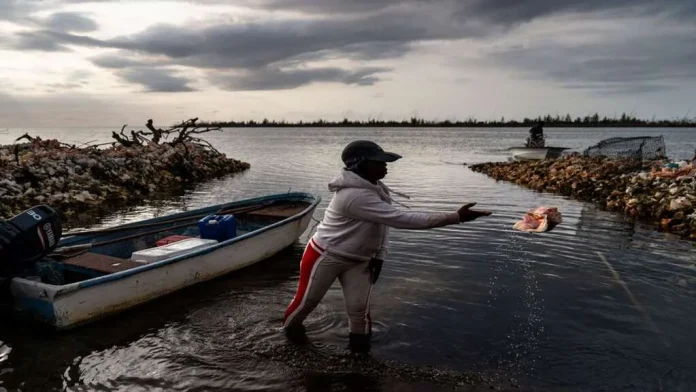
Scientists, international conservationists and government officials have sounded the alarm that the conch population is fading due to overfishing, and a food central to Bahamians’ diet and identity could cease to be commercially viable in as little as six years.

Tereha Davis, whose family has fished for conch from waters around the Bahamas for five generations, remembers when she could walk into the water from the beach and pick up the marine snails from the seabed.
But in recent years, Davis, 49, and conch fishers like her have had to go further and further from shore – sometimes as far as 30 miles – to find the mollusks that Bahamians eat fried, stewed, smoked and raw and are a pillar of the island nation’s economy and tourism industry.

“When I was a child, we never had to go that far to get conch,” said Davis, speaking at a Freeport market where she sold her catch. “Without conch, what are we supposed to do?”
Conch’s potential demise reflects the threat overfishing poses around the world to traditional foods. Such losses are among the starkest examples of how overfishing has changed people’s lives – how they work, what they eat, how they define themselves.
The overfishing challenges faced by Bahamians are mirrored in places as disparate as Senegal, where overfishing has taken away white grouper, long the basis for the national dish of thieboudienne, and the Philippines, where it has depleted small fish such as sardines that are used in kinilaw, a raw dish similar to ceviche.

No longer a theoretical threat, overfishing has wiped out once abundant species and taken off the table forever beloved culturally important dishes. And it’s a worsening problem – the United Nations Food and Agriculture Organization has stated that more than a third of the world’s fish stocks are overfished, and the rate of unsustainable fishing is rising.
Governmental organizations and advocacy groups are working to stop illegal, unreported and unregulated fishing that has expedited the loss of species. They blame poaching, poor regulations and lack of enforcement of existing laws. Regulators, such as the National Oceanic and Atmospheric Administration in the US, have said cutting down on illegal fishing is critical to prevent losing beloved food options.
The loss of such foods jeopardises the availability of protein and iron in people’s diets in poor countries and alters the course of culture in rich and poor nations, said Richard Wilk, a professor emeritus in the Indiana University Department of Anthropology who has studied food cultures. Nations that fail to control overfishing run the risk of repeating the mistakes of countries such as Japan, where the herring fishery collapsed in the middle of the 20th century, costing jobs, reducing access to a traditional wedding food and leaving the country dependent on foreign supplies, he said.

But the toll is heaviest in developing nations and poorer communities.
“The way that environmental changes and overfishing affect people and cuisine is different for subsistence fishers, who may end up going hungry, or local marketers, like the women who smoke fish on the beaches in West Africa,” Wilk said.
AP/