




The Belize-based Caribbean Regional Fisheries Mechanism (CRFM) says it is advancing a regional project aimed at turning sargassum into innovative products that will create jobs and income as well as contribute to building the region’s climate resilience.
CRFM said it is working with Plant & Food Research (PFR), a New Zealand government-owned Crown Research Institute on the project that is also aimed at mitigating the negative impacts of sargassum in the region.
It said during this year, the two entities in partnership with other public and private sector institutions in the Caribbean region, will focus on lab-scale work and field trials to develop suitable prototype products from the sargassum seaweed for commercial use.

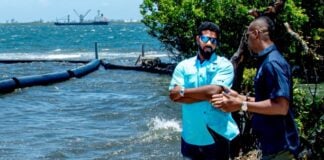
As a result, a team from the CRFM Secretariat and Plant & Food Research recently visited Trinidad and Tobago and Barbados to meet with key stakeholders as they advance the second phase of the project titled, “Developing Sargassum Products for Climate Resilience in the Caribbean.”
“Sargassum remains a major problem for our countries, coastal communities, and business enterprises, especially those in the fisheries and tourism sectors operating in the coastal and marine environment. “We had a very productive mission to Barbados and Trinidad and Tobago meeting with partners and stakeholders with an interest in creating value-added products from the Sargassum,” said CRFM executive director, Milton Haughton.
“We are very confident that we can work together with interested partners to develop viable products and generate jobs and income streams for our people from this natural resource (sargassum) that has been inundating our waters and beaches over the past 12 years. Our focus now is on developing and testing these prototype products and processes using the sargassum. We will also be developing a product commercialization strategy,” he added.

The International Development Program Manager at Plant & Food Research, Rosie Paterson-Lima, said her organization’s involvement was made possible by funding from the New Zealand government International Development Cooperation Program.
“It is exciting for us to work in partnership in the region on this challenge, and to bring our expertise in agronomy, value chain analysis, and commercialization. Together our goal is to minimize the problems caused by sargassum by creating viable economic opportunities for the region.
“We are delighted to have Barbadian Dr. Terrell Thompson joining the project delivery team recently as a consultant. Dr. Thompson is a chemicals and materials engineer with impressive expertise and experience in the sargassum industry,” Paterson-Lima said.

The CRFM said successfully completed the first phase of the project, working with partners in Barbados, Belize, Jamaica, and the Dominican Republic to conduct sargassum raw material safety testing and review of potential products that could be made from the sargassum.
It said the second phase of the project will entail product and process development.
CMC/






 says it is advancing a regional project aimed at turning sargassum)