Armed violence in Haiti disrupting education for over 240,000 children
Key Points(5)
- The United Nations Office for the Coordination of Humanitarian Affairs (OCHA) says rising insecurity and armed violence are continuing to wreak havoc on Haiti’s education system, with severe disruptions reported across several departments, including Centre, Ouest, Artibonite, and Nord.
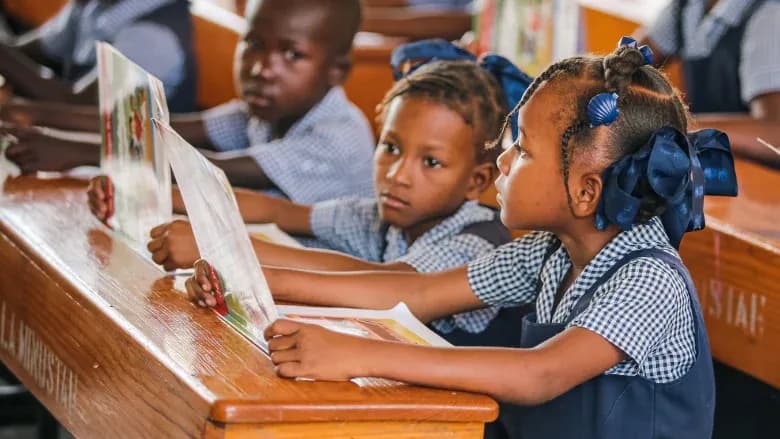
- “As of late April, more than 1,600 schools have been forced to close, disrupting access to learning for more than 243,000 children – that’s according to our partners working to support education in Haiti,” said Farhan Haq, Deputy Spokesperson for UN Secretary-General António Guterres.
- This marks a 60 percent increase in school closures in just four months — up from 960 closures recorded at the start of the year.
- Most of the affected schools are in the Ouest and Centre departments, where violence, mass displacement, and the use of schools as shelters by gangs and internally displaced persons have surged.
- “More than 80 schools are serving as collective shelters for internally displaced people, while 166 schools have been relocated, often under precarious conditions: Learning spaces often lack basic infrastructure, water, sanitation, and essential supplies,” Haq added.
The United Nations Office for the Coordination of Humanitarian Affairs (OCHA) says rising insecurity and armed violence are continuing to wreak havoc on Haiti’s education system, with severe disruptions reported across several departments, including Centre, Ouest, Artibonite, and Nord.
“As of late April, more than 1,600 schools have been forced to close, disrupting access to learning for more than 243,000 children – that’s according to our partners working to support education in Haiti,” said Farhan Haq, Deputy Spokesperson for UN Secretary-General António Guterres.
This marks a 60 percent increase in school closures in just four months — up from 960 closures recorded at the start of the year. Most of the affected schools are in the Ouest and Centre departments, where violence, mass displacement, and the use of schools as shelters by gangs and internally displaced persons have surged.
“More than 80 schools are serving as collective shelters for internally displaced people, while 166 schools have been relocated, often under precarious conditions: Learning spaces often lack basic infrastructure, water, sanitation, and essential supplies,” Haq added.
Children in the French-speaking Caribbean Community (CARICOM) nation continue to face extreme protection risks, including sexual exploitation, abuse, and recruitment by criminal gangs.
“When students see their education interrupted, they become even more vulnerable to these threats. Teachers have been displaced, and many communities face insecurity and damaged roads, making access to functioning schools unsafe,” said Haq.
Despite the deployment of a Kenyan-led multinational security force, armed groups still control much of Port-au-Prince and several surrounding areas. These gangs have openly challenged state authority, exacerbating an already dire humanitarian situation.
The UN’s Humanitarian Response Plan for Haiti this year calls for over US$61 million in education funding. However, Haq said less than US$6 million has been received to date.
“Additional support is urgently needed to sustain learning for Haiti’s most vulnerable children and prevent a generational education crisis in the country,” he stressed. Immediate needs include temporary learning spaces, school kits for at least 100,000 children, mental health and psychosocial support, improved water and sanitation facilities, and security measures for school environments.
OCHA says it continues to work closely with partners and Haitian authorities to ensure the right to education is upheld despite the ongoing crisis.