On August 31, 2025, Trinidad & Tobago marks 63 years of independence. At home, the milestone feels a bit subdued—this year’s traditional Independence Day parade has been canceled, leaving communities to observe the holiday on a smaller scale. But the spirit of celebration is hardly muted. Instead, it has spilled into the diaspora, where Trinis abroad, particularly in hubs like South Florida, are gearing up to fête in true island style. From cultural showcases to street parties, the red, white, and black will wave proudly, proving that no matter where Trinidadians find themselves, Independence Day is never just a date—it’s a rhythm, a flavor, and a vibe that the world has come to recognize.

Because for all its size, this twin-island nation has made an outsized mark on the globe. Whether through the pulsating sounds of soca and calypso, the brilliance of steelpan, the revelry of Carnival, or the unmistakable taste of doubles and roti, Trinidad & Tobago’s cultural imprint stretches far beyond Port of Spain. Independence Day, then, isn’t only about looking back at the nation’s journey to sovereignty—it’s about recognizing the gifts Trinis continue to give the world.
Carnival: The Greatest Show on Earth
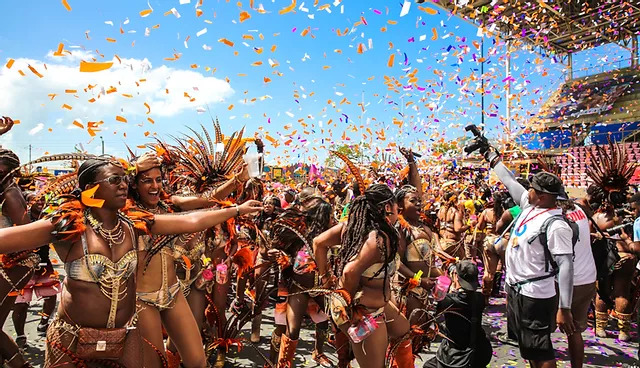

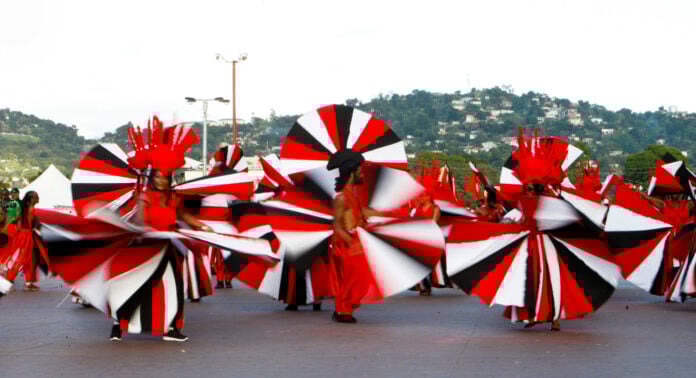
Trinidad’s Carnival is more than just a festival—it is the country’s most powerful cultural expression and one of the largest street celebrations in the world. Held annually on the Monday and Tuesday before Ash Wednesday, it transforms Port of Spain into a kaleidoscope of color, rhythm, and movement, drawing tens of thousands of masqueraders and hundreds of thousands of spectators from across the globe. The celebration’s roots run deep: it began in the late 18th century when French planters brought masquerade balls to the island, and enslaved Africans, barred from participating, created their own parallel celebrations. Out of that resistance was born the Canboulay processions—torchlit street parades filled with drumming, dancing, and chants that would become the heartbeat of Carnival. Over time, these traditions fused with African drum rhythms, stick-fighting rituals, and East Indian influences, producing an entirely new cultural form that spoke to freedom, survival, and identity.
Modern-day Carnival stretches far beyond the two official days. “The season” begins weeks earlier with fetes, soca music competitions, and cultural showcases. The International Soca Monarch competition and Panorama—the premier steelband contest held at the Queen’s Park Savannah—are staples that pull massive crowds. Dimanche Gras on Carnival Sunday showcases the Calypso Monarch finals, where witty, often biting lyrics deliver social and political commentary. J’ouvert, starting before dawn on Carnival Monday, brings mud, paint, and oil-smeared revelers onto the streets in a ritual that recalls emancipation and rebellion. Then come the spectacle of Pretty Mas bands on Monday and Tuesday, where sequined, feathered costumes and choreographed movements transform masqueraders into living art.
The festival is also a major economic driver. According to the National Carnival Commission of Trinidad and Tobago, Carnival contributes hundreds of millions of dollars annually to the economy, fueling sectors from tourism and hospitality to costume production and music. International arrivals spike during this period, with visitors spending on hotels, food, transportation, and events. In recent years, Carnival has even expanded into digital spaces, with live-streamed fetes and competitions bringing global audiences into the celebration in real time.

But perhaps the most far-reaching impact of Trinidad’s Carnival is how it seeded a global movement. Toronto’s Caribana, London’s Notting Hill Carnival, Brooklyn’s West Indian American Day Parade, and Miami Carnival are all direct descendants, powered by Trinbagonian artistry. Mas bands like Tribe, Island People, and Peter Minshall’s legendary creations have influenced costume design worldwide, while soca stars such as Machel Montano, Kes, and Bunji Garlin headline diaspora Carnivals. For the Caribbean diaspora, these festivals are more than parties—they’re cultural anchor points, keeping heritage alive in second- and third-generation communities while welcoming global audiences into the fold.
Carnival’s brilliance lies in its duality: it is at once a history lesson rooted in struggle, a social stage where commentary still thrives, and an unrestrained celebration of joy. In Trinidad, Carnival is not just an event—it is a declaration of freedom that the world continues to dance to.
Music: Soca, Calypso, Steelpan—Global Soundtrack
Trinidad and Tobago’s music is a story of invention, survival, and global influence. Its earliest internationally recognized form, calypso, traces back to the 17th century when enslaved Africans on sugar plantations merged West African kaiso traditions with the rhythms of canboulay festivals. Denied their languages and family ties, they turned to music as a coded form of expression—mocking overseers, passing on news, and sustaining their community. These songs were first led by griots, later evolving into the chantwell and ultimately the calypsonian. By the 19th century, modern calypso fused masquerade lavway chants, French Creole belair, and calinda stick-fighting songs with influences from neighboring Venezuela. Carnival, imported by French planters but transformed after emancipation in 1834, became calypso’s primary stage, where the music carried political weight as a voice of the people.

Calypso’s first international wave came in the late 1930s and 1940s with pioneers like Atilla the Hun, Roaring Lion, and Lord Invader, who took the music abroad and recorded some of its earliest hits. A major figure in this period was Lord Kitchener, whose career spanned over five decades and made him one of calypso’s most enduring voices. Famously, he arrived in England aboard the Empire Windrush in 1948 and serenaded reporters with his composition “London is the Place for Me,” cementing his role as a cultural ambassador for Trinidad. Kitchener went on to dominate calypso competitions at home and release classics that remained Carnival staples right up until his passing in 2000.
The wartime and post-war years also brought calypso into global pop culture. In 1944, Lord Invader’s biting social commentary “Rum and Coca-Cola”—a critique of the social fallout from U.S. military bases in Trinidad—was adapted into a sanitized version by the Andrews Sisters, becoming an American chart-topper. In 1956, Mighty Sparrow shook the scene with “Jean and Dinah,” a wry take on prostitution in Port of Spain after the U.S. base at Chaguaramas closed. That same year, Harry Belafonte’s album Calypso sold over a million copies, sparking a brief international calypso craze. While Belafonte’s version of the genre was lighter and commercialized, it nonetheless helped bring Caribbean music into mainstream American homes.
By the 1970s, calypso gave rise to soca, pioneered by Ras Shorty I (Garfield Blackman), who blended calypso with Indian rhythms, soul, and funk to create a faster, more dance-driven sound. Soca quickly became the heartbeat of Carnival. Super Blue revolutionized the genre with his “jump and wave” style; Machel Montano carried it onto the world stage with concerts from Madison Square Garden to London’s O2 Arena; and artists like Destra Garcia, Bunji Garlin, and Kes the Band continue to push soca into new territory, fusing it with EDM, reggaeton, and Afrobeats.
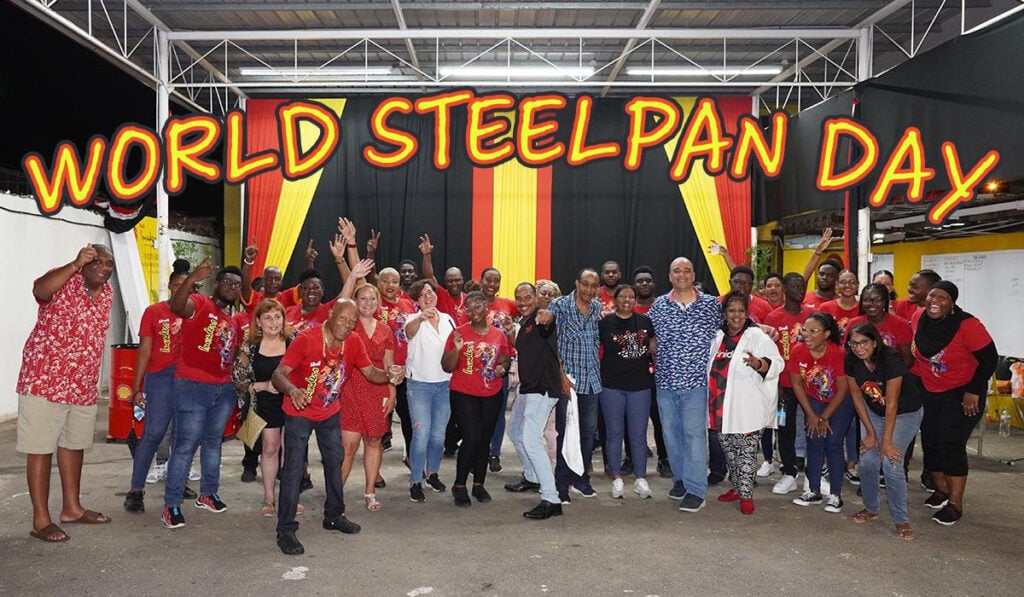
Meanwhile, Trinidad invented one of the world’s most unique instruments: the steelpan. Emerging in the 1930s–40s when resourceful youth transformed discarded oil drums into precision-tuned instruments, steelpan overcame bans and stigma to become the country’s national instrument. Today, its shimmering tones anchor both Carnival and the prestigious Panorama competition, where massive steel orchestras dazzle crowds with inventive arrangements. Beyond Carnival, the pan has traveled worldwide—taught in schools from London to Tokyo, performed in symphony halls, and recognized as one of the great innovations of 20th-century music.
Trinidad’s reach doesn’t end there. Calypso Rose, the first woman to win the Calypso Monarch competition, broke barriers with songs on sexism and social justice. Black Stalin kept political fire in the music alive. Billy Ocean became a Grammy-winning international star, selling over 30 million records, while Nicki Minaj, born in Trinidad, became one of the most influential women in global hip-hop. Even diaspora artists like Foxy Brown carry Trini DNA into new genres.
From Lord Kitchener’s serenade on the docks of Tilbury to the pulse of soca fetes and the ringing brilliance of steelpan, Trinidad’s music continues to be both protest and party, a cultural export and a heartbeat of identity.
Food: Rhythms of the Palate
Trinidad and Tobago’s cuisine is a living mosaic of cultures—African, Indian, Chinese, European, and Indigenous Taíno influences meld together to create flavors that are bold, complex, and unmistakably Trini. Each dish is a story, passed down through generations, celebrated at Carnival, and savored at home, on the streets, and across the diaspora.
Breakfast & Street Food
Breakfast in Trinidad is a sensory adventure. Doubles, perhaps the island’s most iconic street food, consists of two baras (soft fried flatbreads) filled with curried channa (chickpeas) and topped with an array of condiments like pepper sauce, kuchela (spicy mango or green seasoning chutney), tamarind sauce, cucumber, or pommecythere. While traditionally eaten in the morning, doubles are enjoyed throughout the day and form the backbone of the island’s informal street-food culture.
Other staples include sada roti, an Indo-Trinidadian unleavened flatbread cooked on a cast-iron tawa and served with a variety of chokhas—mashed, roasted vegetables like baigan (eggplant), damadol (tomatoes), karaili (bitter melon), and pepper. Complementing these are fried or curried vegetables such as bodi (long beans), okra, pumpkin, and lauki (bottle gourd), alongside fried plantains and spicy sauces. Fried bake and coconut bake appear frequently, served with protein-rich fillings like fried shark, saltfish, buljol, black pudding, accra (saltfish fritters), corned beef, or stewed meats, making for hearty morning meals.
Maracas Beach, along Trinidad’s northern coast, is famous for bake and shark, a fried flatbread sandwich generously stuffed with fried shark, fresh vegetables, tropical fruits like pineapple, and a variety of sauces. Souse—a tangy, spicy dish made from pig, cow, or chicken feet, or cucumber—is also a popular breakfast item, often touted as a cure for hangovers.
Hot drinks such as cocoa tea (made from homemade cocoa balls), cornmeal porridge, and farine (an Amerindian-inspired porridge) accompany these dishes, offering warmth and energy for the day ahead.
Lunch, Dinner & Signature Dishes
Trinidad and Tobago’s main meals showcase diversity, depth, and history. Callaloo, an African-rooted dish made from dasheen (taro) leaves, okra, crab or pigtails, pumpkin, onions, coconut milk, and pimento, is often served with cornmeal coo coo, rice, dumplings, plantains, or curried crab. The island’s pelau, a one-pot rice dish with pigeon peas, meat, and coconut milk, reflects Creole and African influences. Other everyday dishes include dhal and rice, curried chicken or duck, breadfruit oil down, and macaroni pie, showcasing the fusion of European and Caribbean flavors.
Seafood is a central component of the culinary identity, particularly in Tobago. Locals enjoy flying fish, king fish, carite, prawns, shrimp, cascadura (a freshwater fish with an old legend promising return to Trinidad for those who eat it), red fish, bonito, lobster, conch, and crab. Curried crab and dumplings are a Tobagonian specialty, often paired with dasheen, sweet potatoes, cassava, yam, and other “blue foods”—a category of hearty, starchy, and often purple-tinted dishes endemic to the islands. Fish broth, prepared in a style reminiscent of bouillabaisse, is commonly served as a main or side dish.
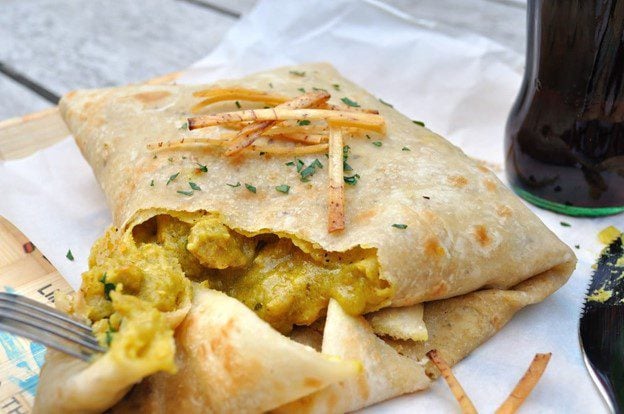
Indo-Trinidadian street foods extend far beyond doubles. Aloo pies, pholourie (fried spiced chickpea balls), saheena (vegetable fritters), baiganee, bara, and kachori are beloved snacks, often sold alongside wraps made with dhalpuri or paratha roti, stuffed with curried meats, vegetables, or seafood. Indian sweets, particularly around Hindu festivals, celebrate both the season and the enduring influence of indentured laborer traditions.
Other street favorites include wontons, corn soup, geera (cumin) pork, kebabs, gyros, pasteles, and even raw oysters served with spicy cilantro or chadon beni sauces. Trini cuisine’s diversity ensures that both casual street meals and elaborate family dinners showcase the same vibrant, layered flavors.