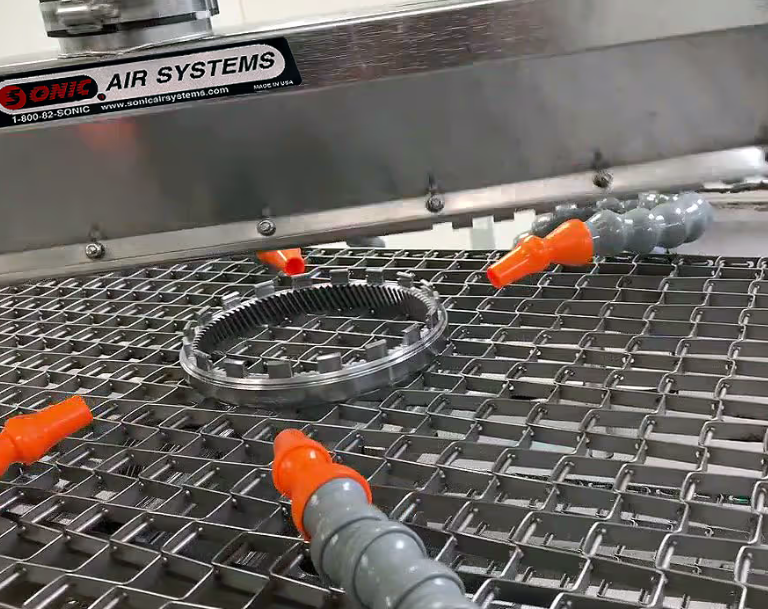
Air nozzles are emerging as one of the most cost-effective options for enterprises looking to improve their efficiency and save more energy. They supplement or replace compressed air systems to provide high-powered air flow at a fraction of the energy cost.
Facilities constantly use high-pressure compressed air systems in industrial settings which demand continuous use of drying, cooling, cleaning, or material-moving applications. Air Nozzle Manifolds, which are increasingly being used in manufacturing facilities to maximize air supply without necessarily incurring high utility costs, are among the components that exemplify this shift. The usage of energy-efficient air nozzles can provide businesses with an additional sustainable and measurable benefit when they look for ways to streamline processes and reduce expenses without sacrificing the quality of the manufactured goods.
Efficient for drying and cooling
One option that is being considered in a number of industries is the air nozzle manifold for cooling and drying. Through the employment of several nozzles on a single manifold, this system produces precise, consistent air flow that enables subtle distribution control. Because air nozzle manifolds enable the direct distribution of high-velocity air in regions that require it, they provide a practical and energy-efficient option for drying and chilling jobs in an industrial or commercial setting.

High Energy Efficiency
Typically, many units of electrical energy are required for each unit of compressed air that is delivered. This is not wasted by blower-driven systems. They use much less energy since they work at lower pressure, often measured in inches of water column rather than PSI. Converting compressed air facilities to Air Nozzles manifolds results in instantaneous energy savings, which are promptly realized because the facilities run continuously in an industrial setting.
Systems with Air Nozzle Manifolds
The compressed air or blower air will be sent through an air nozzle manifold, which is made up of several nozzles positioned within a single header. When combined, the nozzles provide a concentrated air stream that creates a consistent airflow cover inside a product or processing area. Manufacturers can modify the airflow patterns based on the size, shape, and product needs of the process thanks to this design. Unlike one-point air delivery systems, which raise the possibility of uneven drying or chilling, manifolds distribute air evenly. These are commonly used in procedures such as conveyor drying, component cooling, cleaning, and moisture removal after washing or coating.
Increased Stability and Productivity in Drying
This is particularly important in sectors like food processing, computer assembly, and automobile manufacture where appearance is crucial. Nozzle manifolds provide consistent drying performance even at large production rates by controlling air pressure and angles. This reduces dwell time and the quantity of production line bottlenecks. Increased throughput at the expense of quality is the result.
In industrial production settings, the drying and chilling processes are essential for ensuring high-quality output, reducing cycle times, and ultimately cutting operating costs. Controlled airflow is crucial for removing moisture, releasing heat, and preparing products in accordance with the subsequent production step in manufacturing lines, material handling facilities, and so on. The designed airflow solution has become crucial in achieving this goal because industries continue to prioritize accuracy and uniformity.
Manufacturing Sustainability
A recent addition to modern production policies is sustainability. By assuring energy-efficient airflow management and minimizing waste due to inconsistent drying or cooling, air nozzles support these goals. Their endurance and durability, which lower the rate of material renewal and consumption, also assist sustainable operations.
Conclusion
Air nozzles are used in many different types of companies. Most often, pressurized air—a vital but expensive resource—is employed with these nozzles. Unfortunately, compressed air is often an essential tool. The efficient utilization of compressed air is the result of the nozzle itself. When selecting the appropriate instrument, businesses can select between standard and multi-channel air nozzles. After discussing the differences between the two air nozzles below, we wrap off by discussing the advantages of a multi-channel air nozzle for countless uses.