When Did Molly, Scamming and Dunce Become Fashionable?
Key Points(5)
- The evolution of music in Jamaica and its influence on youth is one that is oftentimes debated at various levels in society.
- This directive was given to radio stations to reinforce the Commission’s commitment to keep the airwaves free of harmful content given the role that traditional media still plays as an agent of socialisation.
- However, social media plays an integral part of socialisation, and makes it easy for youth to access music that has been banned on the airwaves.
- Minister with responsibility for Information Robert Morgan while speaking at the National Youth Month Church Service spoke about his son who was playing a song on YouTube.
- The minister said his son wasn’t playing the song on his own volition he was on YouTube when it started playing.
The evolution of music in Jamaica and its influence on youth is one that is oftentimes debated at various levels in society.
Recently the Broadcasting Commission of Jamaica imposed a ban on the playing of music that promotes or glorifies lottery scamming, the use of the illicit drug Molly and illegal guns. This directive was given to radio stations to reinforce the Commission’s commitment to keep the airwaves free of harmful content given the role that traditional media still plays as an agent of socialisation.
However, social media plays an integral part of socialisation, and makes it easy for youth to access music that has been banned on the airwaves. Minister with responsibility for Information Robert Morgan while speaking at the National Youth Month Church Service spoke about his son who was playing a song on YouTube. The minister said his son wasn’t playing the song on his own volition he was on YouTube when it started playing.
"…I heard my son playing a YouTube video, and he wasn't playing it because he looked for it, he was just on his tablet, and I heard, 'Bounce cheque inna account and mek mi skull upset. nuh know dunce yet, back a di class mi nah nuh subject.”
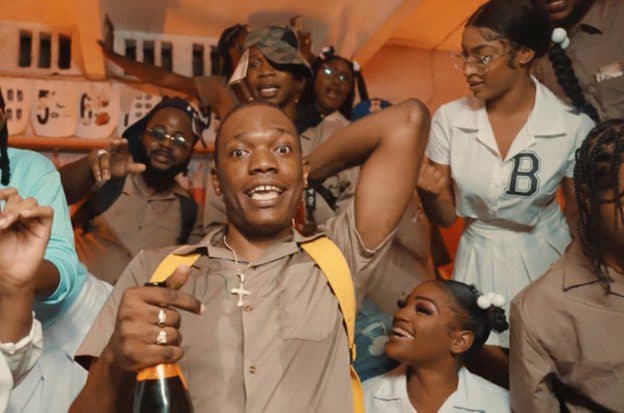
The song Dunce Cheque by dancehall artiste Valiant has been trending for the past few days on several social media platforms. The song speaks about being dunce, scamming as well as the use of Molly.
How did this become a norm? Are the songs a reflection of the society in which we are living? Gone are the days when working hard and attending school for a higher education was being preached to the youths. Being dunce and having the ability to scam are the recurring themes in songs nowadays.
Dunce Cheque is one of the many songs that highlight scamming, Molly and being fully dunce. Malie Donn’s Bank is another trending song that continues to make its rounds. The song speaks about engaging in criminal activities; being a thief.
“Yes, Miss Jen, I'm still a thief. Still here committing criminal activities,” he sings with pride. Being a big crook is held in high regard not to mention the use of drugs. But how did we get here?
The era of the Bro God is here, and the new generation has come armed with trap music, their own lifestyles that does not portray Jamaica in the best light. This is definitely not the music of Barrington Levy or Beres Hammond but an era of scamming- the rise of the “choppa” culture that’s carving its place in history.
First made popular locally in St. James and surrounding western parishes, scamming has found itself into the criminal spotlight. It gained national notoriety around 2011-12, by which time an Anti-Lottery Scam Task Force had already been formed by the Jamaica Constabulary Force, and the U.S. government opened an F.B.I. office in Jamaica to help tackle the plague that was causing American citizens to lose their retirement funds.
The open arms of Jamaican music initially received a taste of scammer culture around 2012, when incarcerated dancehall artiste Vybz Kartel with Gaza Slim on hook released Reparations. Thus, what was once considered an illicit lifestyle, got its first national co-sign with a basic explanation of why it's morally correct.
There is an uncomfortable truth about the rise of such music in Jamaica. With its creators and current viral acts acting as proponents of the lifestyles surrounding scamming, the music moves one step forward and one step back.
The music, though often hardly impressive, represents what’s currently happening on the ground in Jamaica. Youth no longer believe that hard work is the key to success but believe in a fast life; get rich by any means necessary.
Young people are the driving force of any economy and help to build and shape society. If we lose our young people now to what is deemed culturally appropriate, then there’s a little hope for the future. To quote Prime Minister Andrew Holness “fully dunce.”
What are your thoughts?