The reggae world is still mourning the passing of The Hon. Dr. Jimmy Cliff, OM — reggae singer, actor, pioneer, and one of Jamaica’s most recognizable global superstars — who died on November 24.
Jimmy may not be with us in the flesh, but his music will live on forever. He lives on in every melody he gifted us in songs like The Harder They Come, Many Rivers to Cross, Rebel in Me, and others. His music was the soundtrack to generations of Jamaicans at home and across the diaspora. You Can Get It If You Really Want, which first captured global attention in the 1972 film The Harder They Come, found new life when it was featured in Speed 2, the Will Smith film Hitch, the animated hit The Pirates! Band of Misfits, and on the Sebastian album from The Little Mermaid.
Just recently, the song made its way into a national E*TRADE commercial in the United States, inspiring another generation as the soundtrack to a woman’s quest to climb Mount Everest. To countless fans across Africa, Brazil, Europe, and the United States, Jimmy Cliff was reggae’s first true international star.

I had the honor of working with Jimmy Cliff twice — first in 2010 when he was inducted into the Rock & Roll Hall of Fame, and again in 2012 when he performed at Groovin’ In The Park.
2010 was a special year for Jimmy, as he became only the second Jamaican reggae artist inducted into the Rock & Roll Hall of Fame. Bob Marley was the first. I was asked by his management to arrange a press junket in Manhattan for about 30 media outlets — including The New York Times, Vibe Magazine, Irie Jam Radio, Forever Reggae TV, CLM TV, and others — at the Waldorf Astoria to welcome him to New York. In that room, Jimmy spoke about the roots of his music. He delved into the oppression from which he rose to become a global superstar. He spoke about his journey as a “shepherd of reggae,” about opening gates so others could pass through. His humility and charming smile filled the room.
I will never forget when Jimmy, the reggae icon, handed his Rock & Roll Hall of Fame trophy to me to hold in my hands. A small gesture, maybe, but to someone who grew up in western Jamaica listening to Jimmy Cliff’s music since childhood, it felt like holding a piece of history — a cherished piece of Jamaica. It was Jimmy’s story, and in many ways, a piece of my own.
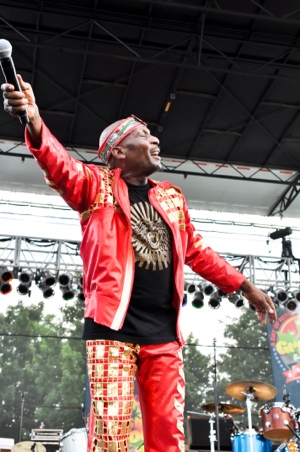
Our paths crossed again in 2012 at Groovin’ In The Park. Jimmy was booked as a headline performer alongside R&B heavyweights Gladys Knight and Boyz II Men, reggae crooner Beres Hammond, and dancehall doctor Beenie Man. Watching him command the Roy Wilkins Park stage in Queens, New York, was nostalgic and reminded me once again why the world loved this “son of the soil.” Jimmy transformed the stage, took thousands of reggae lovers on a musical odyssey, and made them feel like family. The truth is, Jimmy Cliff was a multi-dimensional force — an actor, activist, storyteller, and visionary.

Thank you for the precious memories, Jimmy. Thank you for the songs you wrote and so eloquently sang. Thank you for The Harder They Come and your other films that moved us, the pride you instilled in us, and the legacy you left behind for the world to cherish. You were a mentor from afar, a giant whose footsteps we still follow. Walk well, my friend. You have crossed your last river as you now fly into Zion to be with contemporaries like Dennis Brown, Bob Marley, Toots Hibbert, John Holt, Gregory Isaacs, and others.