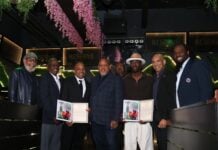
What was unveiled at the recent launch of JAMAKU—the latest publication by acclaimed dub poet Malachi Smith, presented as part of Jamaica’s Consul General Oliver Mair’s Distinguished Lecture series at the Island Space Caribbean Museum in South Florida—went far beyond what leapt from the pages of the spellbinding stories being shared.
For a start it marked the first time in the lecture series that a poet was at the podium – sharing a defining life’s journey – reflective reel of what’s deeply rooted in his experiences in Jamaica, an eye opening experience in the US with the first poem read from his book, The Lynching Tree…and the jolt, from journeying to Ghana, performing with the Jamaican Folk Revue and Tallawah Mento Band at the Pan African Historical Arts and Culture Festival (PANAFEST 2025).
It was noteworthy then, that though not featured in the publication, he began with the piece Homecoming – the very first verse, setting the stage of his presentation:

I packed my suitcase with tears
to return home to you
Mama, I am now poorer;
It’s been four hundred years
since I was torn from your arms
and cast into hell,
into the belly of ships,
into cane fields,
into cotton plantations,
into biting cold and scorching sun,
into starless nights,
into the abyss of enslavement,
into a world without windows.
The packed audience was immediately taken along, and thereafter went on tour of all that Malachi Smith has experienced – the thought provoking route of the poems presented from JAMAKU – what he reconstructed from the Japanese literary art form haiku, a short form of poetry originally consisting of three phrases with longer poems over time being produced.
The collection of poems that’s JAMAKU, published by Independent Voyces and available on Amazon, therefore represents all that’s idiomatic about the Jamaican experience with colourful photographic images captured by the poet and his associate, filmmaker and poet Judith Faloon Reid.
The launch, he said, surprised him “on many levels” – the turn out and response from the community, how he felt “liberated,” he chuckled, on removing his jacket once he started speaking, on being particularly stirred sharing stories about his ancestors that needed to be told – and about feeling empowered, as a vessel, to continue his journey, taking it to the next level. “That next level,” he says, “is to be publishing more books because I have a lot of work, and to keep motivating students with each Jamaica Poets Nomadic College and School Tour (of which he’s founder), with the eighth staging of the tour this year from November 1 – 15.”
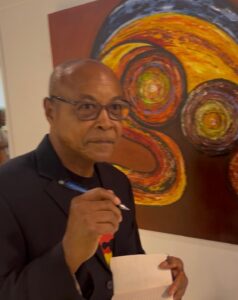
Smith shared stories about his trip to Ghana and kept asking, rhetorically, and repeatedly, about how our ancestors endured enslavement, the Transatlantic Passage, and their innate and uncanny resolve to survive. He spoke of his haunting trip and time at Cape Coast where slaves were shipped from. ‘I never saw seas that were so still and at times yet so angry.
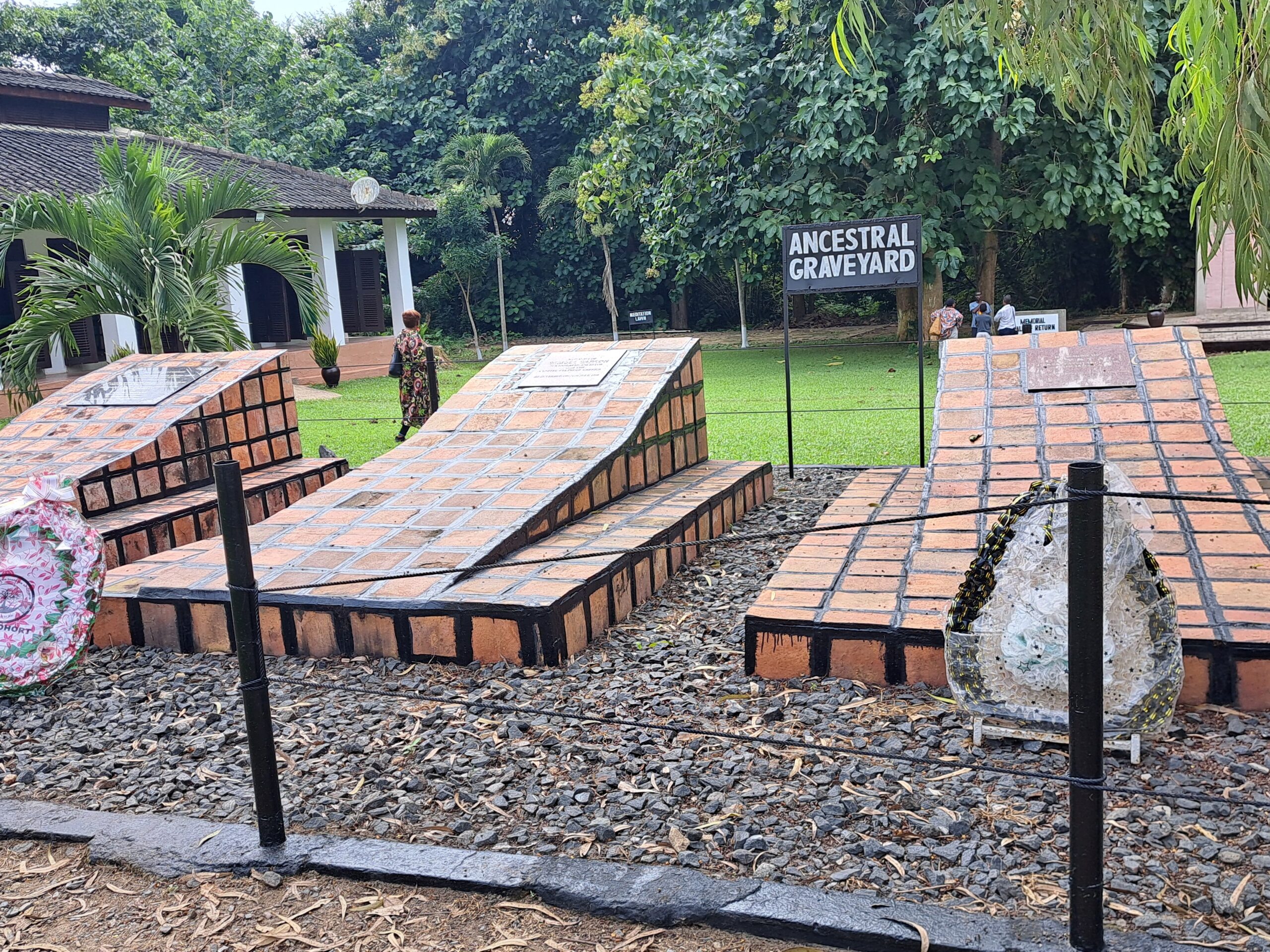
I was afraid of it. I wouldn’t swim or even put my toes in it, but I would take pictures of it every morning. I was told that my fears and all that was tugging at me emotionally was the connection and engagement with the spirits of the women who had perished. Tugging at him emotionally was also his visit to the Assin Manso Ancestral Slave River Site where the remains of Crystal, uncovered during archaeological work at the African Jamaican Slave Village at Seville, were returned to Ghana and reburied.
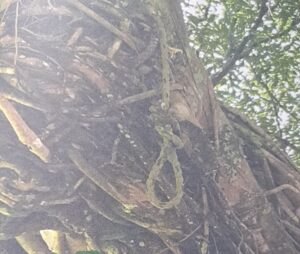
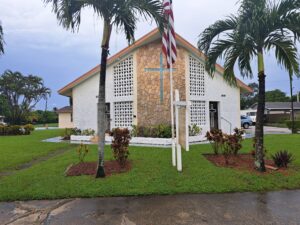
Crystal was an enslaved woman who vowed to return to her homeland and would often not eat, rebelling to go back home. The Lynching Tree, his first poem read from JAMAKU, was about those who also perished – lynched from the Weeping Fig Tree (Ficus Benjamina) that’s now heritage site at the Davie Community Worship Centre in South Florida. Smith, a former police officer, and other members of the Jamaica Ex-Police Association of South Florida, had attended a Convention at the Worship Centre. After the service, passing the tree, he discovered that the noose was still visible though the rest of the rope was covered by the tree bark.
Nothing is proverbially left hanging from the lines of the Lynching Tree:
Time tries to mask My
Story, fails as bark’s thick skin
Breaks where strange fruits hang
“The Lynching Tree speaks volumes of our journey from the motherland, West Africa in particular,” says Smith. “It cannot be obliterated from history or memory. The tree itself—the tree bark keeps growing and covering the rope but is still not able to cover the noose. Symbolically, it reflects the battle between forcers to whitewash our history and story.”
Other telling pieces that were presented from JAMAKU were Daddy where are you, Arise, The dream, One day (about national hero Marcus Garvey), One way, Hope Gardens and Flat Bridge, which addresses particular undercurrents:
Trod careful over
My under currents are deep
Secrets, charm, bones, history.