Holness or Golding? New York diaspora weighs in as Jamaicans head to the polls
Key Points(5)
- Today, September 3, Jamaicans at home head to the polls in what political pundits say is one of the most closely contested general elections in recent history.
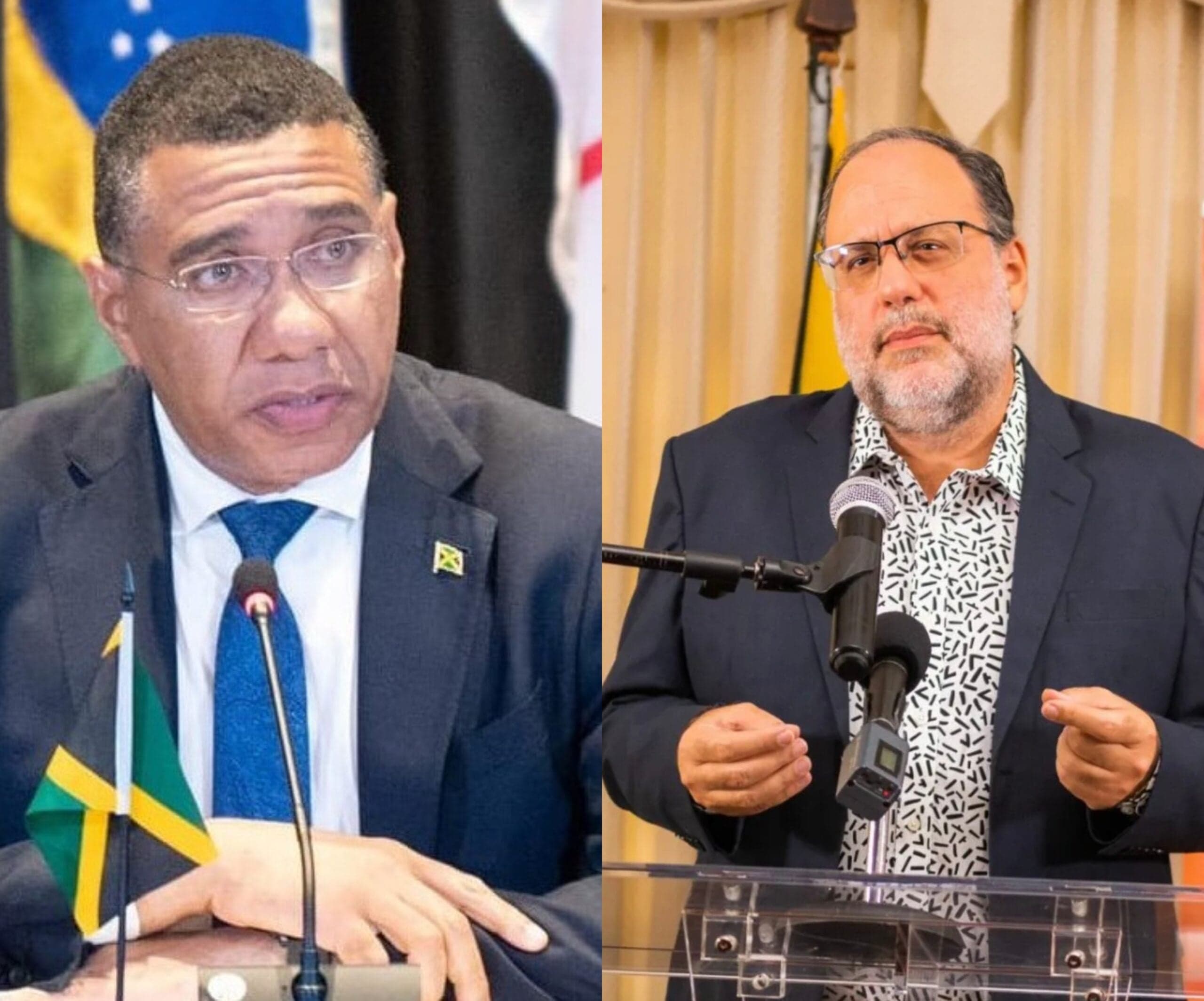
- Voters will have to decide whether the ruling Jamaica Labour Party (JLP), led by Prime Minister Dr.
- Andrew Holness, or the People’s National Party (PNP) under Opposition Leader Mark Golding, will form the next government.
- From heated debates in the past month over corruption and citizenship of Jamaica to questions about leadership, integrity, and the state of the Jamaican economy, the campaign season has ignited spirited discussions not only at home but also in the diaspora.
- <em>Caribbean National Weekly</em> spoke with a few Jamaicans on the ground in New York to get feedback.
Today, September 3, Jamaicans at home head to the polls in what political pundits say is one of the most closely contested general elections in recent history. Voters will have to decide whether the ruling Jamaica Labour Party (JLP), led by Prime Minister Dr. Andrew Holness, or the People’s National Party (PNP) under Opposition Leader Mark Golding, will form the next government.
From heated debates in the past month over corruption and citizenship of Jamaica to questions about leadership, integrity, and the state of the Jamaican economy, the campaign season has ignited spirited discussions not only at home but also in the diaspora.
Caribbean National Weekly spoke with a few Jamaicans on the ground in New York to get feedback. Everyone had an opinion, which, not surprisingly, was sharply divided along party lines.
A divided diaspora mirrors a divided Jamaica
As Jamaica votes today, the diaspora remains split. PNP supporters see Mark Golding as a fresh, untainted political leader who has the tenacity and steady hands necessary to restore confidence and integrity to the government of Jamaica. Others believe Andrew Holness’ leadership skills, experience in politics, firmness, and record provide the stability Jamaica needs going forward.
Yard and foreign: What makes someone a Jamaican?
For Tassie Scarlett, a bank executive who has lived in the New York diaspora for more than four decades, the Prime Minister’s comments that “being born in Jamaica doesn’t necessarily make you a Jamaican” struck a nerve, but not in the way some people expected.
“I’m not offended,” Scarlett told Caribbean National Weekly.
“We all know we have a lot of Jamaicans who’ve migrated and adopted this country as theirs, sort of turning their back on Jamaica. So maybe that’s why the PM said this comment. But being born in a country, naturally, that’s your country.”
Patrick Beckford said Andrew Holness and members of JLP knew that Golding was born in Jamaica.
"Reminds me of the birtherism of Obama by Trump," he opined.
Scarlett, who is active in diaspora philanthropy through JAMPACT’s work in early childhood education, questioned whether remittances alone justify giving overseas Jamaicans voting rights.
“Not because you send money back home gives you a voice,” she argued. “I like to see diasporans giving back in other ways—service to kids, service to the needy. Those initiatives speak more to me than just sending money back home.”
Integrity vs corruption: Golding’s “clean hands”
Others in New York were direct in their support for Mark Golding. Phil Graham of Trelawney praised the PNP leader as a man of integrity.
“He has a track record as a businessman, lawyer, banker, and has been very successful in his trade. There is no corruption that can be attached to him. He is a pure person right now,” Graham said.
Regarding Mark Golding's country of birth, Graham said, "It's clear that if the Prime Minister wanted to verify if Mark Golding is a Jamaican, he could have easily done that. And whether Mark Golding has dual citizenship is neither here nor there because legally, as far as the Jamaican Constitution and the laws are concerned, he's not breaking any laws," he reasoned.
He went further, saying the JLP has persons sitting in parliament who were born abroad.
"There are persons sitting on the opposite side of the bench who weren't born in Jamaica. They were born overseas, and there's no question about those persons whatsoever. So it smacks of the PM just trying to get one over on politics, instead of trying to be honest and fair and balanced. And that's one of the things that makes me think that Prime Minister Holness is not suitable for the job," he shared.
Phil Graham blasted the PM over unresolved corruption concerns.
“If I am accused of certain things and I have nothing to hide, I’ll open my life, all my books, everything. The Prime Minister is doing the opposite,” he charged.
Patrick Beckford echoed that sentiment, saying, “I do not trust Holness with the Jamaican Treasury. Golding has proven himself as an astute manager of his successful company. Corruption versus clean hands—and so I am vouching for Jamaica’s stability in the better-trusted leader.”
Jamaican-born, Long Island resident Barrington Whyte, dismissed corruption claims as “merely a politically driven attempt to muddy the water,” adding that Holness’s comments on citizenship were directed at Golding’s “failure to commit to Jamaica by not getting a Jamaican passport over decades, whilst holding a British passport.”
KC alum Bobby D’Souza, originally from Clarendon, said the debates sealed his decision.
“I think Mr. Golding won the debate. He explained more about what his intentions are and what he is going to do for Jamaica, because things are in a deplorable condition.”
Solid support for Holness
Prime Minister Holness enjoys solid support among some members of the New York diaspora, particularly those who value his record in infrastructure, technology, and international investment.
“From the diaspora perspective, Prime Minister Andrew Holness remains the stronger choice,” said New York radio host Sherry Southe, who hails from Mandeville.
“He brings proven leadership, a clear track record in infrastructure and digital transformation, and policies that continue to attract international investment,” she said.
Southe rubbished the corruption narrative as pure political noise.
“Allegations are part of politics, but PM Holness responded directly and transparently. For the diaspora, what matters most is tangible progress—economic growth, improved infrastructure, and a positive international image," she explained.
Bronx resident Martin Greaves, originally from Mandeville, supports PM Holness as best suited for the job.
“Dr. Holness is best suited to continue being the PM of Jamaica. He was not charged with any crimes, and the PNP has no real plan for Jamaica. They had 18.5 years to deliver to the Jamaican people,” he said.
Barrington Whyte was even more emphatic. “Based on the work he has done over the last nine years, Andrew Holness is the clear choice,” he said.
Although Jamaicans living in the diaspora are unable to cast a ballot remotely, many remain deeply invested in the island’s local politics and the country's future. From charity initiatives to remittance flows, the diaspora continues to support, build and shape Jamaica’s development. Though they don't have a voice at the polls, they are watching closely as the nation decides its future.