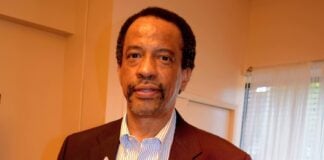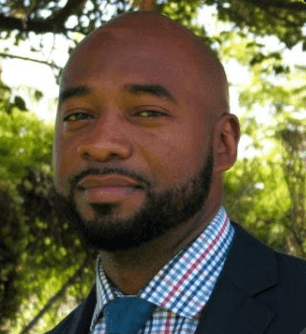
Connecting cultural heritage with financial independence might seem unintuitive at first, but for Giovanni Moss it’s as simple as bringing together aspects of himself. The Bahamas-born, Floridian has followed in his parent’s footsteps and devoted himself to his life’s purpose, altruism.
“I offer a hand up, not a handout,” Moss explains. A rehearsed slogan, but an accurate one. Presently, Moss is the director of strategic partnerships at Tetra Tech, an organization focused on sustainable development and post-disaster support for both American and Caribbean territories. As Moss puts it, today he’s doing what he’s always done, but on a larger scale.
His altruistic path took root while working for the town of Davie for almost 13 years, first as a neighborhood revitalization coordinator where he coordinated community meetings and developed programs and local partnerships for the benefit of residents and local businesses alike. Then, he became Davie’s community development director where he spearheaded initiatives and had to manage the day-to-day operations of various staff and consultants while keeping abreast of the town’s many projects.

This stint, which lasted nine years, led to some of Moss’ proudest accomplishments, including the construction of two boys and girls clubs to allow for a safe and productive space for children to play and learn; spearheading numerous affordable housing initiatives; and setting up a housing trust to keep homes within the community and out of the hands of would-be gentrifiers.
Despite these achievements, Moss’ job at Davie came to an acrimonious end, due to a retaliatory firing after he levied multiple complaints of discrimination against the leadership.
Moss admits to being grateful for not encountering regular racism in his field but says his time at Davie was plagued by microaggressions. Following the termination, Moss brought forward a lawsuit against the town for unjust termination. After a protracted back and forth through the legal system, the termination was struck from his records, and he was paid a compensation fee.

The incident reframed things for Moss and sparked an entrepreneurial spirit within him.
“I didn’t want to have all my eggs in one basket, or have anyone control my destiny,” he explains. He began to notice how the Caribbean diaspora was treated in various cities across the US and started strategizing how to combat it.
His solution returns to empowerment. Moss believes that through programs that put Black, Indigenous, and people of color (BIPOC) people on track to achieve financial independence, they can amass enough influence to rise through the ranks of community organizations, so it’s no longer one Black person in a boardroom of white faces.

Giovanni Moss believes that as more diverse leadership takes root, BIPOC and immigrant communities will flourish as their interests are represented in meaningful ways without substantial opposition and hostility.
Moss’ resume has a remarkable clarity of purpose with, on the surface, one exception; he’s the creator and executive producer of Road Ready TV – a recently launched carnival and travel reality web series that follows a house of carnival enthusiasts learning and participating in carnivals across the diaspora.
The Road Ready TV concept was born from Moss marrying two aspects of himself: the outreach veteran and the island boy who adores carnival. The idea took root after a stay in The Bahamas during carnival season. He makes a point to attend as many Bahamian carnivals as he can, and he could not help but notice the influx of commerce for small business owners and vendors. “It’s the social fabric of the Bahamian economy in a sense, especially on the small business side,” he explains.
Moss observed that carnival organizers have a harder time than most getting their events approved. He chalks some of this up to classic racism – organizational power’s general disdain for any large groups of Black and brown people. On the other hand, he acknowledges the existence of an earnest unease with half-naked carnival-goers day drinking and dancing on public roads.
To this end, Road Ready TV aims to not only promote carnival culture, but to also educate the uninformed. Season one of the show, which takes place in Orlando during its carnival, not only highlights what makes carnival special, but also explores how it intersects with the history of Black people in the area. “Carnival is one of the unifying pastimes for Caribbean people. It represents expression, freedom, culture, and inclusiveness,” Moss explains, noting the foundational values of Caribbean carnival.
For Moss, as carnival becomes more accepted in the US and other non-Caribbean countries, it not only grants cultural freedom to the Caribbean diaspora, but also serves as an additional windfall that can lead to financial independence and more positions of power for Black and brown people in general. Through these positions of power, the Caribbean diaspora is able to further nurture and cultivate cultural festivals. This is the kind of positive feedback loop that Giovanni Moss is determined to foster through every aspect of his multifaceted work-life.