PM Keith Rowley Says Trinidad and Tobago's Economy has Shrunk by 10% Due to COVID
Key Points(5)
- Keith Rowley says the coronavirus (COVID-19) has hit Trinidad and Tobago “hard, shrinking our economy by 10 per cent”.
- In an exclusive interview with the Trinidad Guardian newspaper, Rowley said that the national budget to be presented by Finance Minister Colm Imbert on October 5, “must be presented in the serious scenario of managing an economy downwards without collapsing it”.
- Trinidad and Tobago has 2, 493 positive cases with 1,705 being active.
- The country has recorded 39 deaths since the first case was recorded in mid-March.
- In the interview, Rowley, whose People’s National Movement (PNM) was returned to office following the August 10 general election, said that as an oil and gas producer, production and sale of oil has dropped globally.
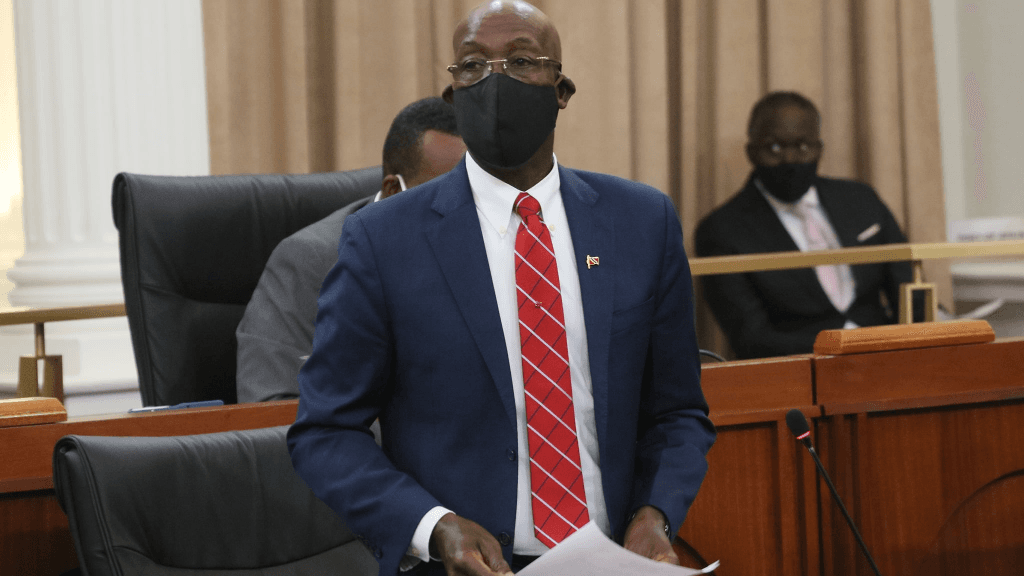
Prime Minister Dr. Keith Rowley says the coronavirus (COVID-19) has hit Trinidad and Tobago “hard, shrinking our economy by 10 per cent”.
In an exclusive interview with the Trinidad Guardian newspaper, Rowley said that the national budget to be presented by Finance Minister Colm Imbert on October 5, “must be presented in the serious scenario of managing an economy downwards without collapsing it”.
Trinidad and Tobago has 2, 493 positive cases with 1,705 being active. The country has recorded 39 deaths since the first case was recorded in mid-March. The country has had to shut down its borders and during the start of the pandemic and lock down its economy as it forced people to remain at home as part of the efforts to curb the spread of the virus that was first detected in China last December and blamed for 898,000 deaths and 27.6 million infections worldwide.
In the interview, Rowley, whose People’s National Movement (PNM) was returned to office following the August 10 general election, said that as an oil and gas producer, production and sale of oil has dropped globally.
“COVID has hit us hard, shrinking our economy by 10 per cent, even as we continue to support our hardest-hit citizens at a big cost,” Rowley said, noting that COVID-19 came at a time when oil and gas prices were already softening and had the effect of further reducing consumption of methanol, urea ammonia, LNG, oil and gas.
“It was a perfect storm. Some plants in Point Lisas have shut down. Just today I was advised by BP Trinidad they are reducing their staff by 25 per cent. All gas and oil markets are experiencing the same thing due to reduced demand. Thousands of planes are on the ground, fewer cars are moving about.”
Rowley said that he was urging the population to pay attention to the “realities of our reduced circumstances” during the budget presentation, adding “we are staving off economic collapse since the country had become accustomed to spending and living off a budget of TT$63 billion (One TT dollar=US$0.16 cents).
“Recently, government revenues dropped to TT$43 billion. We don’t have a strong enough revenue stream to sustain the servicing of the country. We’ve used a lot of debt and short term borrowings to keep it on an even keel.
“Still, the energy sector remains our best bet. We have been strengthening our revenue stream against the odds, including revising contracts which will boost revenue, improving production volumes and providing quality business in the energy sector,” Rowley told the newspaper.
He said also the country should be prepared for the re-introduction of the property tax that had been suspended for several years.
“ The court has given us parameters to meet; we will meet those, collect tax that will not be onerous given the large number of people paying it, and, as part of local government reform, make the funds available to local government bodies to service their communities and the environs of peoples property will be looked after. We will also vigorously minimise tax evasion in general.”
Rowley did not rule out dipping into the Heritage & Stabilisation Fund, saying “that’s what savings are for, a rainy day, and this is a storm. We have not touched the capital yet, which remains the same as five years back”.
In the wide-ranging interview, Rowley also commented on the complaints by the private sector regarding the shortage of foreign exchange.
”To battle COVID economic contraction, the US government printed two trillion dollars and gave it to its people. They don’t have to make the money. They just print it. But for us, every US dollars we spend, we must earn it. So the demand for more foreign exchange is just that, a demand.
“Take medicine. We must pay for all the drugs in foreign exchange. We can’t buy them in TT dollars. We pay for the food in foreign exchange. The question is how much of what we import in a free market do we really need?”
Rowley said the country’s ability to earn significant foreign exchange through agriculture and other means is limited.
“What we can do is reduce our foreign exchange expenditure by producing and consuming as much local food as we can. We have been brought up eating other people’s food. We need to prioritise our a) use of foreign exchange and b) earn more.”
During the interview, Rowley maintained that the sale of the state-owned oil refinery at PETROTRIN to the company owned by the Oilfield Workers Trade Union (OWTU) represented the best offer for the company that had been losing billions of dollars annually over the years.
He said Patriotic Technologies “made us the best offer and was selected (and) we are currently working out contractual arrangements on which the outcome will depend. They are close, but it’s not finalised.
“Last August, a thorough review of PETROTRIN revealed a US$850 million debt. We had to either pay the debt or refinance it and couldn’t do so without severe financial consequences to the Treasury. “Restructuring allowed us to create the Heritage Petroleum Company Ltd., which is servicing that debt without a government guarantee, paying the taxes to the country and making a profit of over a billion dollars. The downside was we had to close the refinery. The upside to that was we saved the national financial economy,” Rowley told the Trinidad Guardian newspaper.
CMC