Jamaica's Minimum Wage Increase Described as Mere Drop In The Bucket
Key Points(5)
- The minimum wage for security guards will move from J$9,700 to J$10,500 per 40-hour workweek.</p> <p style="text-align: justify;">The increase comes in the wake of inflation reaching a new high of 9.7 percent for the annual period ending January.
- The minimum wage was last increased on Emancipation Day, August 1, 2018, by 12.9 percent.</p> <p style="text-align: justify;">The announcement also comes only a few days after the Bank of Jamaica warned to expect price increases due to inflation.
- In recent weeks, Jamaicans have seen a rise in gas and food prices.</p> <p style="text-align: justify;">Following the announcement, many Jamaicans took to social media to criticize the government for an "embarrassing" increase in wages.</p> <p style="text-align: justify;">"Do we consider impact?
- No one is saying leave it as is.
- We're asking that it be raised to take the poor off the floor.
When the Jamaican government announced a near 30 percent increase in the national minimum wage on Tuesday, little did they know there would be swift backlash from the public.
The increase is seen as a mere drop in the bucket, and already members of the diaspora are being looked to for continued remittances to assist their relatives.
Countries worldwide are being affected by the ravages of inflation, and while some may welcome a near 30 percent increase in wages, it's being described as embarrassing by others. With the exchange rate hovering around J$155 to US$1, the minimum wage is now USD$58 per week.
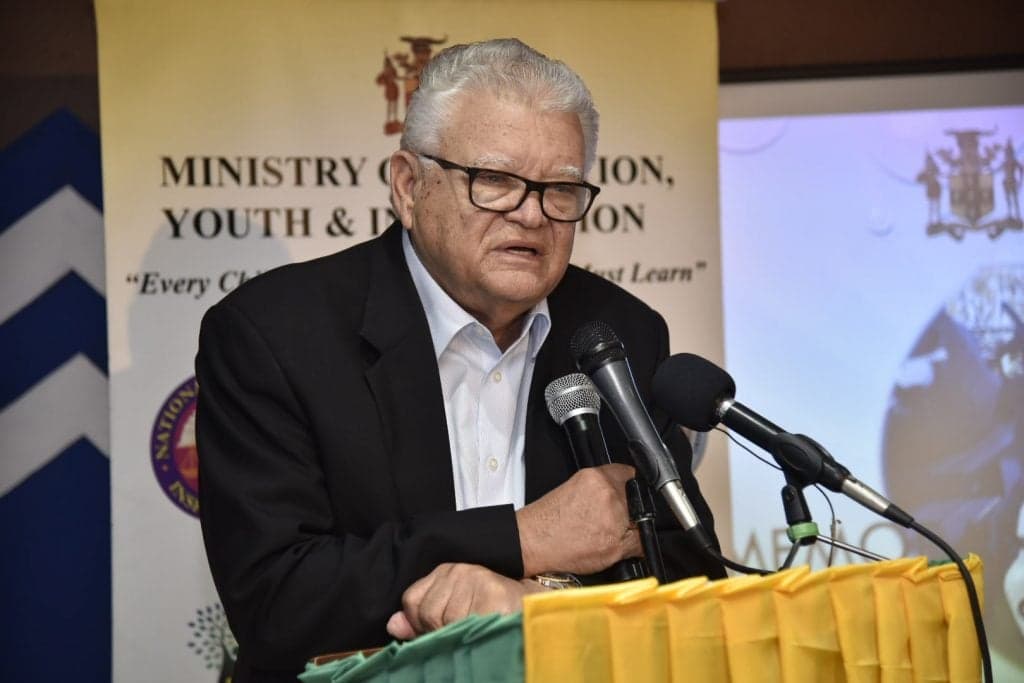
Minister of Labour Karl Samuda announced that effective April 1, 2022, Jamaica's minimum wage would move from J$7,000 per 40-hour workweek to $9,000.
"This is the minimum wage, and there are many people who use this as a guide, but it does not constitute the wage that you are expected to pay. If you can do more and you help, as many do, those who work for you that fall into these categories, then by all means; certainly, effort should be made to do that," Samuda told a news conference.
Minister Samuda also announced that security guards would see increases in their minimum wage and other allowances. The minimum wage for security guards will move from J$9,700 to J$10,500 per 40-hour workweek.
The increase comes in the wake of inflation reaching a new high of 9.7 percent for the annual period ending January. The minimum wage was last increased on Emancipation Day, August 1, 2018, by 12.9 percent.
The announcement also comes only a few days after the Bank of Jamaica warned to expect price increases due to inflation. In recent weeks, Jamaicans have seen a rise in gas and food prices.
Following the announcement, many Jamaicans took to social media to criticize the government for an "embarrassing" increase in wages.
"Do we consider impact? Value? Standard of living? No one is saying leave it as is. We're asking that it be raised to take the poor off the floor. This is the FLOOR. Your week's pay, after 40 hours at $57. Worse with the weight of all other increases for consumers?" wrote popular media personality Krystal Tomlinson via Twitter.
"We have no pride, no ambition, no damn shame. Over 60 years of independence from Britain and 180+ years since emancipation and look at us. Our people still enslaved," said popular entrepreneur Yaneek Page.
Average Jamaican citizens also shared similar sentiments.
"Jamaica is so embarrassing. Minimum wage is presently at a little over 3000 USD per annum. You read that right, per annum," wrote one social media user.
Another said, "this is ridiculous and an insult. How can anyone survive on $9000 a week? That's food for a single person for one-two weeks, and that's stretching it. Imagine citizens with entire families. It really doesn't spark hope and possibility for the people making it."
Responding to the massive backlash on social media, Minister without Portfolio in the Office of the Prime Minister with responsibility for Information, Robert Morgan, sought to clarify the government's position on the wage increase.
"The government would love to implement a higher minimum wage, but the facts of our economic reality are a constraint. Every movement in wages impacts inflation and employment. It's an uneasy balance between what we would like to do and what the market can afford," Morgan said in a statement.
"The minimum wage is not an indicator of what employers should pay but rather a floor they should not go below. If they can pay more, they should, but they are not allowed to go below," he added.
With Jamaica having one of the lowest minimum wages in the Caribbean (comparable to USD), Chairman of the Minimum Wage Advisory Commission, Dr. Ronald Robinson, says a liveable wage is being considered for minimum wage earners.
"One of the things that we have sought to do in this particular report was to think of it not just as a wage increase or a dollar increase but to also add several other aspects to sort of give a package. And I think that will be dealt with in the long-term basis, but it's really to try and to move the persons earning at this level to almost a point of being able to live, and I think that's where we're headed," he said.