Jamaican high school team heads to Mexico City for Robotics Olympics 2018
Key Points(5)
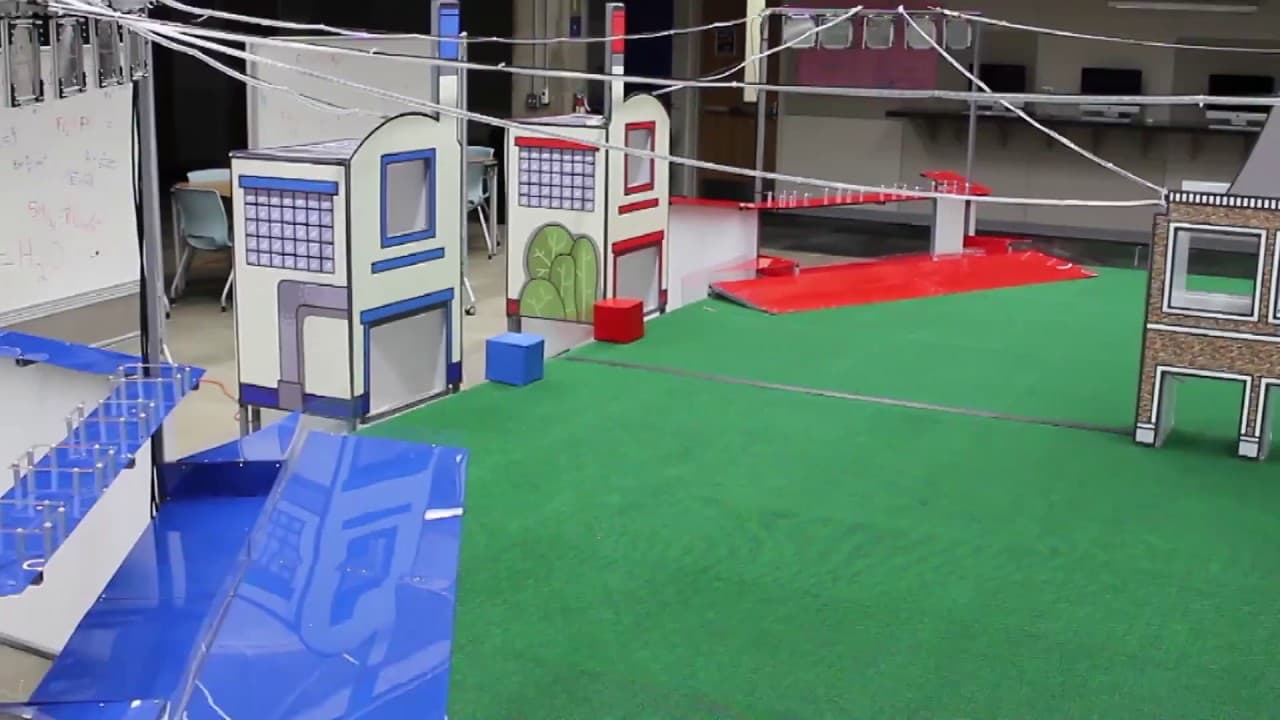
- <span style="font-weight: 400;">In just under two weeks, a team of high school students with coaches and a chaperone in tow will be competing with their counterparts from over 100 countries at the </span><b><i>FIRST</i></b><span style="font-weight: 400;"> Global Challenge (FGC) in Mexico City.
- (UJAA), which represents the 53 member alumni associations in the USA.
- </span><span style="font-weight: 400;">UJAA is responsible for the organization, coordination, project management, and interfacing with </span><i><span style="font-weight: 400;">First</span></i><span style="font-weight: 400;"> Global.
- In the inaugural year last summer in Washington D.C., Team Jamaica placed 43</span><span style="font-weight: 400;">rd</span><span style="font-weight: 400;"> among over 160 teams.
- In this its second year, </span><b><i>FIRST</i></b> <span style="font-weight: 400;">Global has once again invited one team from every nation to participate in an event that builds bridges with high school students of different backgrounds, languages, religions, and customs.
In just under two weeks, a team of high school students with coaches and a chaperone in tow will be competing with their counterparts from over 100 countries at the FIRST Global Challenge (FGC) in Mexico City.
The team from Calabar, Immaculate, Jamaica College and Kingston College arrives in the Mexican capital city on 13th August for the competition at the Mexico City Arena.
Sponsors
Team Jamaica Robotics’ participation is a project adopted and sponsored by the US-based Union of Jamaican Alumni Associations, Inc. (UJAA), which represents the 53 member alumni associations in the USA. UJAA is responsible for the organization, coordination, project management, and interfacing with First Global. Additionally, Jamaica’s Ministry of Education, Youth and Information has provided substantial resources to assist with travel and housing.
Coached by JC Old Boys
Coached by veteran Jamaica College Old Boys, the coed team trains at JC’s Robotics lab. In the inaugural year last summer in Washington D.C., Team Jamaica placed 43rd among over 160 teams. Coach Gavin Samuels is confident that the team will be even more successful this summer.
FIRST Global Challenge is an annual international robotics challenge, whose purpose is to ignite a passion for science, technology, engineering, and mathematics (STEM) among more than two billion young people worldwide. In this its second year, FIRST Global has once again invited one team from every nation to participate in an event that builds bridges with high school students of different backgrounds, languages, religions, and customs. By bringing these future STEM leaders together in an engaging and collaborative competition that drives home the importance, excitement, and applicability of STEM education, FIRST Global inspires students to learn the skills they will need to make the discoveries their parents and grandparents would consider miracles, impossibilities, or just plain science fiction.
Reflecting on last year’s competition, UJAA President Lesleyann Samuel, herself an engineer, shares an added benefit of this competition: “Aside from not knowing each other, they had language and cultural challenges, and in order to win, the students found ways to collaborate and cooperate for the greater good, connecting technology with terra firma.
“This experience can be life-changing, as we expose our children not only to the technical aspects of the challenge,” she said, “but also to the realities of what it takes to solve our global challenges. We cannot teach this in a classroom.”


.JPG&w=3840&q=75)