Jamaican-American Susan Collins Becomes the First Black Woman To Lead A US Federal Bank
Key Points(5)
- <p style="text-align: justify;"><span style="font-weight: 400;">When Jamaican-American Economist Dr.
- </span></p> <p style="text-align: justify;"><span style="font-weight: 400;">"It is an honor and an inspiration to serve as the Boston Fed's next president," Susan Collins said in the press release.
- </span></p> <p style="text-align: justify;"><span style="font-weight: 400;">"Throughout my career, I have been driven by a commitment to leveraging research, education, and public service to improve lives.
- I am delighted with the opportunity to lead such a dynamic organization, engage with its talented staff, and work with its constituents – to understand their economic challenges and help explain the work of the Fed in the economy.
- "Why were living standards so different?
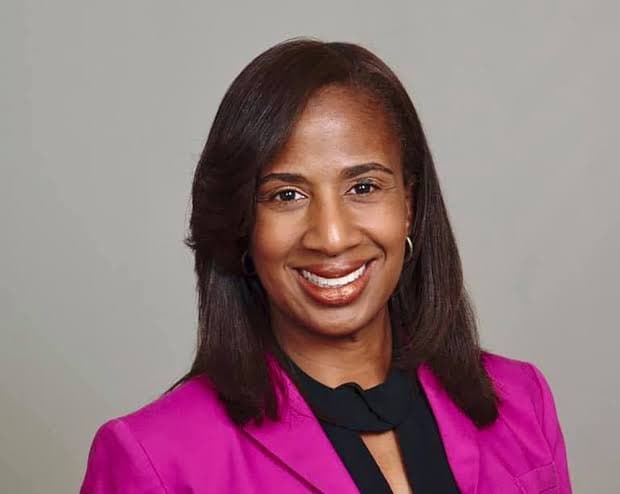
When Jamaican-American Economist Dr. Susan Collins assumes her new position as President and CEO of The Federal Reserve Bank of Boston in July, she will become the first Black woman to lead a Federal Reserve Bank in the United States.
The federal bank announced this on February 8.
"It is an honor and an inspiration to serve as the Boston Fed's next president," Susan Collins said in the press release.
"Throughout my career, I have been driven by a commitment to leveraging research, education, and public service to improve lives. I look forward to helping the Bank and System pursue the Fed's dual mandate from Congress – achieving price stability and maximum employment."
She continued: "I am also inspired by the portfolio of important and innovative work underway at the Boston Fed. I am delighted with the opportunity to lead such a dynamic organization, engage with its talented staff, and work with its constituents – to understand their economic challenges and help explain the work of the Fed in the economy. It will also be a pleasure to return to Greater Boston and New England."
In congratulating Collins on her appointment, Aaron Klein, senior fellow in economic studies at the Brookings Institution, said, "It is a remarkable advancement when you consider that America had a Black president before any of the 12 regional banks had a Black president. Hopefully, Dr. Collins will bring a fresh perspective to the Fed, which could benefit from new thinking."
In her new position, Collins will oversee the Boston Fed's monetary policy and economic research, its operational role in the US financial payments system, bank supervision, and community development, according to a press release.
63-year-old Susan Collins grew up in New York with both parents - a social anthropologist father who worked at the United Nations and a university librarian mother who had migrated from Kingston. She became an American citizen in 1997.
According to the American Economics Association (AEA), on whose executive committee Collins served, she came to economics out of curiosity, from observing the poverty in Jamaica which she frequently visited with her parents to see relatives.
"Those summer visits raised all kinds of questions," she told AEA newsletter. "Why were living standards so different? Even wealthier people in Jamaica suffered from water shut-offs or other hardships…
"It was clear to me very early on that contexts matter. If you grow up with these questions, it's no surprise to become an international economist," Collins said, adding that her parents encouraged her to follow her curiosity.
"Jamaica has a tradition of really strong women, and so high-powered careers were supported," Collins, who identifies as a Jamaican-American, told the newsletter.
She graduated summa cum laude from Harvard University in 1980 and earned her Ph.D. in economics at the Massachusetts Institute of Technology (MIT) in 1984. She has held various teaching positions at Harvard, Georgetown University, and the University of Michigan and served on the President's Council of Economic Advisers from 1989 to 1990.
Until her appointment takes effect on July 1, Collins will continue to serve as provost and executive vice-president for academic affairs at the University of Michigan, where she has been since 2020.
She is married with two adult children. When asked by an interviewer where were her favorite mountain and beach, she said Jamaica, boasting that there were mountains that met the beach on her Caribbean island.