The Economic Commission for Latin America and the Caribbean (ECLAC) and the International Labour Organization (ILO) says that while regional economies grew 6.6 percent last year, the recovery in employment has been “slow, partial and uneven”.
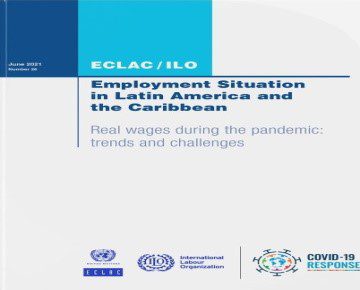
In a joint report entitled “Employment Situation in Latin America and the Caribbean, real wages during the pandemic: trends and challenges,” the two United Nations agencies underline that the recovery of employment to pre- coronavirus (COVID-19) pandemic levels lags in comparison with the recovery in the countries’ economic activity.
The report notes that by the end of 2021, most countries had regained their pre-crisis gross domestic product (GDP) levels, while employment levels remained lower in many cases.

“As seen in other crisis situations, the dynamics between employment and economic activity play a critical role in implementing better and more timely labor policies, which means that possible lags in employment suggest the need to strengthen the instruments to facilitate people’s reincorporation into the labor market.”
The report said after the number of employed in the region suffered a historic contraction in 2020 (8.2 percent), there was a significant rebound in that indicator in 2021, notching 6.8 percent growth in the fourth quarter of that year versus the same period of 2020.
“However, despite the considerable increase in employment throughout the year, the number of employed people in the region did not return to the level seen at the end of 2019 until the fourth quarter of 2021.”
The ECLAC and ILO report states the labor gaps between men and women widened in 2021, adding that the labor market recovery has also been unequal, “to the detriment of women.
“Although employment and labor force participation has improved for both men and women, the former have benefited more than the latter. The crisis prompted by the coronavirus disease (COVID-19) pandemic affected female employment more significantly, marking a setback equivalent to more than 18 years in the levels of women’s labor force participation.
“The slow recovery in the activities that account for a larger share of female employment and the larger burden that women shoulder in caring for the sick, children, and older people help explain this notable difference in the dynamics of total participation rates,” it added.

The report noted that the health crisis stemming from COVID-19 has had “important effects” on wage trends in the region. It said the impact of the recent evolution of inflation has been most clearly reflected in real minimum wages, “the purchasing power of which declined in 2021”.
In addition, the average real wages in the region in 2021 were 6.8 percent below pre-pandemic levels, “lagging more than economic activity and employment vis-à-vis that marker,” warning this could worsen in 2022 when even steeper rises in inflation are expected.
“It is vital to deploy institutional instruments, such as collective bargaining and minimum wages, to enable discussion of wage adjustments at the level of productive units and branches of activity, to meet the needs of both workers and companies,” says Mario Cimoli, ECLAC’s acting executive secretary, and Claudia Coenjaerts, the ILO’s regional director for Latin America and the Caribbean, in the document’s foreword.
They wrote that policies to facilitate the insertion of wage earners – such as hiring subsidies – that are focused on the most vulnerable groups will not only contribute to a faster recovery in their employment levels but will also “prevent wage conditions from becoming more precarious than before the pandemic.”
According to the ECLAC and ILO report, in 2022, the pace of job creation is expected to decelerate, adding that “it is foreseen that progress in the vaccination process, fewer restrictions on movement, and the reopening of schools will fuel a recovery in participation levels, especially among women.
CMC/