
Every company needs several departments to operate together, yet silos often get in the way. Marketing launches campaigns without knowing what’s going on with sales, operations get ready without knowing what finance’s budget priorities are, and HR makes programs that aren’t tied to company goals. These silos don’t just slow down projects; they also cause duplication, delays, and anger.
Modern project management tools connect different departments. Instead of spreading data and tasks out over many apps, unified platforms like Lark bring together communication, information, and action. Because departments work together instead of alone, the consequence is not only smoother collaboration but also better results.
Lark Base: Creating shared visibility across teams
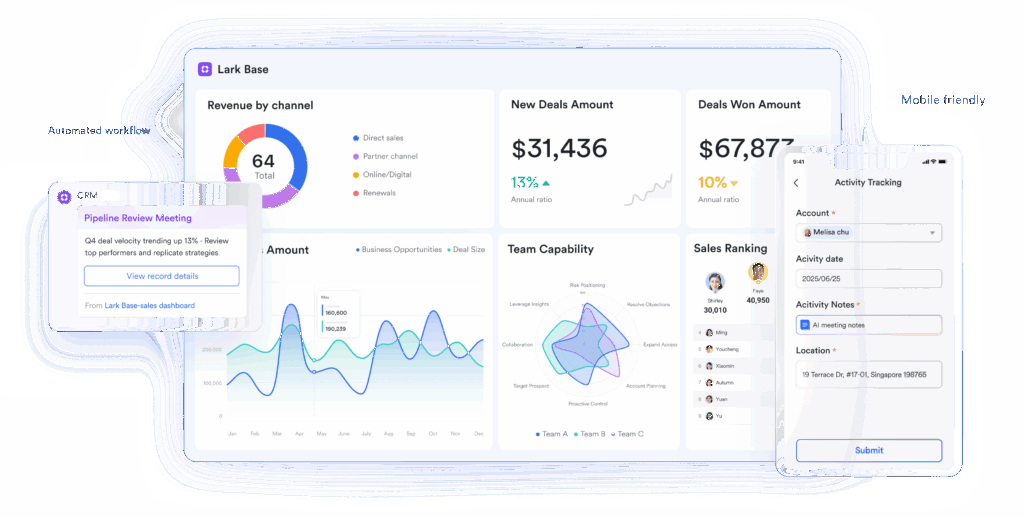
Making sure that all departments can see the same information is the first step in breaking down silos. Lark Base gives you this base by bringing all of your projects and obligations together in one flexible hub.

With Base’s automations, users can easily connect client opportunities directly to delivery dates and get notified every time the status updates. In kanban view, marketing plans campaigns, and in timeline view, operations manage supply chains. Because everyone uses the same system, updates go right away to all departments.
With these capabilities, Base helps people to build up a database of their project, an information hub for their promotion, or a CRM app for sales. Also, it stops silos from forming. Teams don’t work on separate but parallel tracks anymore; they recognize where their duties intersect. The organization works together as one, not as distinct groups trying to get attention.
Lark Sheets: Turning data into a shared resource
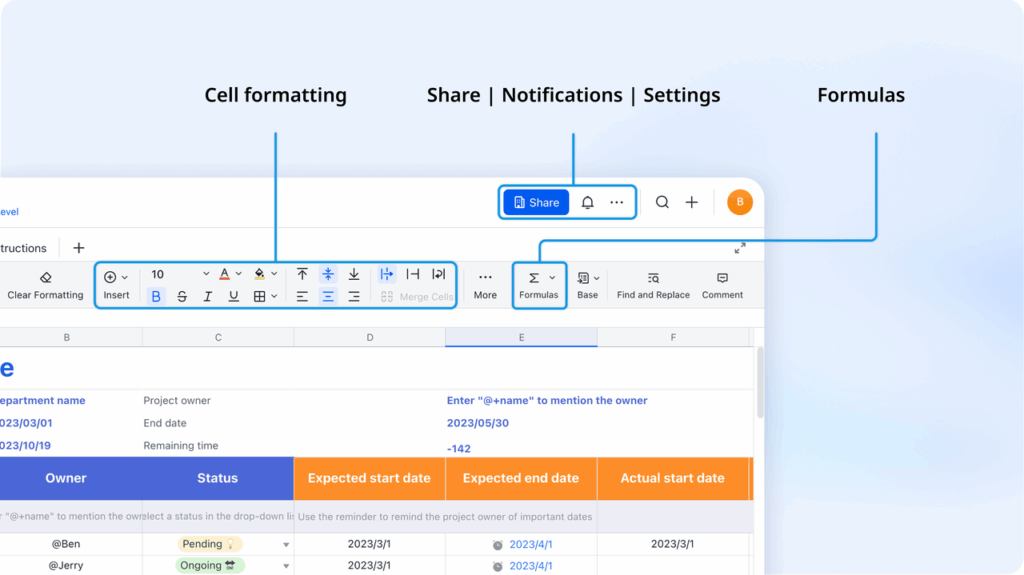
Data is one of the most common reasons for people to act in a compartmentalized way. Finance keeps track of forecasts in one system, marketing keeps track of performance in another, and operations uses its own spreadsheets. Instead of acting on these numbers, teams spend hours reconciling them.
Lark Sheets makes data collaborative, which cuts down on this redundancy. Teams can work on the same document at the same time by embedding Sheets into Docs, Base, or Wiki pages. A financial projection can quickly change a marketing budget or an operations plan, making sure that all departments are using the same data.
Sheets gets rid of the silos that happen when teams keep their own copies of data by considering it as a common resource. Departments no longer fight over correctness; they all know the same thing and act with confidence.
Lark Wiki: Preserving and sharing knowledge across silos
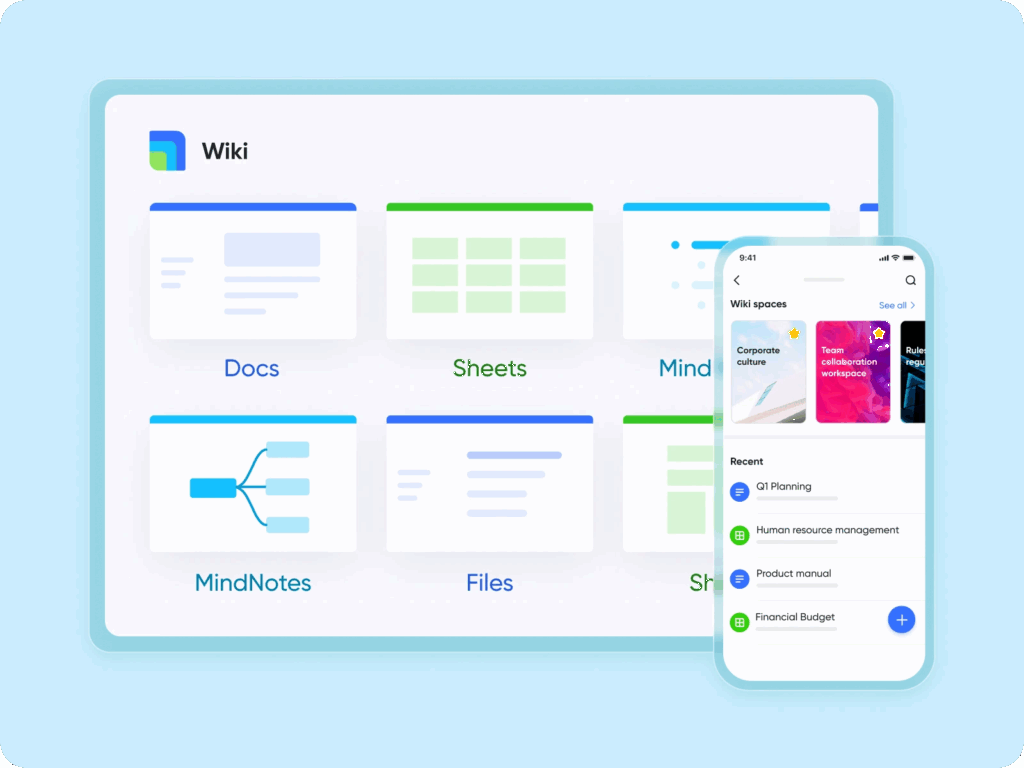
Departments often keep knowledge to themselves. HR might keep onboarding manuals to themselves, while IT might only maintain processes on internal drives. This makes it such that useful information doesn’t get to the teams that need it the most.
Lark Wiki fixes this by being an open, organized place for everyone in the company to share information. Departments keep track of processes, playbooks, and best practices in one place that everyone can get to. Updates are applied right away throughout the company, so no one has to deal with old information.
Wiki makes information clear so that people don’t keep it to themselves. People in different departments have a common understanding, which cuts down on misunderstandings and builds trust.
Lark Tasks: Coordinating accountability across functions
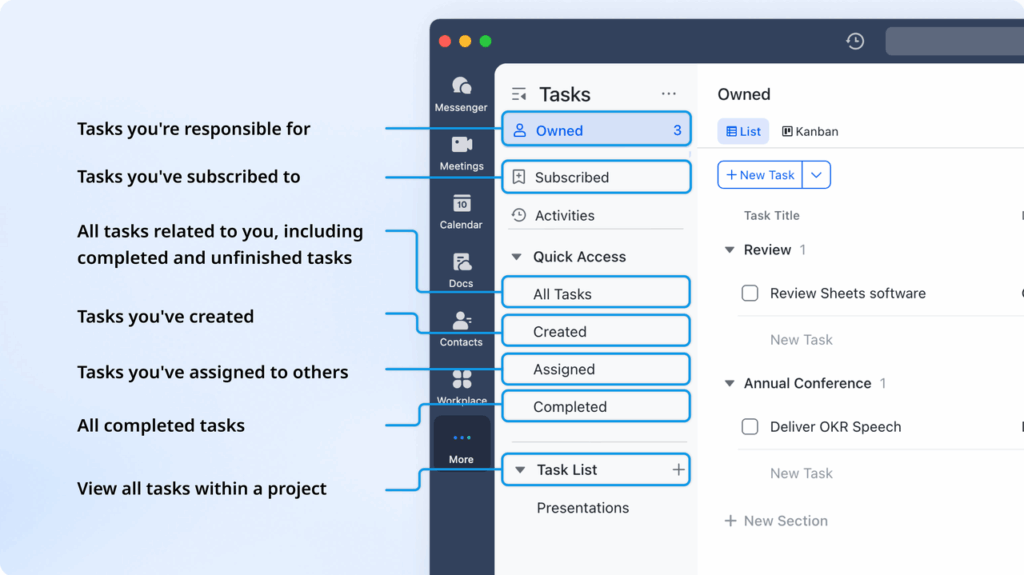
Even when departments agree on goals, they don’t always hold each other accountable. A project needs input from more than one team, but it’s not apparent who is in charge of handing things over. Lark Tasks lowers this risk by making people responsible for their work in cross-functional processes.
Managers provide employees assignments with due dates that are shown on their personal dashboards and on project views for leaders. Because Tasks are linked directly to Base and OKRs, responsibilities are linked to strategic goals instead of being separate. This makes sure that departments stay on the same page about what needs to be done first.
Tasks also help an automated workflow by providing reminders and pushing overdue work up the chain without having to follow up manually. This technology makes sure that people are still responsible for their work even when it crosses departmental lines, which keeps projects on schedule.
Lark Meetings: Aligning departments in real time
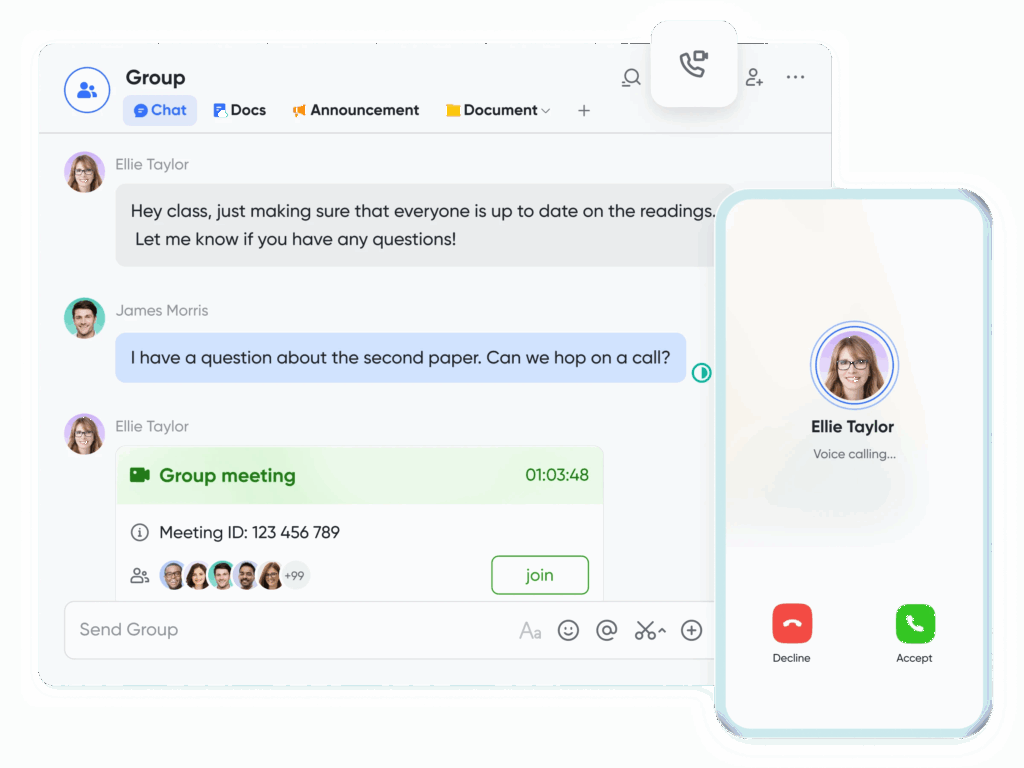
Silos regularly show up at meetings. Departments bring different facts to the table, and negotiations go in circles instead of getting things done. Lark Meetings changes this by making cooperation a part of the meeting itself.
Teams can join calls from Calendar, work on Docs together during meetings, and give out Tasks before they go. For example, a strategy conference with people from different departments doesn’t end with ambiguous commitments but with clear duties that everyone can see. Recordings and transcripts keep everyone on the same page, even those who can’t make it.
Meetings go from being a way to show walled behavior to being a way for people from different departments to work together. Not only do departments leave the table with information, but they also work together to carry it out.
Lark Mail: Connecting external and internal collaboration
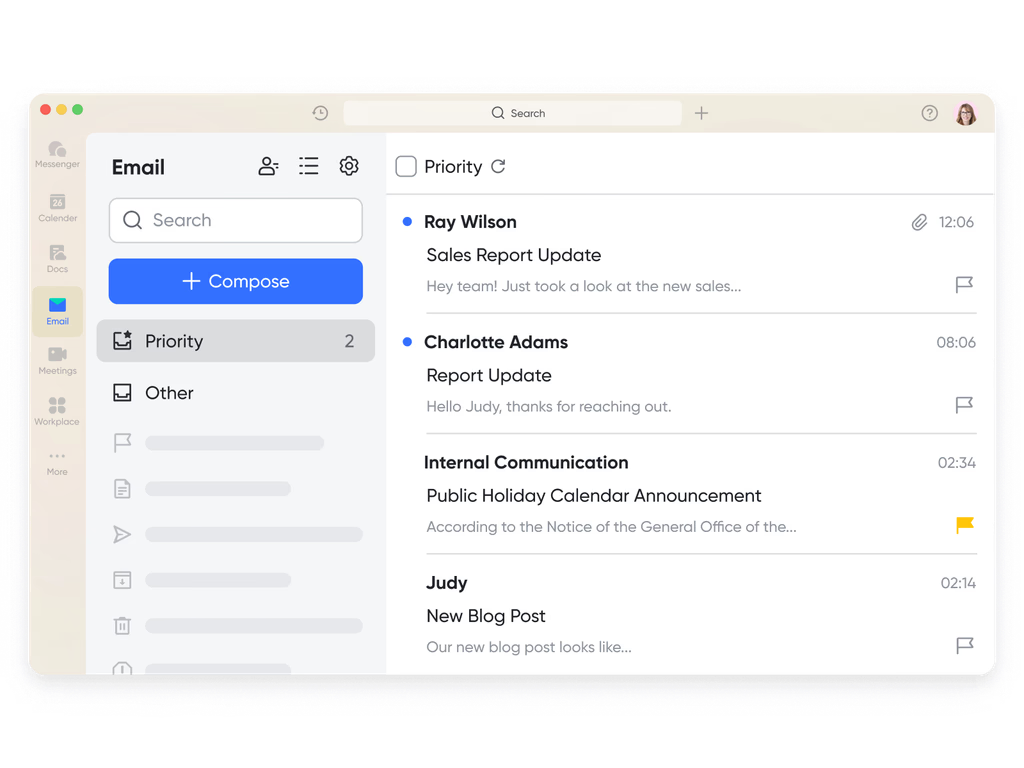
If customer updates only go to one person’s inbox, it’s easy for external communication to develop silos. Sales might send an email to confirm a deal, but operations or finance won’t receive it until it’s too late. This lack of openness makes things more dangerous and delays down delivery.
Lark Mail puts email in the same place where projects are maintained. A client’s confirmation can go straight to Base or start a Task for follow-up. Attachments are linked to the right records so they don’t get lost in personal inboxes.
Mail makes sure that updates that are sent to clients reach everyone in the company by integrating external and internal communication. Departments no longer work alone; everyone is on the same page and up to date.
Conclusion
Silos slow down businesses by keeping information from getting to the right people, making people do the same work twice, and breaking up teams. Unified workflows change this by making every department more visible, accountable, and aligned. Lark shows how networked systems fill up the gaps by replacing silos with teamwork.
Base makes it easy to see all of a project’s parts, Sheets make data available to everyone, Wiki keeps and shares knowledge, Tasks make sure that everyone is responsible for their work, Meetings keep teams on the same page in real time, and Mail connects updates from outside the company with work done within. These characteristics all work together to highlight why connected workflows don’t only do better than silos; they get rid of them.
The lesson is obvious for businesses that want to grow: silos are expensive, but they don’t have to happen. When departments use unified platforms, they don’t work as separate groups. Instead, they work together to achieve a common goal.