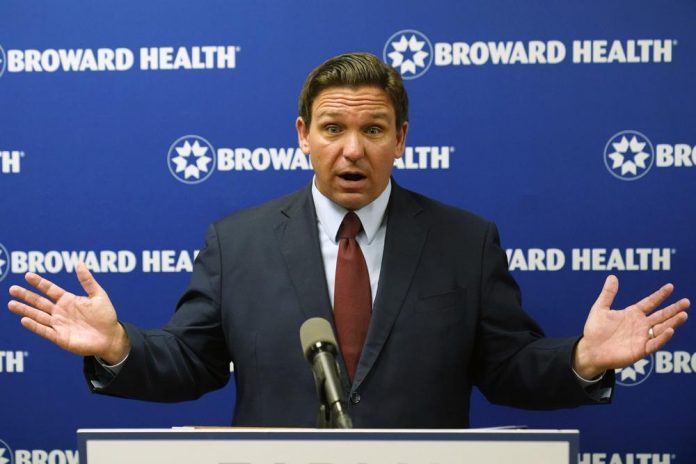
Florida Governor Ron DeSantis has signed Senate Bill 7034 furthering Florida’s support for foster families. Among its provisions, Senate Bill 7034 raises monthly payments for relative and nonrelative caregivers, increases the monthly subsidy for childcare, and expands postsecondary education waivers for foster children. Through historic support, since 2019 Florida has added more than 4,000 foster families across the state.

“My administration is committed to supporting our most vulnerable children and Florida has already added 4,000 more licensed foster parents than we had in 2019,” said Governor DeSantis. “Not only does this bill allow us to expand our support for foster parents, but it also creates more opportunities for foster children. Including our work on early literacy and fatherhood, Florida is a national leader in setting young children up for success.”
“There is no more important institution in our society than the family,” said Lieutenant Governor Jeanette Nuñez. “By signing this bill, we are placing our foster children on a path to excellence, in which they can achieve their God-given potential. Our administration has made it a priority to ensure that children can thrive in every aspect of their lives, and today is yet another amazing win for children in the Sunshine State.”

“Improving the level of benefits for family members and foster parents could mean all the difference when these folks are considering whether they can take in a vulnerable child,” said Senate President Wilton Simpson. “The earlier in life we can give children a safe, permanent home, the better opportunities those children will have for the rest of their lives. Government is a horrible parent, but we can, and we will continue to make foster children a priority by identifying and supporting caring families for them. Governor DeSantis, our First Lady, and Speaker Sprowls are amazing leaders in this effort, and I am grateful for their support of pro-life policy reforms within our child welfare system.”
Joined by foster families and legislative leaders, Governor DeSantis signed SB 7034 at Miami-Dade College, which is providing innovative support for children who have previously been in foster care, including coaches to help them transition to independent life.
“Today is another bright day at Miami-Dade College, in our community and in our state as we witness the signing of this bill that will provide expanded opportunities to the most vulnerable youth in our community,” said Dr. Malou Harrison, Provost, Miami Dade College.
“I am so thankful for what the governor and everyone else are doing for our children,” said Carlene Lawson, a foster parent. “I am a proud parent to be in this system and I am so grateful for what I do to give back and help the system. Thank you for what you are doing for the children, and I am so grateful for this law to be passed for them.”
“I aged out of foster care in Miami-Dade County, and I took a tuition waiver. It was my first experience in college, and I always say it was the foundation to my success” said Demarco Mott, a former foster youth. “I am now serving on the board of directors of Educate Tomorrow. We hear the stories; we get the calls and we needed this. It is definitely exciting to know that we can do a lot more. Policymakers are listening and providing more money and now we can go ahead and do more good work. When we can invest in our children now, we get that reward in our society later.”
The bill amends section 39.5085, Florida Statutes, by providing an increase in the monthly payment for relative and nonrelative caregivers to be equal to the room and board rate for a licensed foster home. This change is important because often, placing children with relatives or family friends is the best outcome to ensure their future success. Previously, relative and nonrelative caregivers received $250-$320 less per month than licensed foster homes.

Additionally, the bill creates a $200 per month child-care subsidy for any foster parent and relative or nonrelative who has a child from birth to school age placed in their home. This program will ensure every foster child has access to early learning programs and will help foster parents afford to enroll these children in childcare.
The bill also amends section 1009.25, Florida Statutes, to reorganize and expand the population of students eligible for the tuition and fee waiver for children who have interacted with the dependency system. The program provides for exemptions from the payment of tuition and fees at workforce education programs, Florida College System institutions or state universities. Previously, exemptions were limited to children who were in foster care as they turned 18. Now, tuition and fee waivers will be available for children who were adopted out of the foster care system or spent a considerable time in foster care in their teenage years.