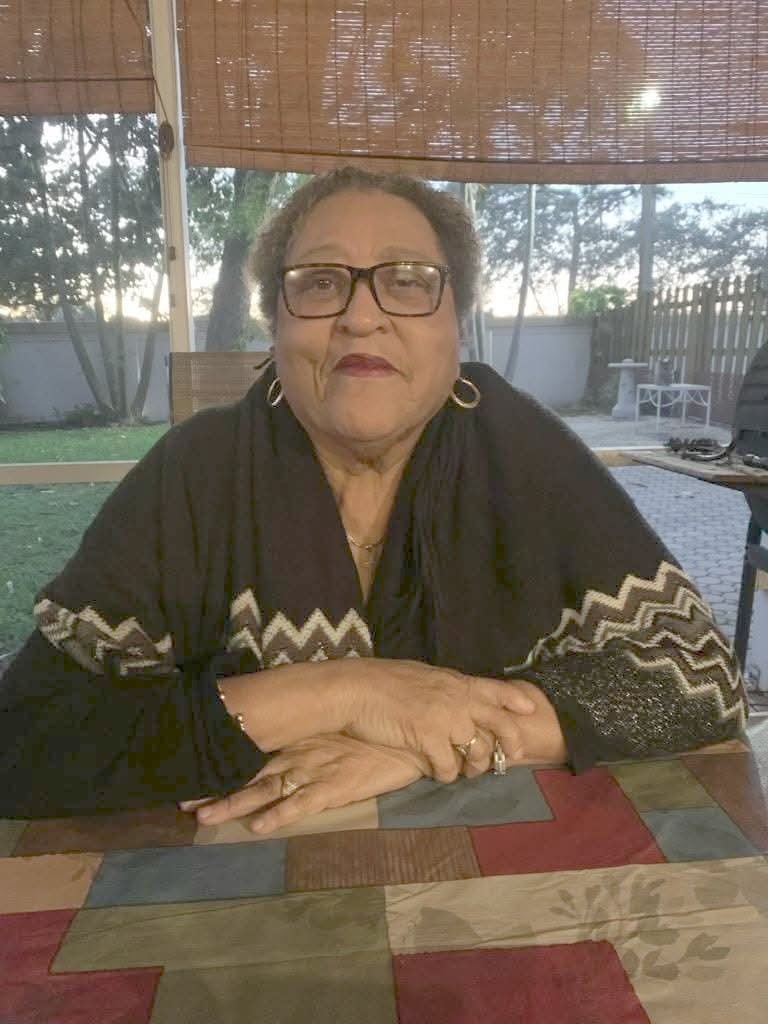
At 80 years young, retired theatre and film actress Pauline Stone Myrie still has the gift of gab. She can command attention, stirring debate about most things Jamaican. During a recent conversation with Caribbean National Weekly, the Jamaica-born, South Florida resident stepped directly into two of Jamaica’s most explosive cultural and political battles: whether Jamaican patois belongs in Parliament and whether traditional Jamaican cultural forms like Hill & Gully are being abandoned by a younger generation chasing modern dancehall clout and doing it for the “likes.”
“Patois is the language of the people of Jamaica,” Pauline declared emphatically. “While there are more people being educated and certainly learning standard English, everybody knows and speaks patois.”
The comments come amid national uproar following a dramatic confrontation inside Jamaica’s Parliament this month, when first-term Opposition MP Nekeisha Burchell opened part of her sectoral debate presentation using the Jamaican vernacular. House Speaker Juliet Holness immediately interrupted her and warned that her speaking time would be reduced if she continued speaking in “patwa.” Government MPs backed the ruling, with some dismissively referring to patois as “broken English.” The clash ignited fierce debate across Jamaica and throughout the diaspora over language, class, identity, and the lingering issue of colonialism.

“The very parliamentarians who are insisting that standard English be spoken in Parliament conduct political campaigning in patois,” Stone-Myrie said sharply. “If they were to campaign in standard English alone, they would be accused of being too ‘speaky-spokey’ and even quite haughty.” For Pauline, the issue goes far beyond politics.
She took it to another level, saying, “I believe that patois should be taught in schools and recognized as a legitimate language with structure, history, and academic value. Students should learn that it is not something to be ashamed of, but actually celebrated as our own,” she reiterated.
Pauline also weighed in on the other hot-button issue dividing Jamaicans — discussions about traditional Jamaican cultural expression and the direction of some of today’s dancehall music.
The public debate resurfaced recently about the old “Hill & Gully Rider” music that once dominated Jamaican entertainment, rural life, folklore, and social satire. Some younger Jamaicans dismiss the style as outdated, while older folks argue it represents an authentic Jamaican identity being tossed aside for explicit lyrics and commercialized dancehall culture. Pauline sees both sides — but insists Jamaica must never lose sight of its roots.
“I grew up with the original Hill & Gully rhythm, which was recognized as part of the cultural rendition of our music,” she explained.
While acknowledging that younger entertainers naturally want to modernize Jamaican music, she warned against forgetting the cultural foundation that shaped generations.
“Nothing will change the original intent of the Hill & Gully music,” she reminded. “Younger people will always want to update and upgrade it as they see fit.”
For Pauline, preserving Jamaican culture does not mean freezing it in time. It means understanding where it came from before trying to reinvent it.
Few Jamaicans are better qualified to speak on cultural preservation than Pauline Stone Myrie, a protégée of Jamaica’s cultural icon Miss Lou, also known as Louise Bennett-Coverley. In 1967, her life changed forever when she was invited by Greta Fowler, then chairman of the Little Theatre Movement (LTM), to understudy Miss Lou. Stone-Myrie has since appeared in nine Little Theatre Movement pantomimes and shared the stage with Miss Lou and Ranny Williams.
“I did feel a little intimidated as a young country girl to be offered this challenge,” Pauline admitted. But Miss Lou immediately embraced her.
“She welcomed me with open arms and lived up to her promise to teach me everything that I needed to know in that format of theatre.”
That mentorship evolved into a lifelong friendship.
“She not only became my mentor but a great friend — a friendship which lasted until her death,” Pauline recalled.
Playing opposite Ranny Williams in multiple pantomimes also became a defining part of her artistic development.
“The lessons I learnt from both of these wonderful performers was about being selfless and willing to share their talent with younger performers.”
Today, Pauline believes both Miss Lou and “Mas Ran” would be proud that Jamaicans are now openly debating cultural preservation, language, and identity.
“They would celebrate the progress and would be quite pleased that there are now cultural debates about preserving Jamaican traditions.”
Long before today’s debates over literacy, language, and identity, Pauline was already helping Jamaicans confront those issues through theatre and film. One of her earliest productions nearly 60 years ago was Life with the Littles, a Jamaica Information Service film focused on widespread illiteracy in Jamaica and the push to introduce the JAMAL adult literacy programme.
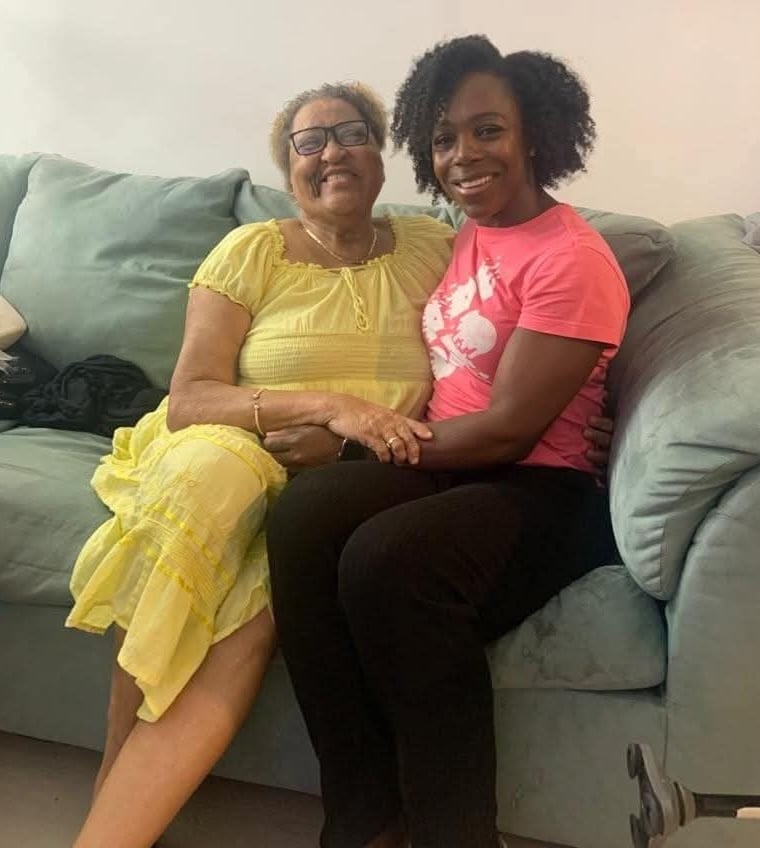
The role proved prophetic. Pauline would later become one of Jamaica’s most recognizable theatre figures. Her film career also flourished with appearances in the Oliver at Large series, Going to Extremes, which was shown on primetime U.S. television, and three major local films — The Lunatic, Cool Runnings, and Dancehall Queen.
After a remarkable career in the arts, travel, culture, and public life, Stone Myrie was asked what stood out as her single most unforgettable life experience — a moment that still gives her goosebumps.
“The defining memory was the moment when I saw myself in the movie Cool Runnings in a crowded New York theatre,” she shared.
Born in Kingston but raised in Montego Bay, Pauline remembers growing up in a different Jamaica.
“In my day, there was hardly any crime, and whether you were rich or poor, you were considered a valuable community member.”
She credits those early experiences with shaping her values and artistic instincts.
“My early experiences fashioned my choices and loyalties to this day,” she shared.
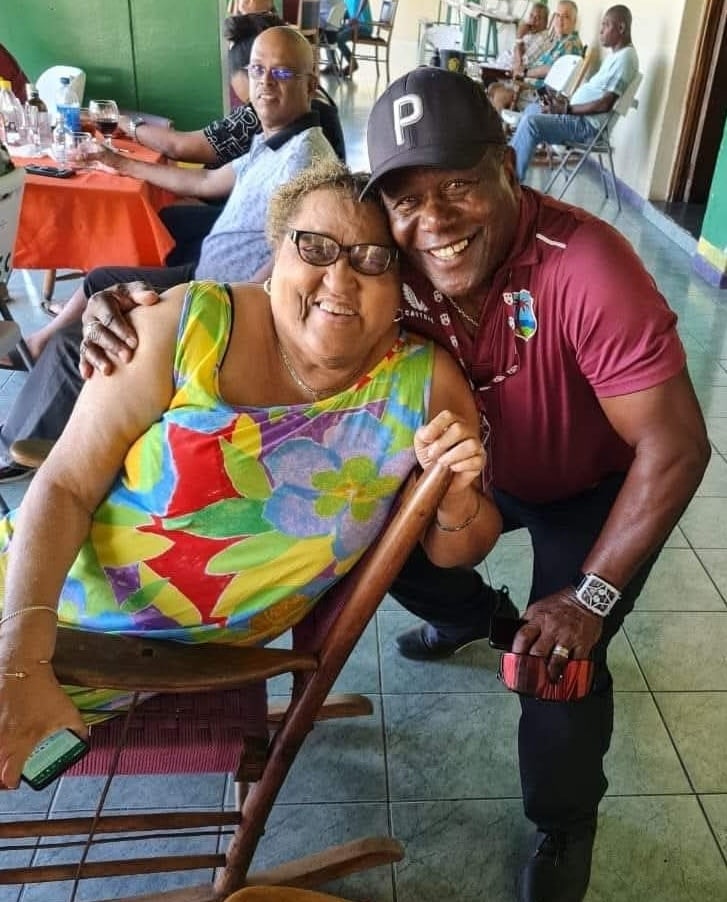
Away from theatre, Pauline developed another lifelong love — cricket. She has travelled throughout the Caribbean watching West Indies cricket and has witnessed historic moments, including Sir Garfield Sobers’ record-breaking 365 not out in 1958 at Sabina Park in Kingston, Jamaica, and Brian Lara’s 400 not out, made in 2004 at the Antigua Recreation Ground in St. John’s, Antigua.
“My global travel taught me that my Jamaican identity was strong, especially when Bob Marley became an international icon. If there were any flaws, it would have been my inability to change public perception in some quarters about us being underhanded,” she opined.
Pauline believes Jamaica’s greatest strength lies in embracing its authentic voice. Her final message to younger Jamaicans was simple: “Follow your dreams and never give up!”