


The ruling People’s Progressive Party (PPP) has used Guyana’s 60th Independence Anniversary to defend its record in government, reflect on the country’s political history, and outline an ambitious vision for the nation’s future under President Irfaan Ali.
In a lengthy Independence statement released Tuesday, the party said Guyana stands “at the threshold of a national renaissance,” pointing to rapid economic transformation, major infrastructure projects, and growing international recognition as signs that the country is emerging as one of the Caribbean and Latin America’s major success stories.

The PPP said the country is experiencing more than economic growth, arguing that Guyana is “shaping a new national identity” driven by modernization, digital transformation, and expanded opportunities for citizens.
The statement framed the anniversary as both a celebration and a reminder of Guyana’s political struggles, including colonialism, ethnic division, and decades of authoritarian rule.
“Colonialism was not benign. Freedom was won only because ordinary people demanded it,” the party said, arguing that independence was achieved through sacrifice, organization, and political struggle.
The PPP also revisited the country’s post-independence history, criticizing the period between 1964 and 1992, when the opposition People’s National Congress (PNC) governed Guyana. The party described those years as a period of “authoritarian rule,” marked by rigged elections, political repression, economic collapse, and widespread poverty.
According to the statement, by 1990 nearly 87 percent of Guyana’s population lived below the poverty line, while the country had become one of the poorest nations in the Western Hemisphere.
The PPP said the restoration of free and fair elections in 1992 marked the beginning of a rebuilding process centered on democracy, economic recovery, and long-term national development.
The party highlighted several development frameworks introduced over the years, including the National Development Strategy and the Low Carbon Development Strategy, describing them as evidence of long-term planning rather than short-term governance.
Looking ahead, the PPP outlined a series of priorities it says will guide Guyana over the next five years, including free education at every level, expanded digital learning and artificial intelligence initiatives, improved healthcare access through 12 new hospitals, and the establishment of a Development Bank to support small and medium-sized businesses.
The statement also emphasized plans to strengthen agriculture, improve transportation and infrastructure, modernize public services, and expand digital government systems, including the introduction of a national electronic identification system.
The party said its development agenda is intended to benefit all Guyanese, including youth, women, senior citizens, persons with disabilities, and Indigenous communities.
In the statement, the PPP also warned against what it described as “populist ideals” and efforts to divide the country for political gain, while urging national unity as Guyana enters what it called its next phase of advancement.
Quoting former President Cheddi Jagan, the party said: “Freedom is indivisible; and unity and solidarity are essential for success.”
The statement concluded with a renewed pledge to defend Guyana’s sovereignty amid its ongoing border controversy with neighboring Venezuela.
“Every square inch of Guyana belongs to the people of Guyana,” the PPP declared.
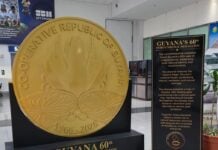
Guyana officially gained independence from United Kingdom on May 26, 1966.


 has used Guyana’s 60th Independence Anniversary to defend its record in government.)