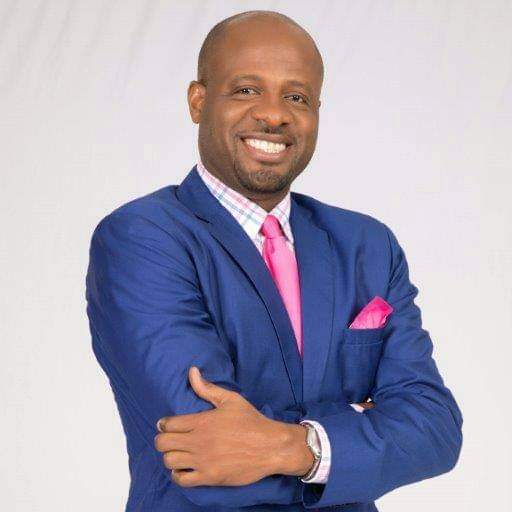
Former West Indies and Jamaican off-spinner Nehemiah Perry says his decision to contest the post of first vice-president of the Jamaica Cricket Association (JCA) is rooted entirely in a desire to rebuild and strengthen cricket development across the island.

Perry will challenge incumbent Fritz Harris when the JCA stages its annual general meeting and elections on May 28, 2026.
The contest emerged as one of the biggest surprises following the close of nominations on May 14, particularly because JCA President Dr Donovan Bennett is set to retain his position unopposed.

Yet Perry believes the state of Jamaican cricket demands decisive intervention, especially at the grassroots level where several parish associations and school programmes continue to struggle financially.
“We have not improved cricket”
Perry argued that the organization must adopt a far more aggressive approach if the sport is to regain momentum.
“I believe we have not improved cricket over how many years now,” Perry told the Jamaica Observer. “The executive needs to take the bull by the horns and start to make some serious decisions as it relates to cricket.”

Perry, who served Jamaica between 1986 and 2004 and later represented the West Indies cricket team in four Test matches and 21 One-Day Internationals from 1999 to 2000, said the game’s financial instability remains one of its greatest obstacles.
According to the president of Kingston Cricket Club, inadequate funding continues to undermine development programmes and restrict opportunities for young players.
“A lot of persons would have known me through cricket or the insurance business… I’m not happy with where we are now as it relates to funding. We need funds to [run] our programmes and we just don’t have it,” he lamented.

Perry rejects talk of political motives
Despite challenging a sitting vice-president, Perry insisted his candidacy should not be viewed as a personal battle against Harris.
“I don’t look at it as a challenge, I look at it as adding some value to the executive of the JCA. I have no agenda but to help to develop cricket,” Perry explained.
“I like Fritz, [he is] my friend, but it’s a democratic world and I think I can help more at that level as part of the executive that makes these decisions.”
He also argued that his professional and sporting experience could bring a stronger strategic direction to the administration.
“I believe that a man of my caliber and standards would bring a little bit more knowledge about the kind of improvement that we need and the kind of structure that we need,” Perry added.
Why not challenge for the presidency?
When questioned about why he opted not to seek the presidency itself, Perry suggested that understanding the inner workings of the executive first was the smarter path.
“Sometimes you have to take your time, observe, ease into the executive post to see how it runs, and then any minor adjustment you can then deal with accordingly,” he said.
While Perry has centered his campaign on the need for change, supporters of the current administration argue that significant progress has already been made under Bennett’s leadership over the past two years.
They point to the increased staging of international matches in Jamaica, major refurbishing work at Sabina Park, including upgraded floodlights and a new electronic scoreboard, as well as the continuation of age-group development programmes despite major disruptions caused by Hurricanes Beryl and Melissa.
Harris said he was surprised to learn he would face opposition.
“I’m surprised by the challenge because I thought the board was moving in a very good direction. If you look at what we have achieved over the last two years, we have surprised just about everybody,” Harris said.
Still, he acknowledged Perry’s right to contest the election and said he is now preparing for a competitive campaign.
“The democratic process gives everyone the opportunity to contest if they so wish, so it’s Mr Perry’s right to challenge. I was not expecting a challenge but the challenge has come and we will just have to deal with that.”
Harris also expressed confidence that members will support his return to office.
“I’m very confident, members have been calling me to give me encouragement to stay the course. Obviously, I won’t be too relaxed and take things for granted; I’ll get into campaign mode soon, and hopefully on the night of elections I’ll be returned [as vice-president],” he added.
Multiple executive battles set for election night
The race for first vice-president is expected to headline a wider series of contests across the JCA executive structure.
Incumbent secretary Laurence Garriques will face challenger Anthony Davis, while Randy Nelson and Keith Walford are set to compete for assistant secretary.
The treasurer’s position will feature a contest between incumbent Kerry Scott and challenger Hopeton Morrison, while Michael Atterbury and Ian Spencer will vie for assistant treasurer.
Meanwhile, Peter Douglas is unopposed for the role of second vice-president.