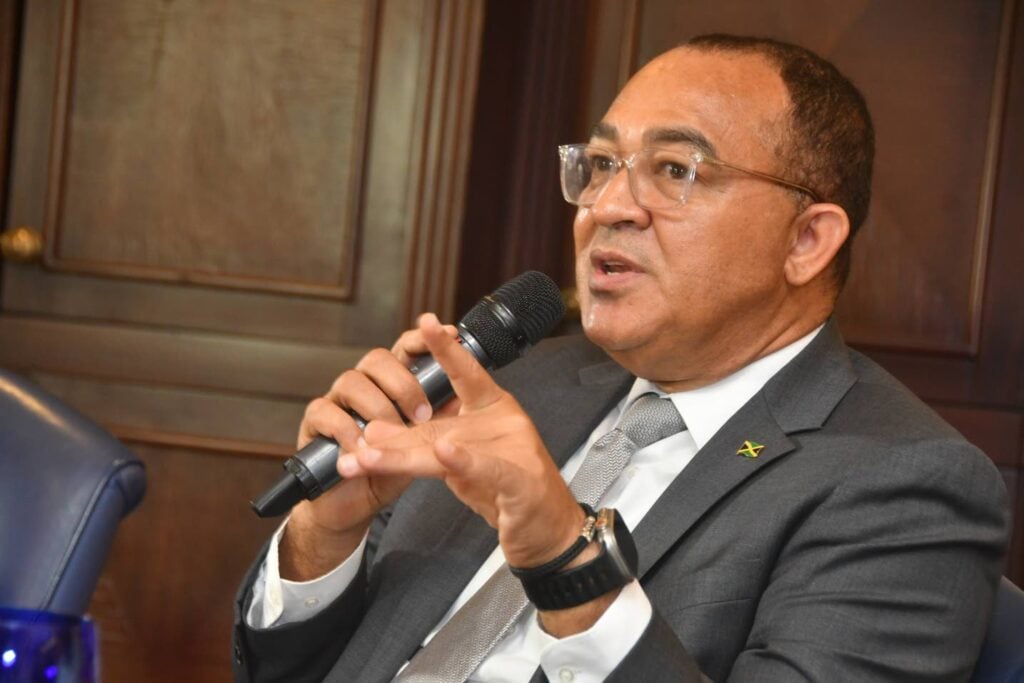
The Government of Jamaica is set to launch a multi-sectoral National Menstrual Health Equity pilot initiative involving eight schools and approximately 2,000 girls as part of efforts to tackle period poverty and improve adolescent health outcomes across the island.
The schools will be selected based on the number of students enrolled in the Programme of Advancement Through Health and Education (PATH).
Announcing the initiative during his contribution to the 2026/2027 Sectoral Debate in the House of Representatives on May 12, Christopher Tufton said the program forms part of the Government’s broader public health agenda.

Tufton said the Government has allocated $50 million for the initiative, which will be implemented through partnerships with the Ministry of Education, Skills, Youth and Information, as well as civic and multilateral organizations, including UNICEF and HerFlow Foundation.
He said the pilot is expected to help guide the development of a national policy framework to address period poverty in Jamaica.
According to Tufton, the initiative will also promote menstrual wellness and adolescent health through water, sanitation and hygiene improvements, HPV vaccination, personal hygiene education, and HIV and sexually transmitted infection prevention strategies.
Tufton described period poverty as the inability to afford or access essential menstrual products, education and sanitation facilities, noting that the issue affects millions of girls and women globally.
He said the challenge contributes to significant health risks, shame and stigma, while forcing many young women to use unsafe alternatives or miss school during menstruation.
“Globally, over 500 million women lack access to menstrual facilities. And this is not just for Jamaica. In the United States, it is one in four,” Tufton said.
He stressed that period poverty should not be viewed solely as a hygiene issue, but as a systemic barrier that undermines educational achievement and reinforces cycles of poverty and inequality.
The minister pointed to data showing that one in four girls in low-income Jamaican communities miss school during their menstrual cycle because they cannot access sanitary products. He added that only 30% of public schools currently provide free menstrual supplies.
Tufton said period-related absenteeism has also been linked to lower academic performance and widening educational disparities among vulnerable students.
The health minister also used his presentation to highlight broader family and adolescent health concerns, including declining fertility rates, responsible parenting and family stability.
He disclosed that discussions are underway with the Ministry of Labour and Social Security regarding the establishment of a multi-stakeholder national task force on fertility and responsible parenting.
The proposed task force would include representatives from the health, labor, finance and education sectors, alongside academia, civil society and private-sector stakeholders. It would be tasked with developing a national fertility and family support strategy for Cabinet consideration.