Have you heard Prince Buster‘s “Wreck A Pum Pum,” released in 1969? What about the Soul Sisters‘ “Wreck a Buddy,” also released in 1969? Yes, it has been almost six decades since those two songs were released. Go listen to them for yourself on YouTube.
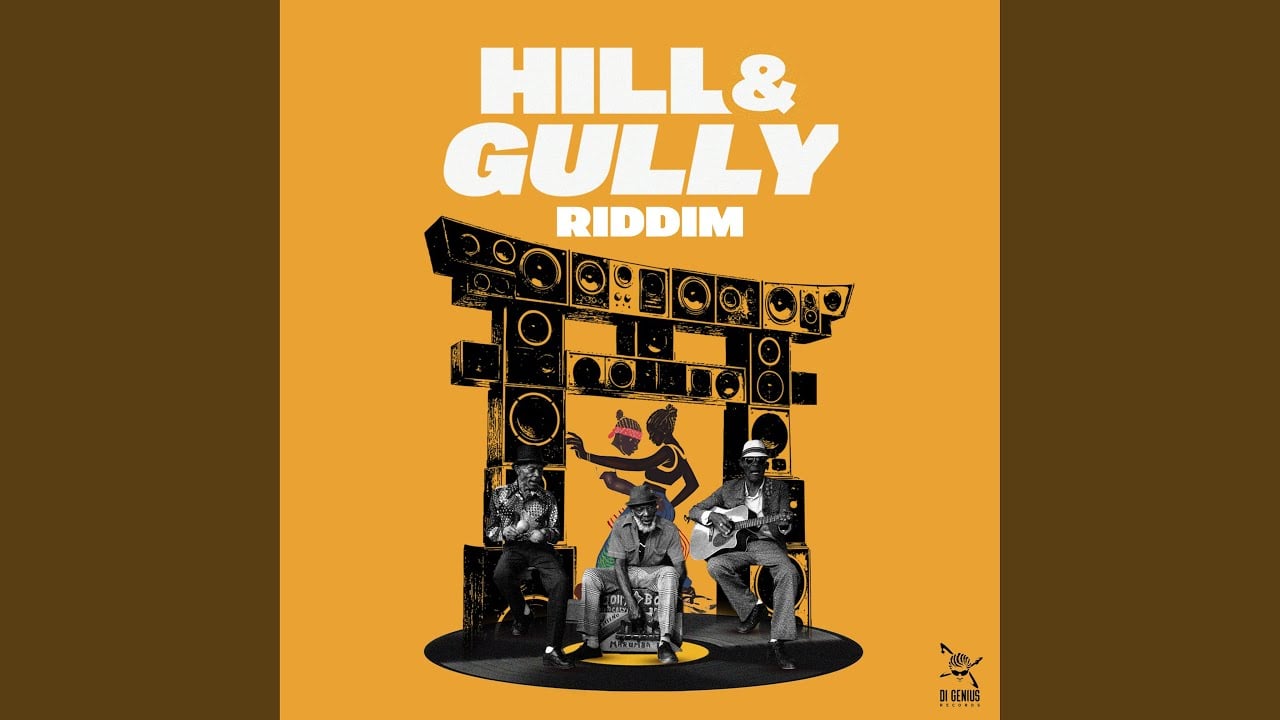
As the conversation in Jamaica and the diaspora intensifies over the sexually suggestive lyrics in Masicka’s “Slip & Slide”; Govana’s “Itsy Bitsy”; Elephant Man’s “Hold Him Gyal”; Valiant’s “Woii”; Aidonia’s “Pit A Pat”; and Nigy Boy’s “Wah Mi Money” — widely viewed as a standout, refreshing and clean-cut song — all featured on the resurgent Hill & Gully riddim, it is worth looking back at history.
Donna Hope, a professor at The University of the West Indies, Mona, has reframed the debate from one of morality to one of cultural memory.

Jamaican media veteran Fae Ellington, in published comments harshly criticizing what she described as the lyrical content dominating many of the recordings produced by Stephen McGregor, lamented what she sees as a decline in lyrical standards, sharply questioning the normalization of sexually explicit themes in mainstream Jamaican music.
But Hope argues that such concerns, while understandable, risk overlooking a much more complicated history.
In a recent Facebook post that has since sparked wide discussion, Hope referenced one of her own university examination questions: “Using examples from at least two musical genres, critically analyse how ‘slackness’ operates as a form of cultural expression and social commentary within Jamaican popular music.”
It was not merely an academic exercise. It was a reminder of the origins of slackness in Jamaican music.
“Selective amnesia and subjectively placed moral outrage notwithstanding,” Hope wrote, “Our popular music, in particular Mento, Ska, Rocksteady, Reggae and Dancehall, have all had this explicit and very vocal conversation with the female sex organ, female underwear, sex, things in the bedroom etc. – all labelled as ‘slackness’.”
Her point is clear: What some Jamaicans now condemn as cultural decline may, in fact, be part of a deeply rooted musical tradition.
Hope noted that mento, often celebrated as one of Jamaica’s earliest authentic musical forms, was itself no stranger to controversy.
“Mento, in particular, was the first genre of Jamaican music from which songs were taken to the House of Representatives to be banned and chastised in the 1950s because of its careless and slack lyrics,” she wrote.
For her students, the revelation is often startling.
“My students are routinely amused and shocked each year when I introduce them to these songs that were very very popular during their heyday in each genre.”
Her conclusion carried more than a touch of irony.
“One era’s ‘creativity’ apparently outweighs that of another. CarryOn.”
The Hill & Gully riddim debate has also drawn responses from voices beyond academia.
Former Cabinet minister Aloun Ndombet Assamba, responding to Hope’s post, offered a more expansive view of the riddim’s current reinterpretations.
“I spent some time last night listening to some of the various versions of the lyrics on the Hill and Gully rhythm. There are all kinds of words that have been put on the rhythm. Some lewd, some positive, some hilarious, some Christian.”
She added, “There is even one by a young man asking men to support their children.”
For Assamba, the riddim’s versatility reflects Jamaica’s cultural ingenuity.
“I think that is what makes us such a melting pot of creativity. One thing for sure, it has us talking!”
That sentiment was echoed internationally by music researcher James Danino, who recalled presenting on the history of women in Jamaican music at a reggae and dub festival in France.
“Contrarily to popular belief, ‘slack’ lyrics were not something that happened with the advent of what is now called ‘dancehall music’,” Danino wrote.
He cited Prince Buster’s “Wreck A Pum Pum” and the Soul Sisters’ “Wreck a Buddy” as evidence that sexually charged lyrics long predate modern dancehall.
“Women have been also singing these songs since they began,” he noted.
Yet veteran broadcaster and Irie Jam Radio personality Chris Dub Master offered a perspective that helps bridge both sides of the debate, arguing that while historical context matters, cultural roots must also be respected.
“The fact that you have people of an older generation, such as Fae Ellington, speaking out against the lewd lyrics being sung over a rhythm such as Hill and Gully, it’s an opportunity to have a conversation about where the culture is going and that there is somewhat of a disconnect between generations,” he said.
Dub Master acknowledged Hope’s historical framing but argued that context and execution matter.
“I don’t think anybody is arguing the fact that there’s a lot of sexually explicit music in the culture,” he told Caribbean National Weekly. “I think what some of the older Jamaican citizens have a problem with is that something that is a grounded, rooted Jamaican traditional folk song and then you’re taking that music and flipping it completely in a different direction.”
For him, the issue is less about censorship and more about cultural stewardship.
“It has opened up a new conversation,” he said. “I don’t think it should be something that we argue about so much but it should be taken as an opportunity – a teaching moment.”
His concern extended beyond music itself.
“I’ve seen in recent years where… school-aged children have a problem recognizing Bob Marley,” he said. “So, we’re losing touch somewhere along the line.”
That sentiment creates an intriguing midpoint between Hope’s academic analysis and Ellington’s moral concern.
The renewed controversy ultimately raises a larger question: Is Jamaica confronting a genuine moral decline in music, or simply rediscovering truths it has conveniently forgotten?
If Hope’s argument holds, the Hill & Gully debate may be less about lyrical decay and more about historical discomfort — about who gets to define acceptable creativity, and when.