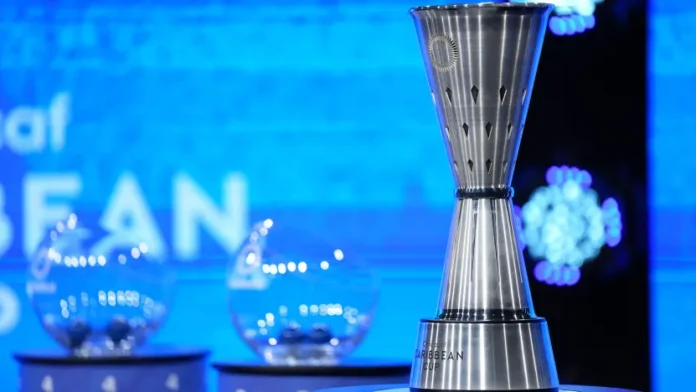
The path to continental football glory is beginning to come into focus.
On May 26 in Miami, the official draw for the 2026 Concacaf Caribbean Cup will set the stage for another fierce regional battle, one that carries with it not only Caribbean supremacy, but qualification to the 2027 Concacaf Champions Cup.
With anticipation building across the region, three clubs have already punched their tickets into the tournament: Dominican Republic powerhouse Cibao FC, along with Trinidad and Tobago representatives Club Sando and Defence Force FC.

Seven more teams are still to emerge from domestic leagues and qualifying competitions in the weeks ahead, but the outlines of the tournament are already taking shape.
A tournament growing in prestige
Now entering its fourth edition, the Concacaf Caribbean Cup has rapidly evolved into the Caribbean’s premier club competition, offering clubs not only regional recognition but also a gateway to the broader Concacaf stage.
This year’s tournament will feature 10 clubs divided into two groups of five.
The opening Group Stage will stretch from August 4 through September 17, with every club playing four matches, two at home and two away, over five match windows. The format is designed to test both depth and consistency, leaving little margin for error.
Only the top two teams from each group will survive the opening phase and advance to the knockout rounds.
Pressure intensifies in the knockout stage
Once the field narrows to four, the competition will shift into a high-pressure home-and-away semi-final format scheduled for October 13-15 and October 20-22.

The stakes will only rise from there.
The Final and third-place playoff, both played across two legs on December 1 and December 5, will determine not just the regional champion, but which clubs move on to the next level of continental competition.
The reward structure makes every match critical.
Both finalists, along with the third-place finisher, will qualify for the 2027 Concacaf Champions Cup. The tournament champion will earn an even greater advantage: a direct bye into the Round of 16.
Miami draw will shape the battlefield
The official draw in Miami will play a major role in determining the competitive balance of the tournament.
Concacaf will use a single-blind draw system built around five pots, with seedings determined by the Concacaf Club Ranking as of May 25, 2026.
Teams will be drawn sequentially into Groups A and B until each group contains one club from every pot.
That structure could create immediate heavyweight clashes and dangerous travel schedules, particularly in a competition where away performances often determine survival.
Final spots still up for grabs
While three clubs are already confirmed, seven qualification places remain available across the Caribbean football landscape.
Two positions will come from the CFU Club Shield, awarded to the champion and runner-up of that competition.
Haiti will contribute one club through its Champion des Champions winner.
Jamaica, one of the Caribbean’s strongest football territories, will send two representatives, the champion and runner-up from the 2025-26 Jamaica Premier League season.
Another berth will go to the champion of the Dominican Republic’s Liga Dominicana de Fútbol, while Suriname’s representative will emerge from the 2025-26 Suriname Major League campaign.
With qualification races still active in several countries, the final tournament line-up remains fluid and potentially explosive.
Defending champions waiting in the wings
Hovering over the competition is the shadow of defending champions Mount Pleasant FA of Jamaica.
The Jamaican club captured its first Caribbean Cup crown in 2025 after edging Universidad O&M FC 3-2 on aggregate in a gripping final, a triumph that elevated the club’s regional stature and reinforced Jamaica’s growing influence in Caribbean football.
As the new tournament approaches, challengers across the region will be eager to dethrone them.
More than regional bragging rights
For Caribbean clubs, this competition has become far more than a regional showcase.
It is now a direct pathway into the wider Concacaf ecosystem, a chance to test themselves against elite opposition from North and Central America, raise club profiles internationally, and accelerate professional development both on and off the field.
By the time the draw balls are pulled in Miami on May 26, the countdown to another high-stakes Caribbean campaign will officially begin.
And for the clubs involved, every step from August to December will carry the weight of ambition, survival, and the pursuit of continental relevance.