If you grew up around Caribbean water, you carry a certain standard for what the sea should look like. You know what warm, clear water feels like. You know the difference between a beach that earns your time and one that just looks good in photographs. That standard makes you a tough audience when someone suggests a new coast.
So when a friend told me I needed to sail Turkey’s Turquoise Coast, I was sceptical. I’ve seen blue water. I’ve seen beautiful coastline. What could the eastern Mediterranean offer that the Caribbean hasn’t already?
The answer, after a week on a crewed yacht arranged through Blue More Yachting, turned out to be: quite a lot. Not because the water is better. It is different. But because the experience of sailing this coast combines things that don’t usually come together in one trip.

The water and the coast
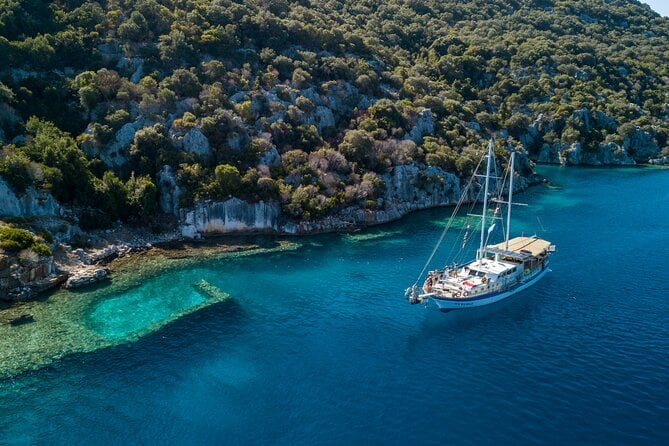
First, the water. Turkey’s Turquoise Coast gets its name honestly. The colour shifts between deep cobalt and pale jade depending on depth and bottom composition. It is warm enough for comfortable swimming from May through October and clear to a degree that surprised me, and I come from a place where visibility standards are high.
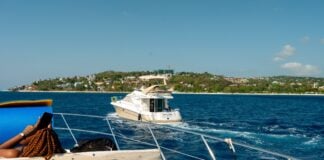
A yacht charter from Marmaris from Marmaris heads south along the Bozburun Peninsula, a narrow strip of land with fishing villages on one side and empty anchorages on the other. The bays here have no road access. You arrive by sea, anchor in water that is fifteen metres deep and still clear to the bottom, and swim to a pebble beach backed by pine forest. The smell of warm pine mixed with sea salt is not something I had experienced before. It is distinctly Mediterranean and distinctly appealing.
The coastline between Marmaris and Fethiye runs for roughly 150 kilometres, and the variety along that stretch is remarkable. Sandy beaches, rocky coves, river estuaries, cliff-face ruins, small harbour towns, and long stretches of uninhabited forest. In the Caribbean you might sail for days between islands with open water in between. Here, the coast is continuous and the interest is constant.
The food factor
Caribbean cuisine is close to my heart, so I was curious how the food on a Turkish charter would compare. The answer: it is a different tradition but equally generous and equally driven by what is fresh and local.
The chef on our vessel shopped at local markets before dawn. Breakfast was a full Turkish spread: white cheese, olives, tomatoes, local honey, eggs, fresh bread baked on board. It took 45 minutes and nobody rushed. Lunch was typically grilled fish caught that day, a spread of meze dishes, salads dressed with Aegean olive oil, and seasonal fruit.
Dinner was the main event. Multiple courses, regional specialities, and the kind of care in presentation that would do well in any restaurant. One evening the chef prepared a whole sea bass in a salt crust that the group is still talking about. The olive oil alone, from a village the chef knew personally, was worth the trip.

For anyone who appreciates food as a cultural expression rather than just fuel, Turkey’s coast delivers. The flavours are distinct from what we know in the Caribbean, but the philosophy is the same: use what is fresh, prepare it with care, and share it generously.
History in the water
This is where Turkey’s coast offers something the Caribbean simply does not have in the same concentration. The Lycian civilisation left tombs carved into cliff faces along the shoreline. Greek and Roman ruins sit on headlands above swimming bays. In Dalyan, ancient Kaunos looks down from a rock face onto a river where Caretta Caretta turtles nest on a protected beach.
You encounter this history casually, from the deck, while sailing between lunch and your afternoon swim. One morning I spotted what looked like a doorway carved into a cliff above the waterline. “Lycian tomb,” the captain said. “About 2,400 years old.” Then he poured me another coffee. History here is not a separate excursion. It is part of the scenery.
The crew and the hospitality
Caribbean people know hospitality. We grow up with it. So I was curious how Turkish crew hospitality would feel. The answer: different in style, equal in warmth, and occasionally surprising in its attentiveness.
Our captain had been sailing this coast for over twenty years. He chose each day’s anchorages based on wind, weather, and his reading of what our group would enjoy. When he learned that one of us had a birthday coming, a cake appeared at dinner. Nobody had mentioned it to the chef. The captain had overheard a conversation and passed it along. That kind of quiet attention defined the week.
The deckhand taught two of us to paddleboard with a patience that went beyond his job description. The chef asked on the first day about dietary preferences, allergies, and favourite flavours, then spent the rest of the week proving he had been listening. By the final dinner, the meal was tailored to our group in ways that felt personal.
For anyone coming from a culture where hospitality matters, and who worries that it might feel transactional on a charter vessel, I can say clearly: it does not. The warmth is genuine, and it comes through in every meal, every anchorage choice, and every small gesture throughout the week.
How it works
Blue More Yachting, the operator we used, has been running charters on this coast for 14 years and manages over 240 crewed vessels. A gulet charter from Fethiye includes the vessel, crew, all meals, fuel, and water sports equipment. The crew handles everything: sailing, cooking, provisioning, cleaning, route planning.
Getting there from the US East Coast is straightforward. Turkish Airlines flies direct from Miami, New York, and several other cities to Istanbul. A short connection to Dalaman puts you within 45 minutes of the marina. The whole journey door-to-vessel takes about 14 hours, which is comparable to reaching some Caribbean islands from the mainland.
The charter season runs from late April to early November. September and October are particularly good: warm water, uncrowded anchorages, and the kind of late-afternoon light that makes the coast glow. For those of us who know the Caribbean well and are looking for a new coast to explore, Turkey’s southwestern shore is worth the flight. It offers a different kind of beauty, a different cuisine, and a depth of history that adds a dimension the Caribbean can’t match. Bring your standards. They’ll be met.