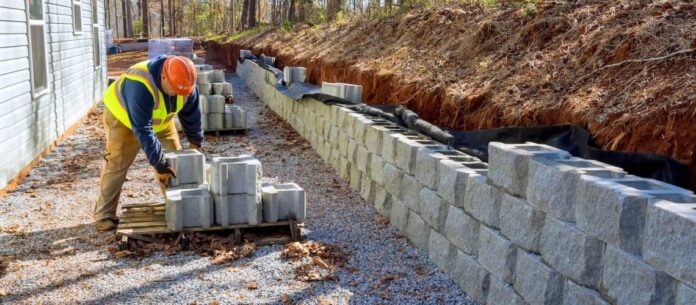
Arranged landscapes are stunning, but with shifting soil or stagnant water, they can present a continuous maintenance headache. Installing a retaining wall can be a solution, but it’s not a straightforward task; it requires more than just placing blocks. The contractors examine grading, drainage, and then long-term pressure to determine potential future damage. For instance, retaining wall contractors demonstrate how erosion and terrain challenges can significantly alter the situation, emphasizing that the plan is just as important as the wall itself.

Understanding Erosion Hazards
On inclined land, soil will wash away easily when rainfall or irrigation is heavy. Soil washes away with water runoff, wearing away the shape of the yard gradually and loosening the ground. Unchecked erosion is detrimental to plant health, exposes roots, and can undermine building foundations over time. Contractors evaluate erosion risks—taking into account the slope, soil type, and drainage. This makes Retaining Walls Contractors an important consideration, since they can assess slope and drainage conditions to help prevent long-term erosion damage.
The Role of Retaining Walls
A retaining wall is a kind of sturdy fence or wall built on sloped sites to hold soil in place. These structures prevent the Earth from moving downward, so an increase in loss cannot occur. They create stable ground for plants and pathways with level sections. Contractors choose materials—concrete, stone, or timber, typically—according to site requirements and aesthetic choices.

Design Strategies for Lasting Solutions
No site comes without its singular challenges when it comes to property. A professional assesses the grade, water flow, and existing landscaping before suggesting a design. They set out to provide utility alongside beauty, increasing the aesthetic value of the property. Through proper engineering, pressure exerted by soil and water from the building can be handled efficiently, eliminating the risk of falling.
Drainage Management and Water Flow
Retaining walls are also at risk of collapse from water pressure behind them if there are no appropriate drainage measures in place. Drainage pipes, a layer of gravel, and weep holes are installed by contractors to redirect excess moisture. These attributes reduce hydrostatic pressure and aid in prolonging the life of the wall. Good water control is important so that water does not pool at the trough and, in turn, protects plant life nearby.
Material Selection and Construction Techniques
The selection of material greatly affects how long and how well the walls last. Stone provides a natural appearance, and concrete is stronger for taller structures. Timber is mostly used for smaller installations, which will need treatment for longevity. Experienced contractors construct the walls in stages, compacting the soil in place and providing support at each level as it is developed.

Adding Function and Beauty
In addition to their practical value, retaining walls also have decorative value. These terraced spaces can be new planting beds, seating, or walkways. Strategic placement and final touches, like caps or built-in lighting, provide beauty and a piece of functional art. Replacing a wall with a well-designed one transforms eyesores into attractive focal points, which will ultimately boost not just value but also property curb appeal.
Addressing Challenging Terrain
There are additional challenges with uneven or steep slopes. A contractor may suggest stepped wall designs and multiple tiers to ensure stability. They also spread weight and pressure more evenly around the structure. Innovative designs maximize space and help integrate the feature into the environment.
Long-Term Maintenance and Care
When retaining walls are built well, they hardly need any maintenance. Periodic checks can alert us to early warning signs of settling or movement. Remove debris from drainage features to promote water runoff. A professional installation, along with the use of high-quality materials, translates into fewer expensive repairs down the line.

Environmental Considerations
Helping local ecosystems stay healthy, erosion control can help prevent soil and nutrients from blowing away. Retaining walls is a best practice for capturing runoff that could potentially pollute waterways. Some contractors will recommend plantings or ground covers on top of walls to help soak up soil and provide habitat.
Collaboration and Planning
Solutions are more effective when property owners clearly communicate their thoughts to contractors. By talking through objectives, budgets, and site constraints, we make sure that the final design achieves the desired results. Experts walk clients through material selection, the construction schedule, and ongoing maintenance.
Conclusion
They offer realistic solutions for issues like landscaping, erosion, etc. with their expert knowledge and professionalism; hence their name, retaining wall contractors. Their designs create outdoor spaces that stay beautiful and functional for many years to come. Using good planning and quality construction, these professionals turn troublesome areas into selling features that are safe, functional, and attractive for many years.