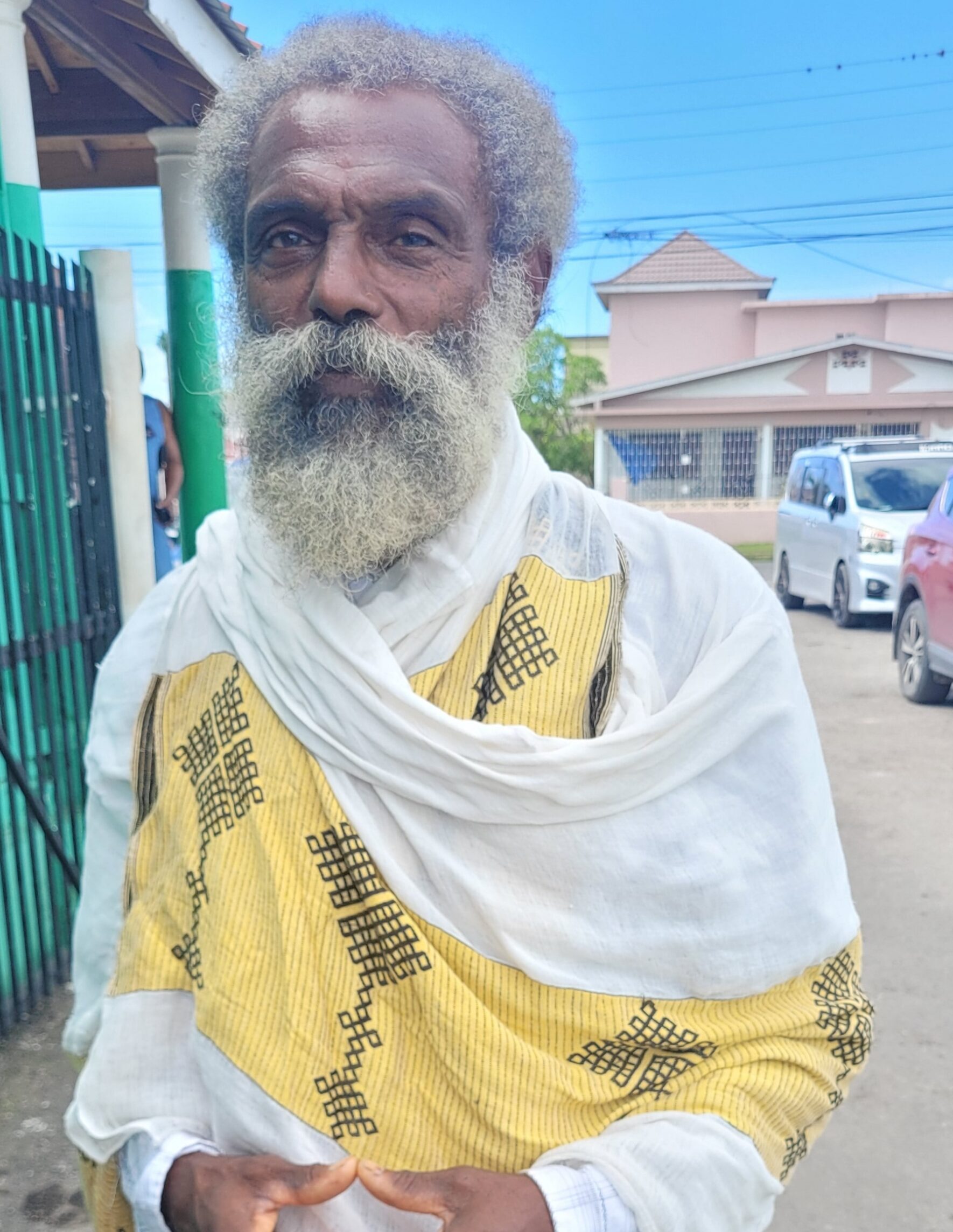
On my first visit back home to Jamaica since Hurricane Melissa ravaged sections of Westmoreland, St. Elizabeth, St. James, and other parts of western Jamaica, I did not expect a chance encounter on the streets of Sav-la-Mar to turn into a deep reasoning on constitutional reform, identity, and power. But that is exactly what happened when I met Haile Mika’el Cujo.
Cujo is a frequent independent candidate in Jamaican local government elections, representing the Whitehouse division in Westmoreland.
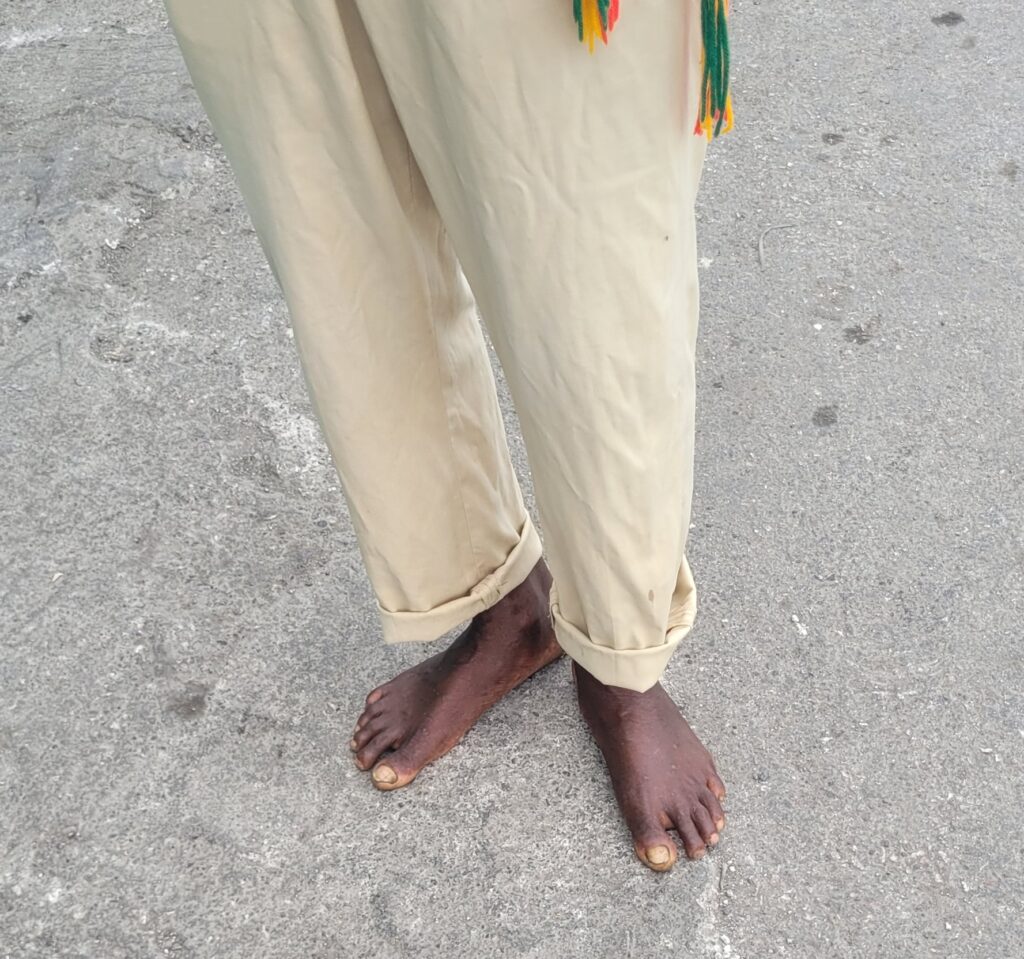
I stopped Haile Mika’el simply because he was walking barefoot through the town. In all my years as a journalist and radio host, the only other Jamaican I had ever seen do this consistently was radio host Mutabaruka. What I initially thought might be a homeless, mentally disturbed individual quickly turned into a deep, prolonged conversation about Jamaica and constitutional reform with Haile Mika’el.

“I’m Haile Mika’el Cujo,” he answered confidently when asked who he was. “I’m many things to many people, including being a constitutional lawyer.”
From that opening line, it was clear Mika’el was anything but aimless. Intelligent, articulate, charismatic, and deeply engaged with Jamaica’s political future, he immediately began outlining the work that has defined his public life in recent years: a proposed new constitution for Jamaica.
“I’ve written a proposed constitution for the Republic of Jamaica called ‘We the People Proposed Constitution of Republic of Jamaica,’” he said. “This document that I have proposed is a public document since July 26, 2021, when I sent the first draft to Parliament.”
According to Mika’el, every member of Parliament, including Prime Minister Andrew Holness, received the document. Yet, he says, none have meaningfully engaged him.
“All the parliamentarians got it from July 26, 2021, and they have not responded to me,” he said.
Mika’el is critical of the official constitutional reform process. He points to the creation of the Ministry of Legal and Constitutional Affairs and the Constitutional Reform Committee as developments that followed his submission, but which, in his view, ignored his work.
“After three years and spending $3 billion in April of 2025, the Prime Minister said that the process has failed,” Mika’el noted. “I told him that they are all to be blamed.”
At the heart of Mika’el’s proposal is a radical shift in sovereignty.
“This document gives the sovereignty to the people of Jamaica,” he said. “It removes it from the British monarchy. We would now own the country under this document.”
A key feature of his constitution is the formal recognition of the Maroons as Jamaica’s indigenous people, with guaranteed political representation.
“The indigenous people, known as the Maroons, they have their rights to their land as from ancient times because they were here before Christopher Columbus,” Mika’el said.
He cites Belize as a regional precedent, where indigenous land rights and parliamentary representation are constitutionally protected. The proposed constitution also introduces mechanisms for accountability and economic reform.
“This document also allows for impeachment of elected officials who are found to be wanted, meaning that they are corrupt,” he said. “It also opens up the land.”
Under his proposal, a restructured ministry would eliminate squatting by making land and housing accessible, while renewable energy would become a national priority.
“We wouldn’t have to be paying for LNG (Liquefied Natural Gas – a cleaner fuel source used to diversify the country’s energy mix away from expensive oil) and all of these things,” Mika’el argued. “We use sunshine, water, wind to generate electricity. I’ve also heard that the vibration from the earth makes electricity, so we could explore that as well.”
Beach access, another long-standing public issue, is also addressed.
“This document gives us access to everything that is ours in this country,” he said.
Despite resistance from elected officials, Mika’el says ordinary Jamaicans are responding positively.
“They are gravitating toward it,” he said. “It’s the elected officials who are opposing it.”
He rejects arguments that constitutional change must strictly follow the existing 1962 framework.
“Who made those laws?” he asked pointedly. “These English people who came down here as pirates and robbed the country… and then we have to follow their rule of law? No, we need to get rid of their rule of law.”
Mika’el describes his vision as peaceful but transformative.
“I’ve been saying this is a bloodless revolution,” he said. “All it needs is the 63 people who were elected by the people of Jamaica to sign this document and bring it into effect on National Heroes Day, 2026.”
His barefoot presence, which first caught my attention, is deeply symbolic to him. A member of the Ethiopian Orthodox Tewahedo Church, Mika’el explained that his name is spiritual as well as ancestral.
“Haile Mika’el is my baptismal name,” he said. “It means the power of the archangel Saint Michael. Cujo is my great-great-great-grandfather’s name. He was stolen from Africa and sold here as a slave.”
He also challenged social norms around footwear and respectability.
“The people on the coat of arms, they don’t wear shoes,” he said. “We are in a barefoot country.”
When asked how long he has lived this way, his answer was simple and grounded in Jamaican childhood.
“This is nothing new,” he said. “We have been walking barefoot from when we were little children… running up and down on the beaches. And it’s natural.”
He named dub poet Oku Onuora, the “father of Jamaican dub poetry,” as the inspiration for walking barefoot.
“He’s the first dub poet. He has been barefoot from a long time. His beard is whiter than mine. White like this shama that I am wearing,” he proudly shared.
He spoke of places he has been prevented from entering because of his decision not to wear shoes.
“People locking me out of KFC (Kentucky Fried Chicken) and Burger King, saying that I have to have on shoes on. Even in the Westmoreland Municipal Corporation, the security guard say I can’t come inside without shoes. Stupidness! We are in a barefoot country. Furthermore, at Emancipation Park, there’s a statue of two naked people. So we all have a right to walk naked or they should take down the statue!” he declared.
“We can’t have this hypocritical situation going on in the country. It’s confusing for the little children,” he reasoned.
As for Prime Minister Andrew Holness, Mika’el says his message has already been delivered.
“I have made an application in his office to see him to discuss constitution change,” he said. “So I’m waiting for him to invite me for that meeting, so we can go about getting Jamaica on track to do what is good and proper for our country.”
As he continues refining his constitutional proposal, now in its 19th revision, Haile Mika’el Cujo remains grounded—barefoot in Sav-la-Mar, but firmly standing on his belief that Jamaica’s future must be shaped by “we the people.”