Jamaica’s Ambassador to the United States, Major General (Ret’d) Antony Anderson, has unveiled a bold plan to harness the expertise and capital of Jamaica’s diaspora doctors to build a world-class medical tourism industry that could generate more than US$1.8 billion annually.
Not a career diplomat versed in cocktail-circuit pleasantries, nor a healthcare bureaucrat fluent in policy jargon, Anderson—the man who once commanded Jamaica’s military, overhauled its police force, and advised the Prime Minister on national security—now faces perhaps his most audacious mission yet: convincing diaspora doctors that their exodus from Jamaica wasn’t abandonment, but preparation.
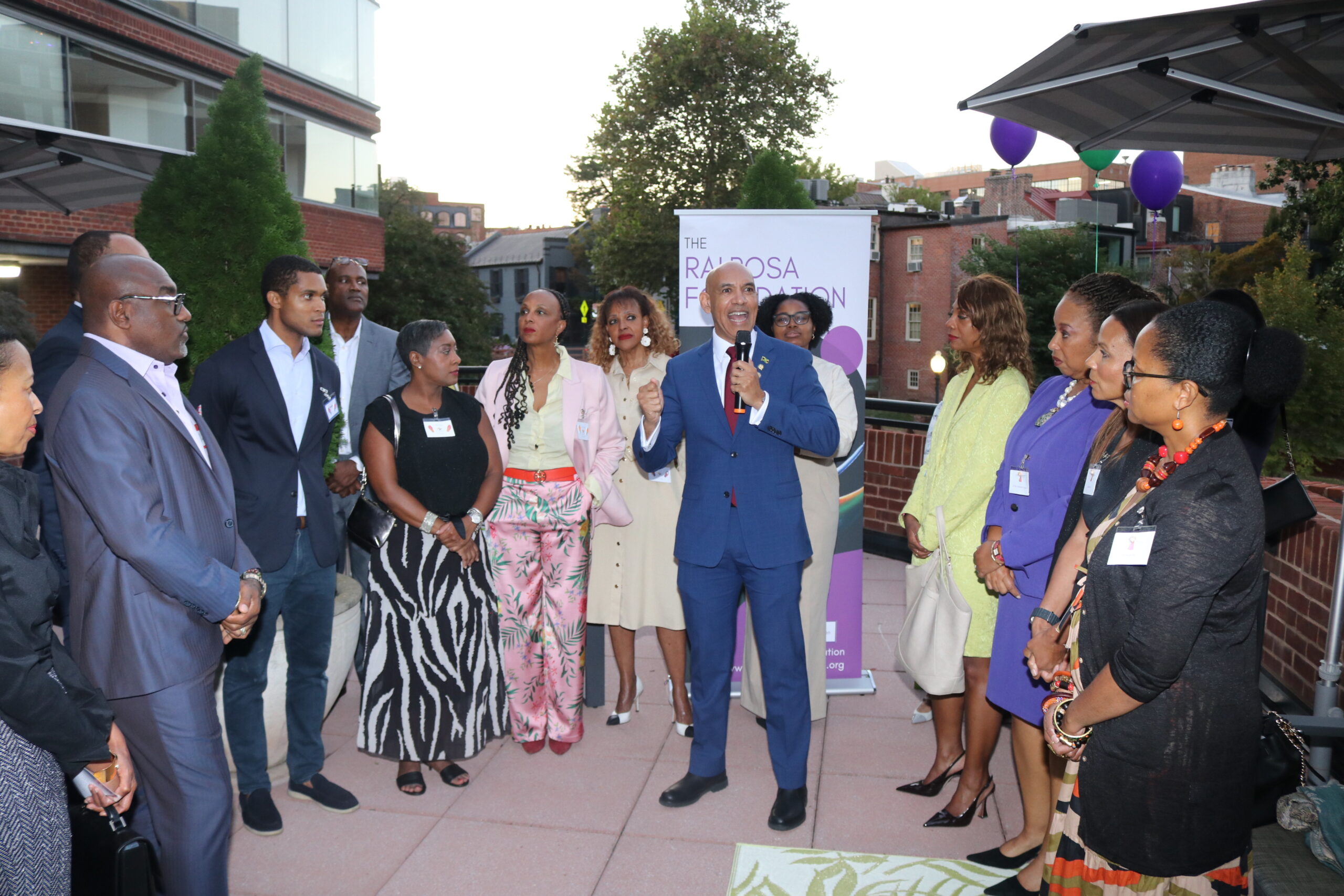
Standing before a room packed with Jamaican professionals—educators, doctors, lawyers, engineers, and other diaspora leaders—Anderson delivered an unconventional diplomatic pitch. Speaking at a reception hosted in his honour by the RalRosa Foundation in Georgetown, Washington, D.C., on October 1, the Ambassador challenged Jamaican medical professionals in the United States to view their migration as preparation for a new phase of national service through investment and collaboration.

“If I was going to get sick, here’s the place to do it,” Anderson joked to the audience before shifting to a more serious tone. “Imagine if those same skills and expertise could generate billions while fixing the very healthcare system you left behind.”
From Brain Drain to Economic Gain
The Ambassador’s call draws on lessons from Turkey and Thailand—two countries that successfully turned their health sectors into global medical tourism destinations. Turkey alone earns more than US$1.8 billion each year from patients, many from the United States, seeking affordable, high-quality care abroad.
“Those countries didn’t just build facilities for foreigners,” Anderson noted. “Their investments lifted the quality of care for everyone. Jamaica can do the same.”
He added that Jamaica’s proximity to the U.S., its English-speaking workforce, and its deep pool of diaspora physicians provide a natural competitive advantage.
A New Investment Model
Anderson’s proposal reimagines the role of diaspora healthcare professionals. Instead of competing with U.S. hospital salaries, Jamaica would offer equity partnerships in medical tourism facilities, allowing rotational practice and knowledge transfer—without requiring full relocation.
He said he intends to begin discussions with Health and Wellness Minister Dr. The Honourable Christopher Tufton to establish the necessary regulatory framework, including international accreditation, malpractice protections, and investment incentives.
“When supply meets demand, it’s no longer a problem—it’s an industry,” Anderson told the audience. “We can transform our brain drain into a business model that strengthens the healthcare system at home.”
Funding the Public Health System
At the heart of the Ambassador’s vision is a plan to channel private-sector earnings from medical tourism into Jamaica’s public healthcare system, creating a self-sustaining cycle of improvement.
“Can you imagine if Minister Tufton had an inflow of private healthcare revenue to reinvest in public hospitals?” Anderson asked. “That’s how we turn a challenge into a solution.”
He described the approach as “a virtuous circle,” where international earnings raise local standards, which in turn attract more patients and practitioners—including diaspora doctors seeking meaningful ways to give back.
Honoring Diaspora Philanthropy
Anderson also paid tribute to the RalRosa Foundation, whose work he described as “a lighthouse of love.” Named after Keith Ralston and Phyllis Rosa Watson, the foundation has adopted the Golden Spring Health Centre in St. Andrew, providing diagnostic equipment and committing J$3 million over three years to improve services.
“Keith Ralston and Phyllis Rosa Watson planted seeds of service that have grown into this magnificent tree under which we gather tonight,” Anderson said. “Let us water it with our commitment and ensure its branches provide shade for generations of Jamaicans yet unborn.”
Dr. Jacqueline Watson, President of the Foundation, announced that the organization will extend its adoption of the Golden Spring Health Centre for another three years, continuing its mission to uplift healthcare in underserved communities.
A Call to Action
With characteristic military clarity, Anderson urged Jamaican professionals abroad to seize the opportunity before foreign investors do.
“Non-Jamaicans already see the potential,” he warned. “I’m saying to us, get in on the ground floor.”
For Anderson, Jamaica’s medical tourism ambition is not only about attracting foreign patients—it’s about re-enlisting the diaspora in the national project of transformation.
“Every dollar doesn’t just buy equipment,” he concluded. “It purchases hope. Together, we can turn charitable intention into sustainable solutions.”