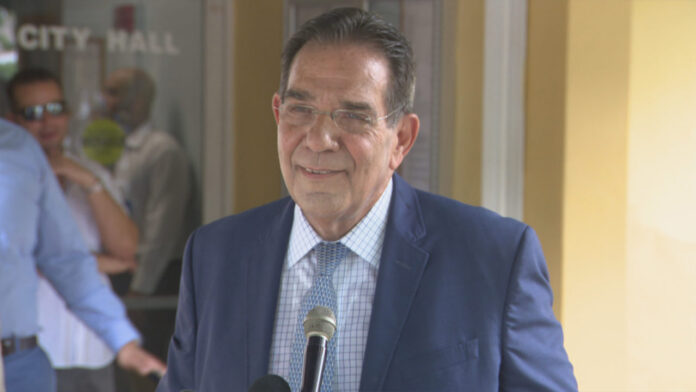
Xavier Suarez, Miami’s first Cuban-born mayor, has filed to run for his old job, after a judge ruled the city’s attempt to postpone this year’s mayoral election was unconstitutional.

“I’m throwing my hat back in the ring,” said Suarez, who served as mayor until 1998 and is the father of current Mayor Francis Suarez.
Now 76, Suarez made history when he first took office as the city’s Cuban-born leader, a milestone that resonated deeply in Miami’s large Cuban-American community. His bid to return could set the stage for a political rematch with longtime rival Joe Carollo, a current city commissioner rumored to be eyeing a mayoral run. The two last faced off in 1997, when Carollo won after a court battle.

“Filing for mayor, you know, it’s been a bit of a wait because the judge had to make a decision,” Suarez said.
That decision came Monday, when a judge struck down the Miami City Commission’s controversial 3-2 vote to delay the election until 2026. Supporters of the delay claimed it would improve voter turnout and reduce costs by aligning city elections with federal ones held in even-numbered years.
Suarez wasn’t convinced. He said the logic didn’t hold up and the change sidestepped legal requirements.
Commissioner Carollo, despite benefiting from the proposed delay, voted against it. The measure would have extended his term and that of Mayor Francis Suarez.
The lawsuit challenging the postponement was filed by Emilio Gonzalez, a former city manager now running for mayor. He argued the city needed voter approval to change an election date. The judge agreed, reinforcing that such changes require a public referendum.
Michael Hepburn, another mayoral candidate and former University of Miami administrator, also opposed the move. Hepburn, who is of Bahamian descent, hopes to become Miami’s first Black mayor and warned the delay was not only unconstitutional but undermined democratic principles.

The city plans to appeal the ruling, with a final decision expected within three weeks.
Meanwhile, Suarez’s entrance adds new momentum to a race already under legal and political scrutiny—and reignites a decades-old rivalry that once defined a pivotal chapter in Miami’s political history.