



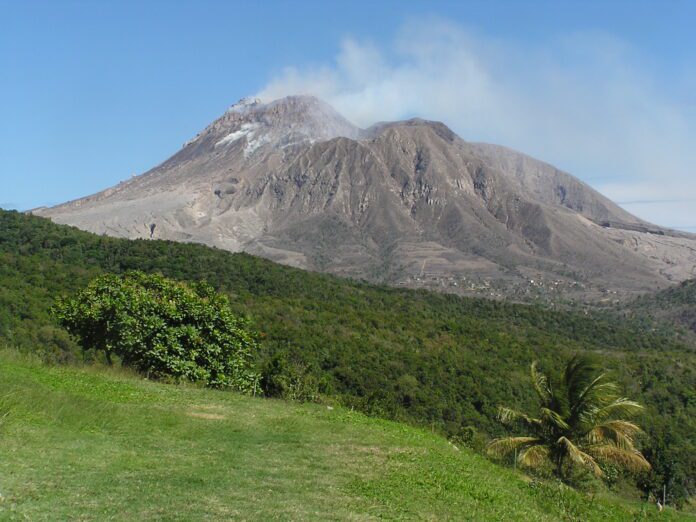
On December 19, the Montserrat Volcano Observatory (MVO) reported a swarm of volcanic earthquakes at the Soufriere Hills Volcano, prompting temporary restrictions in nearby hazard zones. The intense sequence of Volcano-Tectonic (VT) earthquakes began at 10:20 am and lasted for approximately 90 minutes, during which seismic instruments recorded 93 separate events. Two of the largest earthquakes registered magnitudes of 3.3, occurring at depths of 2 to 3 kilometers beneath the volcano’s dome.
MVO described this swarm as “probably the most intense seen since the pause began on 11 February 2010,” indicating the significant nature of the seismic activity. The swarm has led to increased monitoring and temporary restrictions to ensure public safety in the affected areas.
MVO stated that the volcanic earthquake swarm on December 19 was comparable to an event on March 23, 2012, which involved 54 VT earthquakes and included ash venting. However, the December 19 swarm featured a slightly larger maximum earthquake magnitude of 3.6. Unlike the 2012 event, no ash emissions or changes in fumarole activity were observed during the recent seismic activity.

As a precaution, the MVO recommended a temporary suspension of activities in Zone V, the most hazardous area near the volcano. By 12:40 pm, seismic activity had returned to background levels, prompting authorities to lift the restrictions and restore access to the previously restricted zone.
The volcano has been in a state of pause since February 2010, with most VT events during this period occurring at similar depths to today’s swarm.
The Soufrière Hills is an active, complex stratovolcano with many lava domes forming its summit on the Caribbean island of Montserrat. After a long period of dormancy, the Soufrière Hills volcano became active in 1995 and continued to erupt through 2010. Its last eruption was in 2013. Its eruptions have rendered more than half of Montserrat uninhabitable, destroying the capital city, Plymouth, and causing widespread evacuations: about two-thirds of the population have left the island. Chances Peak in the Soufrière Hills was the highest summit on Montserrat until the mid-1990s, but it has since been eclipsed by various rising and falling volcanic domes during the recent volcanic activity










 reported a swarm of volcanic earthquakes at the Soufriere Hills Volcano)