In a significant political development, Haiti’s transitional presidential council officially transferred the rotating presidency to architect Leslie Voltaire on Monday. This transition, however, unfolded amid notable opposition from outgoing president Edgard Leblanc Fils, who declined to sign a decree ratifying the leadership change.
Leblanc Fils expressed his discontent, citing unresolved corruption allegations against three council members who remain voting members and played a role in approving the transition. He stated, “I cannot participate in any process that will further weaken and devalue the country’s justice system,” warning that the council’s majority decision could exacerbate instability in Haiti.
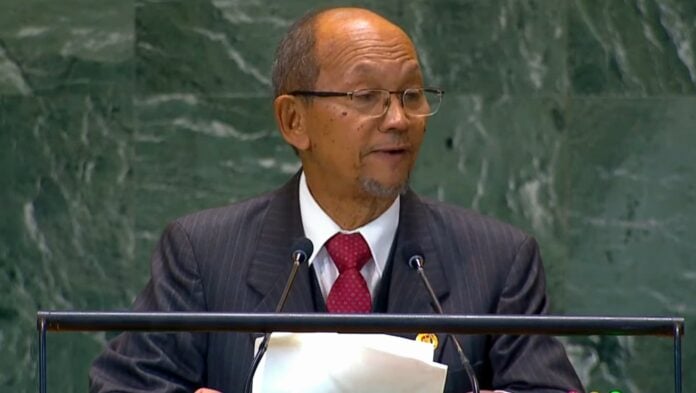
In his inaugural address, Voltaire, representing the party of former President Jean-Bertrand Aristide, emphasized his commitment to enhancing the council’s efficiency and transparency. “Under my presidency, the transitional presidential council will consolidate its gains and structures to work with more efficiency and transparency,” he asserted. Voltaire further noted the Haitian people’s frustration with “violence, lies, and corruption,” calling for a collective effort to prioritize national interests over personal agendas.

The political rift within the council comes at a challenging time for Haiti, which is still reeling from a recent gang massacre that left at least 70 people dead. Prime Minister Garry Conille is currently seeking international security assistance to address the escalating violence.
The transitional council was established in April following protracted negotiations among various political and civil factions in Haiti. Tasked with selecting a prime minister and wielding certain presidential powers, the council was intended to operate until conditions are deemed secure enough to hold new elections.
However, the council now faces scrutiny from Haiti’s anti-corruption unit, which has recommended legal action against three of its members accused of accepting credit cards and soliciting nearly $770,000 from the chairman of a state-run bank. Although these members remain on the council, they have been excluded from the current presidential succession plan, which designates economist Fritz Alphonse Jean to succeed Voltaire in March, followed by businessman Laurent Saint-Cyr in August.

The January 30 Collective of political parties, which nominated Leblanc Fils to the council, has called for the accused members—diplomat Smith Augustin, politician Louis Gerald Gilles, and former judge Emmanuel Vertilaire—to be suspended pending judicial outcomes. All three have denied the allegations, with Augustin initially positioned to succeed Leblanc Fils as the council’s president.
The formation of the council followed the resignation of Prime Minister Ariel Henry, who stepped down amid a gang crisis that has resulted in thousands of deaths and displaced over 700,000 residents. The new administration aims to facilitate Haiti’s first elections since 2016, contingent on the restoration of adequate security.
As gang violence continues to escalate, displacing even more citizens and exacerbating an ongoing hunger crisis, long-awaited international support remains slow to materialize. The situation underscores the urgent need for effective governance and stability in Haiti as it navigates a challenging political landscape.