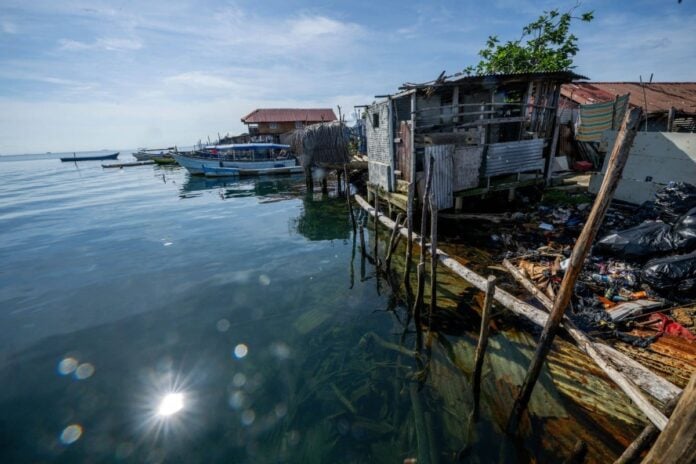
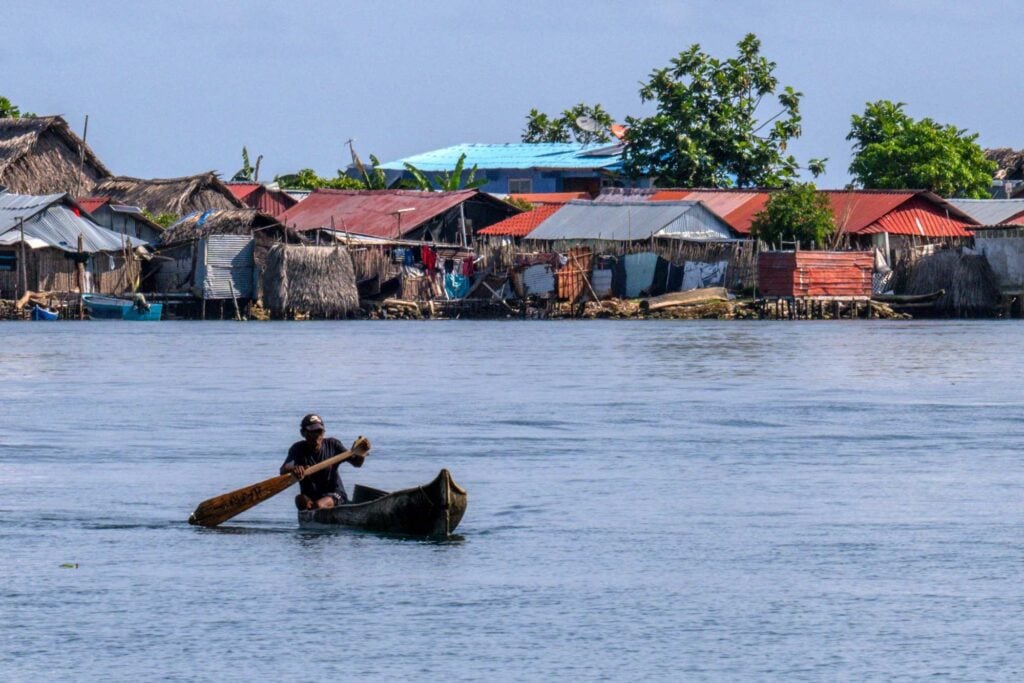
Located just off Panama’s northern coast, Carti Sugtupu finds itself in dire straits. This compact isle, surrounded by pristine waters and spanned the size of five football fields, houses a dense population. So much so, some homes are precariously elevated on stilts, stretching out into the inviting sea.

Daily struggles of the islanders
According to an article by Agence France-Presse (AFP), the island’s indigenous community, comprising less than 2,000 individuals, faces daily challenges far beyond what most would deem acceptable.
A glaring lack of potable water and sanitation facilities makes survival an everyday challenge. Yet, this community endures, drawing sustenance from the ocean, harvesting staple crops, crafting traditional textiles, and welcoming the occasional tourist.

Add to these hardships the relentless heat, scarcity of public services, and cramming conditions, and it paints a picture of resilience.
Rising tides and fading hopes
Unfortunately, this story of endurance is under a looming shadow.
Climate change has been steadily pushing sea levels higher, and the repercussions are evident.

Homes, which were once safe havens, now find themselves susceptible to regular flooding.
AFP notes that experts from various fields predict that Carti Sugtupu, along with many other islands in the Guna Yala region, might be consumed by the sea by century’s end.
Of the threatened islands, 49 are populated, their fate hanging in the balance as they stand just a meter above the current sea level.

“We have noticed that the tide has risen,” retired teacher Magdalena Martinez, 73, told AFP as she sat embroidering a brightly colored toucan onto a “mola” cloth traditional to the Guna people on Carti Sugtupu.
“We think we’re going to sink, we know it’s going to happen,” she said.
Martinez is among hundreds of inhabitants of the island expecting to move soon to a settlement on mainland Panama newly built by the government.
A glimpse into daily life
A day in the life of a Carti Sugtupu resident is far from ordinary.
Without access to drinking water on the island, the inhabitants resort to river collections or purchases from the mainland.
Furthermore, most homes get sporadic power from a communal generator, while a few have solar panels feeding their homes built of zinc and wood, with floors of dirt.
Sanitation remains a concern as individual toilets are non-existent, leading the community to rely on shared latrines perched over the sea.
Human Rights Watch highlights the absence of basic amenities, further compounded by the increasing frequency of floods and storms.
A ray of hope on the horizon
Following prolonged commitments and postponements, the government has finally signaled a beacon of hope for these islanders. By late 2023 or early 2024, relocation plans are slated to be underway.
A new neighborhood on the mainland, a short boat ride away, is in the works. The aim is housing 300 families, averaging five members each, in two-bedroom houses complete with access to clean water and electricity.
In a world grappling with the effects of climate change, Carti Sugtupu’s story, as relayed by AFP offers a sobering reminder of the vulnerabilities of some communities. Yet, even in the face of adversity, the indomitable spirit of the islanders shines bright.