Home Blog Page 164

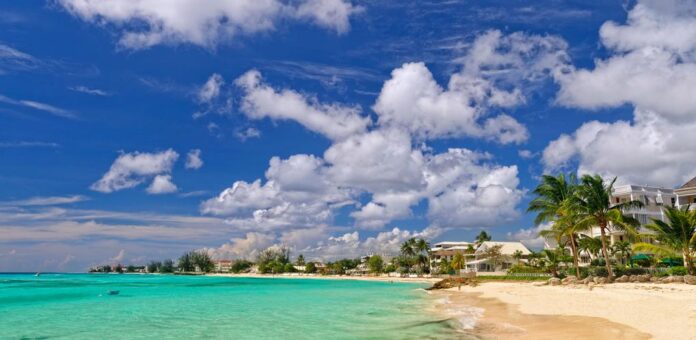
Barbados named Caribbean’s leading wedding destination for second year

barbados travel

Barbados has been named the Caribbean’s leading wedding destination for the second consecutive year, cementing its position as the region’s premier spot to tie the knot.

The accolade was confirmed at the World Travel Awards (WTA) Caribbean & North American Gala Ceremony held on Oct. 4 at Sandals Grande in Saint Lucia. The annual event celebrated excellence across the travel and tourism sectors, drawing leading industry figures and contenders from across the region.

In a release from the Barbados Tourism Marketing Inc. (BTMI), the tourism promotion agency hailed the win as a reflection of the island’s ongoing dedication to fostering a world-class wedding industry.

BTMI Chief Operations Officer Cheryl Carter said in the statement, “Barbados is deeply honoured to receive this prestigious recognition as the Caribbean’s Leading Wedding Destination. This award is a testament to the pride our nation feels when welcoming couples to begin their lives together.

“The dedication, flair, creativity, and expertise of our many wedding planners ensure that every wedding, regardless of the size or style, is truly a memorable occasion. Over the years, Barbados has staged weddings of every description, from intimate to extravagant, drawing on our rich culture, stunning venues, and world-class hospitality. With this accolade, we reaffirm our commitment to excellence in delivering exceptional destination weddings.”

Sandals Grande played host to the third leg of WTA’s Grand Tour 2025, highlighting the region’s finest travel and tourism organizations in a red-carpet affair.

Director of BTMI’s Caribbean department, Graham Clarke, welcomed the continued recognition of Barbados in the face of tough competition from neighboring destinations.

“I am happy that the title remains in Barbados this year, as we were able to eclipse some of our neighbours who were also competing for the honour,” Clarke said in the release. He further credited local industry stakeholders for their role in securing the award.

“This honour reflects not only our island’s unique appeal but also the dedication of our exceptional tourism stakeholders, whose hard work makes every celebration extraordinary,” he added.

WTA founder Graham Cooke described the ceremony as an opportunity to recognize the region’s highest achievers.

“Our winners are stellar examples of tourism excellence, and I congratulate each and every one for helping to raise the collective benchmark across the region,” Cooke said.

Established in 1993, the World Travel Awards are regarded as the benchmark for industry excellence, celebrating outstanding achievements in travel, tourism, and hospitality worldwide.

NGO official confirms two Trinidadians among six killed in US strike near Venezuela

Trinidadians US strike

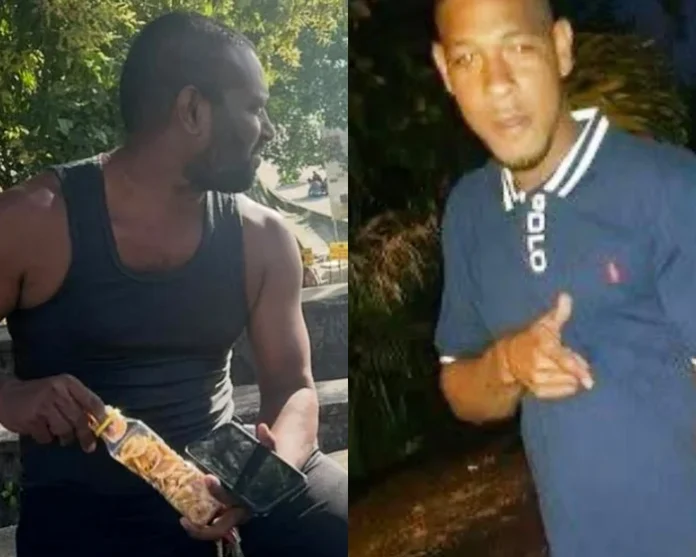
Gary Aboud, secretary of the non-governmental organisation Fishermen and Friends of the Sea, confirmed Thursday that two Trinidad and Tobago nationals were among six people killed following a United States military airstrike on a small vessel in international waters near the coast of Venezuela earlier this week.

“We would like to offer our condolences to the families, friends, children, wives of the deceased. Very, very sorry that they were murdered like this. I am very very sorry,” Aboud said on a radio broadcast Thursday with regards to the killings of Richie Samaroo and Chad “Charpo” Joseph.

Aboud said the killings have left local fisherfolk afraid to go out to sea. “People are terrified at the risk of being killed at sea. Personally I am very upset with our national position of bringing American warships and allowing them to bypass the judicial process.

“We have law and order. We are a civilised nation. Yet we have adopted and given blessing to warmongering murderers to come into our territory and kill people outside of the judicial process.

“I strongly advise fishermen not to go further than a quarter of a mile, half a mile from the shoreline,” Aboud said, adding that the fishes being sought can be caught near the shores. “It is very dangerous to be offshore as you can be killed at anytime,” he said.

The Trinidad and Tobago government and the Trinidad and Tobago Police Service have made no official comment regarding the deaths of the two nationals, but Prime Minister Kamla Persad Bissessar has publicly given support to the United States’ war on narcotics in the Caribbean.

Last month, President Donald Trump ramped up U.S. military presence in the Caribbean Sea, ordering an amphibious squadron to the southern Caribbean as part of efforts to address threats from Latin American drug cartels. A nuclear-powered attack submarine, additional P-8 Poseidon reconnaissance aircraft, several destroyers and a guided-missile cruiser have also been allocated to U.S. Southern Command as part of the mission.

The United States military has carried out four deadly airstrikes in Caribbean waters over the past few weeks against what Washington alleges are Caracas-backed drug traffickers. The Venezuelan government denies the charge, accusing the administration of being a threat to the peace and security of the whole region.

Persad Bissessar has said she is “happy that the US naval deployment is having success in their mission,” and that “the pain and suffering the cartels have inflicted on our nation is immense. I have no sympathy for traffickers; the US military should kill them all violently”.

In the latest U.S. strike, President Trump said it targeted a vessel allegedly linked to narcotics trafficking and terrorist networks transiting through the Caribbean. It was the fifth U.S. “kinetic strike” in the region since the deployment of military assets under the administration’s anti-narcotics campaign. In total, 27 people have been killed in five similar operations, which Washington says are aimed at dismantling drug routes linked to Venezuela.

Relatives of the two Trinidadians have condemned the attack, calling it “inhumane” and “unjustified.” Joseph’s mother, Lenore Burnley, said her son was not involved in drugs and described his death as “wrong and cruel. “The sea law is they supposed to stop the boat and intercept it, not blow it up like that,” Burnley told a local media outlet, while her son’s grandmother, Christine Clement, said he had been living in Venezuela for the past three months and had previously survived another attack while trying to return home by sea.

Aboud urged that the prime minister be questioned before the International Criminal Court over the matter. “What our Right Honourable Prime Minister has done should be questioned at the International Criminal Court because we are a country with courts and if we have a problem with the way the judiciary is functioning we should improve it.

“We have a Coast Guard…(and if) they don’t have radars, we should get radars, but killing our boys at sea, murdering them, there are about 20 commodity items that Trinidad imports from Venezuela,” he told radio listeners.

He listed those items and described broader cross-border movement and trade. “It is very common that many of our boys find it lucrative to run over (to Venezuela) and bring substances. There is also trafficking with the Venezuelans that work here , come and go regularly for funerals, weddings or they just go home after working here for a year or two.

“So the idea of killing them, certainly there is a small percentage of the American import of cocaine and narcotics that come through the Caribbean and the United nations has documentation that states eight per cent of it travels through the Eastern Caribbean territories, but 92 per cent travel through Central America,” Aboud added.

Over to you, Coach McClaren! Jamaica’s last chance to get it right

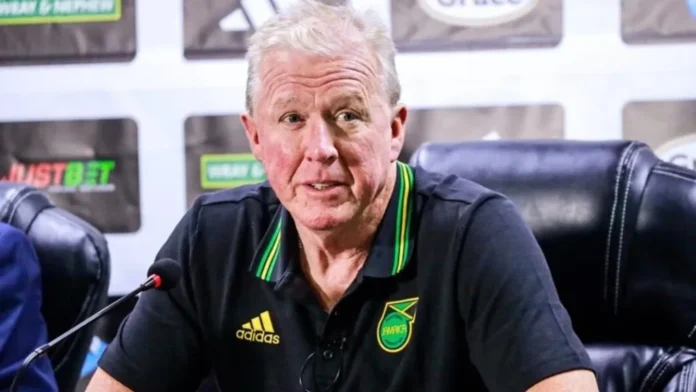
Reggae Boyz Head Coach Steve McClaren

Steve McClaren, the Englishman entrusted with steering Jamaica’s Reggae Boyz toward the FIFA World Cup Finals, has been handed a lifeline.

After weeks of erratic selections, disjointed play, and tactical confusion that nearly jeopardized Jamaica’s seeded status, the Yorkshire native once again finds himself in a position to finish the job. Fate, it seems, has given him another chance — but this time, there will be no excuses.

A philosophy lost in translation

In researching McClaren’s career, one finds repeated descriptions of a coach wedded to possession-based football — a style that emphasizes control, short passing, and methodical build-up from the back. The reality, however, could hardly be more different when one watches his Jamaica side in action. Since his appointment, the Reggae Boyz have played nothing like the teams he was once said to mold.

Instead of composed transitions and intelligent movement, Jamaica has shown a brand of football built on hurried long balls, misplaced passes, and an overreliance on individual brilliance to compensate for the absence of structure. It’s hard to reconcile that with the supposed McClaren philosophy.

Lessons unlearned from the past

If this sounds familiar, it should. McClaren’s time in charge of England between 2006 and 2007 was marked by eerily similar complaints. Critics at the time labeled his football “dull” and uninspired — a style devoid of attacking spark. In 18 games with the Three Lions, he managed nine wins, four draws, and five losses, culminating in the infamous failure to qualify for Euro 2008 and his immediate sacking.

That chapter, it seems, has followed him to Kingston.

The false comfort of victory

Yes, Jamaica sat atop Group B of the Concacaf World Cup Qualifiers after September’s victories over Bermuda and Trinidad and Tobago. On paper, that looks like progress. But the truth behind the results is far less flattering. The performances were patchy, the play incoherent, and the team’s tactical identity nearly invisible.

Then came the rude awakening — a 0-2 loss away to Curaçao in Willemstad last Friday. That defeat sent shockwaves through the island and region alike, as panic spread among fans who had long expected an easy path through a group considered one of the weakest on paper.

A gift and a warning

But fortune smiled again. Jamaica’s emphatic 4-0 win over Bermuda on Tuesday — coupled with Trinidad and Tobago’s 1–1 draw with Curaçao — returned the Reggae Boyz to the top and, more importantly, restored control of their own destiny.

Crucially, this resurgence came not by accident, but by correction. McClaren, perhaps out of necessity, finally got his team selection right. Shamar Nicholson, inexplicably sidelined in recent matches, returned to the starting line-up and immediately justified his inclusion. His goal — his fifth of the campaign and 21st for Jamaica — underscored the poise and presence the team had been missing.

Nicholson’s link-up play with Renaldo Cephas, Kaheim Dixon, and Kasey Palmer brought new life to the attack. Together, they orchestrated Jamaica’s most cohesive and fluid display under McClaren’s watch.

The numbers told the story: 527 completed passes, 75% possession, and 28 shots — 12 on target. For the first time under McClaren, Jamaica looked like a team with purpose and chemistry.

The choice before McClaren

Now, the real test looms. With two critical fixtures remaining — most notably the away clash against Trinidad and Tobago in November — McClaren must decide what kind of team Jamaica will be.

Will he revert to the lumbering, lifeless side that stumbled through September’s wins? Or will he trust the chemistry and rhythm shown in the demolition of Bermuda? The upcoming encounter in Port of Spain demands boldness, not regression. Trinidad and Tobago will be desperate to avenge their earlier defeat, but their defensive frailties are well-documented. Jamaica must exploit those weaknesses decisively and avoid entering the final match against Curaçao under must-win pressure.

A staff without excuses

McClaren does not walk this path alone. He is flanked by three assistant coaches and a special advisor — an unprecedented level of support in Jamaica’s football history. Never before has a national coach been granted such resources for what was expected to be a straightforward qualifying assignment.

That makes the expectations crystal clear: qualification is not optional.

The final word

Tuesday’s performance offered a glimpse of what Jamaica can be — dynamic, composed, ruthless. Now, McClaren must prove that it wasn’t a one-off, but the start of something real.

The nation waits.
Over to you, Coach McClaren.


Opinion: Is Mia Mottley the most effective Caribbean leader or just the most outspoken?

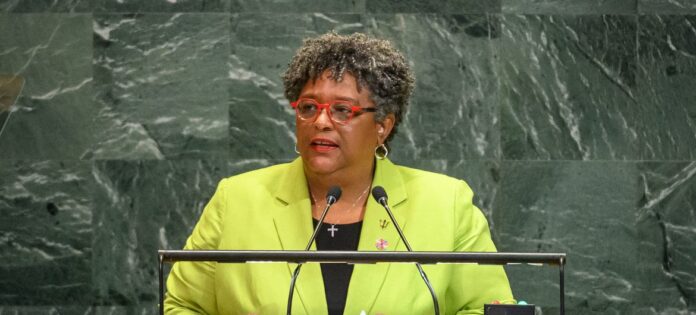
Barbados Prime Minister Mia Amor Mottley

Barbados’ Prime Minister Mia Mottley is currently one of the more prominent Caribbean leaders. There are strong arguments both for her being extremely effective and particularly outspoken on the world stage. While other world leaders were noticeably conservative, even cautious, in their individual addresses at the recent meeting of the General Assembly of the United Nations, PM Mottley was, as has come to be expected, very bold in her approach, calling on the world’s developed countries, including the United States, to focus more on assisting in the development of smaller nations, particularly in the area of climate change.

Her government has also been bold on global matters, including support for a ceasefire in the Israel-Palestinian conflict in Gaza, criticizing Israel for its relentless attacks on Gazans, and support for a Palestinian state co-existing with the state of Israel. Mottley’s approach contrasts starkly with, for example, the more cautious approach of Jamaica’s Prime Minister Andrew Holness and his administration. The Jamaican government, at two successive annual meetings of the UN’s General Assembly, was absent during key votes, one pertaining to the Israel/Gaza war, and the other regarding Palestine’s leader speaking at the UN.

Mottley’s courageous and bold style of speaking on the international stage has endeared her to many within and outside the Caribbean, regarding her as the region’s most effective leader.

Mottley, aside from gaining notoriety for her bold and frank voice, has backed this up with key achievements under her leadership in Barbados since taking office in 2018. Among her more outstanding achievements is her work on climate change. She has pushed a plan to phase out fossil fuels in Barbados by 2030 and has initiated another program for Barbados to plant more than one million trees to enhance resilience and food security, engaging citizens in environmental restoration.

Internationally, she has helped to lead regional and global initiatives, like the Bridgetown Initiative, calling for reform of the international financial architecture to better serve, among others, small island developing states vulnerable to climate change.

Her government has reduced Barbados’s debt-to-GDP ratio from very high levels through renegotiation of debts and creative financial instruments. Despite economic shocks caused by storms, COVID-19, and dependence on tourism, Barbados has shifted toward economic diversification through solar and green energy, as well as the digital economy.

Under Mottley’s leadership, Barbados promptly transitioned to being a republic, cutting ties with the British monarchy—something very meaningful for Barbados’ national identity and sovereignty.

Mottley’s style of leadership is blatantly visible. She doesn’t shy away from addressing global inequality, colonial legacies, climate justice, among other issues. This has given Barbados and the Caribbean more voice on the global stage.

All this suggests she’s more than just an outspoken speaker. She combines visible international advocacy with concrete policy and has won strong electoral mandates.

But being vocal doesn’t always equal effectiveness, and there are limits and criticisms. Some people are unhesitant in pointing out that Barbados is small, which sometimes makes ambitious policies easier—or more visible—than in larger nations. Small island economies are vulnerable to external shocks like hurricanes, climate disasters, dependence on tourism, and global supply chain issues. Even with strong leadership, those vulnerabilities limit success.

Some critics argue about pace, implementation, or whether promises always match outcomes, especially when international funding or cooperation is required. So, while Mottley’s outspokenness helps her bring global attention to issues like climate justice, reparations, and global inequality, that isn’t a guarantee of success. She needs tools, resources, and cooperation to back up the rhetoric, her critics argue.

Comparison is often made between Mottley and Jamaica’s PM Holness, who recently led his Jamaica Labour Party to a historic third consecutive term. Despite criticism from his political opponents, Holness has also made significant achievements.

Under Holness, Jamaica has made credible strides in improving some macroeconomic fundamentals. For example, the debt-to-GDP ratio has been reduced, employment has improved, and inflation has become more stable. His administration raised income tax thresholds, cut certain taxes like the GCT on electricity, increased the minimum wage, invested heavily in infrastructure development, and initiated social safety net programs.

But social problems like crime remain a big issue in Jamaica, and while improvements exist, they’re not uniform. Public perception still sees insecurity, corruption, and inequality as major problems. The scale of Jamaica’s socio-economic challenges is large. Issues like social and economic inequality are persistent deficits, which easily make big wins in one area offset by persistent problems in others.

Mottley and Holness have made significant achievements, but when one prioritizes international visibility, climate advocacy, moral leadership, and exemplary policies addressing small-island vulnerabilities, Mottley is arguably near the top.

Mia Mottley is a very effective leader in terms of agenda-setting and combining internationally relevant causes with domestic policy wins. Whether she is the most effective Caribbean leader depends on what people value. But her bold outspokenness creates the perception that she’s the beacon of Caribbean leadership. She effectively pairs strong domestic performance with exceptional international advocacy. She has elevated Barbados, and by extension, the Caribbean, onto the world stage more than any regional leader since perhaps Eric Williams or Michael Manley.


Top 5 reciprocating saws for cutting metal, wood, and PVC in 2025

reciprocating saws
Workman with chainsaw over white background

If you’ve ever had to cut through thick wood, stubborn metal, or tricky PVC pipes, you already know the magic of reciprocating saws. These machines do not simply cut; they cut through materials in a powerful, controlled, and accurate manner. If you are a contractor, remodeler, or DIY person, you have the appropriate reciprocating saw; it is easy, quicker, and painless to do.

But with such many choices available, which of them do you really want to spend your money on in 2025? Let’s talk about the top 5 reciprocating saws that deliver on performance, comfort, and reliability — the ones that actually get the job done.

DEWALT DCS367B 20V MAX XR Compact Reciprocating Saw

DEWALT is not new to the power tools market, and its DCS367B model demonstrates the point. It is lightweight, small, and strong enough to do site work daily. This reciprocating saw also has a brushless motor, which provides it with increased runtime and extended life of the tool – this is appreciated by pros.

The design is also well-balanced, thereby making your hand not get tired even after taking a long time. It is also easy to make flush or tricky cuts at varying angles with its 4-position blade clamp. In the case of wood, metal, and PVC, this saw can deal with all three with no slowdowns.

It is also battery-free, meaning it can be taken anywhere, and this is ideal in the face of tight or outdoor environments where electric outlets are not necessarily available.

Milwaukee M18 FUEL SAWZALL Reciprocating Saw

The M18 FUEL SAWZALL by Milwaukee is a monster when it comes to brute strength. It is an engine designed to satisfy those who require serious cutting speed and performance.

This reciprocating saw supports POWERSTATE technology of the POWERSTATE brushless motor, which provides faster cuts and reduced vibration. It is also known because of its REDLINK PLUS Intelligence system that combats overheating and overload.

The durability of this saw is one of the reasons why it is selected by the contractors. You can drop it, push it, and you can still expect it to perform like new. It weighs a little more than other models, but that is the cost of power.

In the event you handle heavy steel piping or massive timber, then this saw will become a sort of companion.

Makita XRJ05Z 18V LXT Lithium-Ion Reciprocating Saw

Makita has the idea of making tools that are smooth and comfortable. The XRJ05Z has an ideal combination of speed and precision. It has two-speed adjustments, one for gentle work and another for heavy-duty cutting.

It is quiet running and has low vibration, hence it is popular for long projects. The ability to change the blade without tools is also a welcome feature, as you can change the blade within seconds.

The other reason why people like this model is that it also has an LED light that helps cut through the dark or small areas. When the PVC pipes under sinks are to be cut, or there must be a flush cut in a corner, this saw is up to the task.

BOSCH GSA18V-083B Compact Reciprocating Saw

GSA18V-083B of BOSCH cannot be huge, but not to be underestimated. It’s designed for tight areas where full-sized reciprocating saws just don’t fit.

This saw is extremely light, weighing more than 4 lbs but yet it provides powerful cutting. It is preferable to plumbers, electricians, and HVAC installers, who require something fast and accurate.

It has a smaller body and a variable-speed trigger that provides more precise control, particularly in cutting PVC or thin metal sheets. You will be pleased with the way it goes about smaller detail work, still without giving way.

This small reciprocating tool will save you and your hands as well as your temper, in case you frequently have to work overhead or in the narrowest corners.

BLACK+DECKER BDCR20C 20V MAX Reciprocating Saw

The BLACK+DECKER BDCR20C will be a favorite for a beginner or an amateur DIYer. It is cheap, easy to operate, and ideal for home projects such as cutting wood panels, branching, or light metal work.

It is pivotally shodded, providing additional control during cutting, and has a rapid system of changing the blade so that you can change the material in no time.

It is not as strong as Milwaukee or DEWALT, but it is the one that should be used by any person who does not necessarily need an industrial-level tool, yet wants to have clean and fast cuts.

This model is still among the finest choices for homeowners who do not have to empty their pockets to get power.

Maintenance Tips for Long Life

A reciprocating saw is a friend; take care of it and it will take care of you.

The following are the ways to keep it going:

  • Clean the saw after every use
  • Blades should be sharp, and when blunt, changed.
  • Keep dry to avoid rusting.
  • Determine whether it has a cordless check battery.
  • Oil moving components after every few months.

Such easy routines result in a significant difference in performance and life span.

Conclusion

The reciprocating saws have evolved. What was once cumbersome, noisy, and rough is now smart, efficient, and designed so that any type of user can use it. Be it remodeling a house, cutting metal pipes, or pruning trees, out there is a model that is to your taste and budget.

The above five saws are the finest of 2025, all of them being reliable to thousands of users due to their cutting ability.

Next time you reach to take your tool bag, be sure to have the reciprocating saw. It is not any other power tool, but a tool that makes the work hard but cuts simply.

Why smart creators buy real Instagram likes in 2025

Instagram is no longer only a photo-sharing application. It is the place of personal brands, the growth of small businesses, and the connection of the world with creators. However, this is the reality of the matter, regardless of how creative you make your posts; unless people like or comment on them, then your profile is not going to disappear.

That’s why many smart creators today choose to buy real Instagram likes. Not the kind of likes that are fake and are bot-like and disappear overnight, but actual likes on real people that make your posts look alive and credible.

We should deconstruct the reason as to why purchasing real Instagram likes actually works–and why it will be one of the most intelligent decisions creators make in 2025.

The Harsh Truth About Low Engagement

Suppose this: you have taken hours to create a beautiful post, a catchy caption, and post it at the most opportune moment, and then, there is no response. Very few likes, comments barely.

The algorithm of Instagram immediately presupposes that your post is not interesting, and conceals it under the majority of your followers. This leads to a decline in reach, a lack of motivation, and an unnoticed piece of content.

That is where fake Instagram likes are sold. With the regular engagement, your post will be seen automatically. Cheating the system is not about it; it is just about giving your content the push it rightfully deserves.

What It Really Means to Buy Real Instagram Likes

When you buy real Instagram likes, you’re getting likes from authentic accounts — not bots, not fake profiles. These are actual users who interact with your content, and your engagement will look natural and real.

Real likes, in contrast to fake ones, do not go away in a few days, but remain on your post and, in fact, make the Instagram algorithm consider your account better. It informs Instagram to tell more users to look at this post by saying people like it.

That is all the signal that can alter your growth curve totally.

Why Smart Creators Buy Real Instagram Likes

Why then are the leading influencers and intelligent creators doing it? Being honest is important, but at the same time, they are aware of how the game operates. Many creators today prefer to buy real Instagram likes from Buzzvoice when their growth starts slowing down. It gives their posts an early lift, helping them reach more people organically. This is what makes this strategy so effective:

Instant Algorithm Boost

The Instagram algorithm gives preference to highly engaged content. Posts with real likes will be promoted to multiple feeds, Explore pages, and Reels tabs.

It implies that purchasing real Instagram likes will provide your post with a better beginning, and the moment that the organic users see the post, they will start interacting as well.

Social Proof That Builds Trust

As new visitors come to your profile, the first thing they can see is what you engage in. When your post already has hundreds of likes, then they automatically believe that your content is valuable.

Social proof is important – individuals follow trends. The true likes make your page appear to work, credible, and worth following.

Faster Growth and Brand Deals

Brands are no longer looking at the number of followers. They are also self-interested in the rate of engagement.

Better Reach and Real Followers

This is the one thing that most people overlook: when it comes to having more likes, it does not simply increase your figures. They assist in accessing new real people.

As soon as Instagram itself sees that your post is doing well, it presents it to more people. Those fans are then able to become your true followers, and your development will increase as a matter of course.

How to Buy Real Instagram Likes Safely

First of all, it is important to clarify that not all the like providers are equal. Others engage in selling fake engagements that may cause damage to your account. That is why it is always advisable to stay with good sites that will give you genuine, quality likes from active accounts..

  • When you buy from BuzzVoice:
  • Active users will give you 100% real engagement.
  • Fast, safe, and steady, the delivery does not drop abruptly.

You have the freedom on the number of likes you desire and distribute them among various posts.

BuzzVoice has built a strong reputation among creators because its services actually help increase visibility instead of risking bans or fake boosts.

This type of engagement strategy would be worth every single penny in case you are going to expand your profile intelligently in 2025.

What Happens After You Buy Real Instagram Likes

Once you reach the point of getting real likes, something interesting happens: your content will start working on its own.

  • You are featured in the feed of followers more often.
  • More individuals find your posts on Explore.
  • Organic users begin to like and comment on the post because they see it is active.
  • Brands begin to pay attention to your development.

It is a good process chain that continues to gain momentum.

So instead of waiting months for random growth, buy real Instagram likes to accelerate the process safely and naturally.

Mistakes to Avoid When Buying Likes

Although this is a winning strategy, you should be cautious. The following are some of the errors to be avoided:

  • Don’t buy fake or cheap likes. They fall rapidly and appear to be suspicious.
  • Avoid overdoing it. Maintain a balanced interaction development.
  • Be consistent with quality content. Like has the power to increase the reach, but your content retains followers.

It is at that point when you are combining real likes with real content that real growth will occur.

Conclusion

Instagram likes purchased are not a quick-fix solution, but a savvy growth tool. Competition is stiff in 2025, algorithms are difficult, and organic reach cannot be predicted. But smart creators adapt.

Certain investment into real engagement may be counted as one of the wisest steps in case you are serious about the idea to expand your profile, achieve some credibility, and make your Instagram a real brand.

Start small, remain consistent, and watch yourself develop before your very eyes.

Keep in mind – clever inventors do not rely on chance. They take action.

Florida authorities seize $14.7 million in cocaine in Turnpike traffic stop

Florida cocaine

Florida officials intercepted millions of dollars worth of cocaine traveling from Mexico to South Florida during a traffic stop on the Florida Turnpike, the governor’s office announced Wednesday.

According to authorities, the Drug Enforcement Administration’s (DEA) West Palm Beach office alerted Florida Highway Patrol (FHP) to intelligence regarding a semi-truck suspected of transporting narcotics from the Mexican-Texas border into the state. On Oct. 5, DEA and FHP officers stopped the vehicle traveling southbound on the Turnpike.

“During the inspection, troopers discovered a concealed trap door containing multiple duffel bags filled with cocaine,” officials said in a news release.

Authorities reported that the vehicle was carrying approximately 173 kilograms of cocaine, with an estimated street value of $14.7 million. The suspects were detained and taken into federal custody for further investigation and prosecution. One of those detained was reportedly previously deported from the United States. Their identities have not been released.

In the news release, officials highlighted Florida’s ongoing efforts to combat drug trafficking and its collaboration with federal agencies. Executive Director Dave Kerner said, “With the southern border shut down, transnational narco cartels can no longer simply walk across the border with guns, drugs, and human couriers. This forces cartels to attempt to move large amounts of narcotics in a way that allows the full weight of law enforcement efforts to not just interdict, but to investigate the supply chain back to their point of origin. Ultimately, a secure border allows us to target the ultimate source of evil; the criminal cartels and the resources they rely upon.”

Since 2019, FHP has recovered over 14,000 kilograms of illegal narcotics, including 925 kilograms of cocaine, 23.5 kilograms of fentanyl, 14 kilograms of heroin, 9,600 kilograms of marijuana, and 19 kilograms of MDMA, authorities said.

Lt. Gov. Jay Collins emphasized the state’s zero-tolerance stance on drug trafficking: “Our message to drug traffickers is clear: do not bring your poison into our state. We will find you, we will arrest you, and we will always stand on the front lines to protect Floridians from those who threaten our safety and our future.”

Births plunge, deaths rise: Jamaica records slowest population growth in 50+ years

Jamaica population

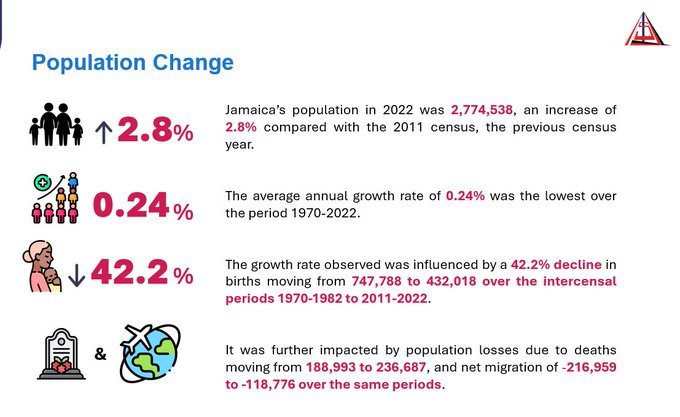
Jamaica’s population reached 2,774,538 according to the 2022 Population and Housing Census, up 2.8 per cent from 2,697,983 in 2011. However, the Statistical Institute of Jamaica (STATIN) has noted that the island is experiencing its slowest population growth since 1970, driven by declining birth rates, higher deaths, and reduced net migration.

The preliminary census and geospatial findings were presented on Wednesday during STATIN’s Quarterly Press Briefing at S Hotel in Kingston.

“The equivalent average annual growth rate of 0.24 per cent for 2011 to 2022 is the lowest recorded over the period 1970 to 2022,” said STATIN Director of Censuses, Demographic and Social Statistics, Stacy-Ann Robinson. “We’re seeing where births are declining, deaths are increasing, and net migration has reduced. Together, these factors have produced slower population growth.”

The data revealed a 42.2 per cent decline in births over the past four decades, falling from 747,788 in 1970–1982 to 432,018 in 2011–2022. Meanwhile, deaths increased from 188,993 to 236,687, and net migration fell from 216,959 to 118,776 over the same period. Between 2011 and 2022 specifically, births dropped from 445,581, deaths rose from 186,516, and net migration continued its downward trend.

Despite the overall slowdown, some parishes experienced population growth, reflecting continued urbanisation. St Catherine recorded the largest increase, adding 26,545 people, followed by Clarendon with 13,540, and Kingston and St Andrew with 10,478.

“These figures highlight where the most significant population shifts have occurred, indicating areas of growth that may require increased planning and resource allocation,” Robinson said.

The census also confirmed the highest population densities in urban parishes, with Kingston and St Andrew exceeding 500 persons per square kilometre, followed by St Catherine and St James, both between 401 and 500 persons per square kilometre. In contrast, largely rural parishes such as Hanover, Westmoreland, St Elizabeth, St Thomas, Portland, St Mary, St Ann, and Trelawny recorded fewer than 200 people per square kilometre.

Robinson noted that the distribution of the population continues to shape development priorities, including housing, infrastructure, and environmental management. “The densest communities were found in St Andrew, St Catherine, and St James, along with the major urban centres and capitals. Parishes such as Portland, St Thomas, and Trelawny had some of the least densely populated communities due to their location near the Cockpit Country and the Blue Mountains,” she explained.

The 2022 census, initially scheduled for 2021, was delayed due to the COVID-19 pandemic, with data collection beginning in September 2022 and concluding in December 2024. To ensure robust population estimates, STATIN used advanced methodologies, including Global Human Settlement Population Layer modelling (GHS-POP), bottom-up modelling, and small-area population estimation techniques.

The results underscore a demographic shift towards urban centres and reveal a growing need for policy planning to address the challenges of declining birth rates, an aging population, and uneven regional population distribution.

President Ali reaffirms Guyana’s commitment to peace and regional security

President Dr. Mohamed Irfaan Ali on Wednesday reiterated Guyana’s steadfast commitment to maintaining Latin America and the Caribbean as a zone of peace, while emphasizing the country’s determination to combat transnational crime, the illicit drug trade, and any destabilizing activities that threaten regional stability.

Delivering the feature address at the Commissioning Parade for Standard Officers’ Course (SOC) No. 56 at Base Camp Ayanganna, President Ali reminded newly commissioned officers that defending peace and sovereignty requires both strength and principle.

“Guyana supports the aspiration of keeping Latin America and the Caribbean as a zone of peace, but equally also, we support every action and embrace every partnership to cripple transnational crime, the illicit drug trade, and any form of destabilisation that threatens the security of Guyana and this region,” he asserted.

President Ali stressed that Guyana’s defence spending is aimed at peace and protection, not war, ensuring that the nation’s prosperity, democracy, and territorial integrity remain safeguarded. He also reaffirmed the country’s adherence to international law and the peaceful resolution of disputes, including the ongoing case before the International Court of Justice (ICJ).

“Guyana rejects all forms of aggression and any attempt to impose solutions through coercion. Peace, dialogue, and legality must define how nations interact,” he said.

Acknowledging both traditional and emerging security threats, such as cybercrime, trafficking, and terrorism, the President highlighted the government’s commitment to equipping the Guyana Defence Force (GDF) with advanced technology, tools, and training.

“We will protect every inch of Guyana’s territory with vigilance and resolve. We will deploy technology to make our country more secure. We will be adaptable, smart, and ready to respond, on land, at sea, in the air, and in cyberspace,” he stated.

President Ali also emphasized the value of regional and international collaboration, noting that lasting security is achieved through cooperation rather than isolation.

“The Caribbean looks to Guyana as a partner in stability, in security, and in service. When one nation in the Caribbean stands strong, the entire region is fortified,” he said.

Finally, the President clarified that Guyana’s dispute is not with the Venezuelan people, but with any actions threatening the nation’s sovereignty.

“We will defend our territorial space with our partners, those who stand for freedom, sovereignty, democracy, and the rule of law,” President Ali affirmed.

This address underscores Guyana’s dual approach of promoting peace while strengthening defence capabilities, positioning the nation as a key partner in regional security.

PJ Patterson says US strikes in Caribbean are ‘fundamentally dangerous’

Jamaica's former PM Pj patterson
Jamaica's former Prime Minister Pj Patterson.

Former Jamaican Prime Minister P.J. Patterson has described recent U.S. drone attacks on vessels in Caribbean waters as “fundamentally dangerous and a horrible erosion of regional leaders’ commitment to sovereignty in the region.”

Since September 2, 2025, U.S. President Donald Trump has authorized strikes on at least five vessels in the Caribbean Sea, claiming they were carrying drugs destined for the United States. According to U.S. officials, these operations have resulted in the deaths of 27 people, including six in the most recent strike on Tuesday.

Speaking to The Gleaner, Patterson, who led Jamaica from 1992 to 2006, said the strikes undermine longstanding regional commitments to peace.

“At our very first meeting in 1972, in Chaguaramus, the four independent countries—Jamaica under Michael Manley, Barbados under Errol Barrow, Guyana under Forbes Burnham, and under the chairmanship of Eric Williams (then Prime Minister of Trinidad and Tobago)—declared the Caribbean to be a zone of peace,” Patterson said.

“What we are witnessing is a fundamentally dangerous and horrible erosion of that firm commitment to assert our collective sovereignty in the area. It is a matter which compels the heads of governments in the Caribbean, as a matter of the greatest urgency, to be in consultations and seek to take a common position, hopefully in reaffirmation of that inviolable position.”

Patterson’s remarks come amid reports from Trinidad that two citizens may have been among six people killed in a U.S. strike targeting a vessel allegedly transporting drugs from Venezuela. President Trump claimed the vessel carried six “narcoterrorists” but provided no evidence to support the assertion.

Residents of the fishing village of Las Cuevas told local police that two Trinidadians were aboard the sunken vessel, though authorities are still confirming their deaths. One of the potential victims has been identified as 26-year-old fisherman Chad Joseph, whose mother, Lenore Burnley, said relatives in Venezuela reported he was on the boat. Another possible victim, referred to locally as Samaroo, has also been reported.

These operations are part of a series of U.S. military actions aimed at halting drug trafficking off the Venezuelan coast. Washington maintains the strikes are necessary to prevent narcotics from reaching American shores.

The incident follows controversial remarks by Trinidad and Tobago Prime Minister Kamla Persad-Bissessar, who praised a previous U.S. strike on another suspected drug vessel that killed 11 people.

“I, along with most of the country, am happy that the U.S. naval deployment is having success in their mission,” Persad-Bissessar said. “The pain and suffering the cartels have inflicted on our nation is immense. I have no sympathy for traffickers; the U.S. military should kill them all violently.”

She added, “Our country has been ravaged by bloody violence and addiction because of the greed of the cartels. The slaughter of our people is fueled by evil cartel traffickers.”

The escalating U.S. military activity in Caribbean waters has sparked growing concern among regional leaders about sovereignty, civilian safety, and the potential impact on local communities.

Gleaner and Jamaica Observer to form joint venture for printing and distribution efficiencies

The Gleaner Company Media Limited (GCML) and Jamaica Observer Limited (JOL) have announced plans to establish a formal joint venture (JV) by the end of the year, marking an unprecedented collaboration between the two leading media houses in Jamaica’s print industry.

The decision follows the signing of a Memorandum of Understanding (MOU) in early August to explore outsourcing opportunities aimed at improving operational efficiency. That MOU examined the potential for shared printing, production, and distribution networks to achieve cost savings and strengthen service delivery.

After completing the fact-finding phase, both companies have agreed to move forward with a shared logistics model for print production and distribution, designed to enhance efficiency and reduce costs while maintaining their independence.

“Our JV discussions detail the co-ordination and efficient printing and distribution logistics as well as all the processes and procedures that will ensure the stability and integrity of both operations,” said Anthony Smith, Chief Executive Officer of the RJRGleaner Communications Group.

The initiative represents a forward-looking shift in Jamaica’s print media landscape. Dominic Beaubrun, Managing Director of Jamaica Observer Limited, described the move as both practical and transformative.

“Our companies recognise the practical and forward-thinking transformation that this JV heralds. This agreement means we are actively finding the solutions to preserve the industry,” Beaubrun said.

While the collaboration focuses on back-end operations, both companies emphasized that they will remain fully independent entities with separate ownership, editorial control, and news operations.

Founded in 1834, The Gleaner is Jamaica’s oldest continuously published newspaper, while the Jamaica Observer, established in 1993, has become a major player in the national and regional media landscape.

Management from both organizations expressed confidence that the new venture will strengthen their ability to deliver high-quality journalism and reliable service to readers across Jamaica and beyond.

MSF permanently closes Turgeau Emergency Center in Haiti

Violent clashes in the central neighborhood of Bel Air in Port-au-Prince on the 28 of February provoked the arrival of 92 bullet wounded patients at the MSF Emergency Center of Turgeau in the space of a week.Credit: Alexandre Marcou/MSF

International medical organization Médecins Sans Frontières (MSF) has announced the permanent closure of its Emergency Center in Turgeau due to worsening insecurity and escalating violence in central Port-au-Prince, Haiti.

The facility had temporarily suspended operations in March 2025 after a serious security incident targeting MSF staff. Despite several attempts to identify ways to safely resume activities, the organization concluded that the risks remain too high for both patients and healthcare workers.

“For several weeks now, the area surrounding the centre of Port-au-Prince has been the scene of regular armed violence,” MSF said in a statement. “If medical activities were to resume at this hospital, located in the immediate vicinity of these clashes, they would be severely compromised by the level of risk to patients and healthcare workers.”

The building has reportedly been hit several times by stray bullets due to its proximity to combat zones. MSF described the decision to close the facility as a “last resort,” emphasizing the severe impact on access to healthcare for residents already suffering from violence, instability, and deteriorating living conditions.

“Since the suspension, several technical ballistic protection assessments have been conducted to identify suitable protection solutions, but no option has been able to guarantee a sufficient level of security to continue our activities,” said Jean-Marc Biquet, MSF Head of Mission in Haiti.

He added that the organization remains committed to Haiti and is exploring alternative ways to continue providing medical support in both Port-au-Prince and Carrefour.

Before resuming any suspended activities, MSF said it is still awaiting the signing of a memorandum of understanding that would establish a humanitarian corridor between Port-au-Prince and Carrefour—considered a crucial step for ensuring safe passage for medical personnel and supplies.

MSF has called on all parties to respect humanitarian and medical work, stressing that medical action must take place “in complete neutrality” and within areas protected from violence.

Despite the closure, MSF continues to operate several other facilities in the capital, including the Tabarre hospital, Cité Soleil emergency center, Pran Men’m clinic, and primary healthcare services in Delmas 4, Bel Air, and Bas Bel Air/La Saline. The organization also recently reopened the Isaïe Jeanty maternity hospital in partnership with Haiti’s Ministry of Health and Population.

St. Kitts and Nevis first Caribbean nation recognized by IATA for eBorder system

St. Kitts airport Saint Kitts

The Government of St. Kitts and Nevis has announced that its eBorder system is now officially recognized on the International Air Transport Association’s (IATA) World Tracker as In Force for both Advance Passenger Information (API) and Passenger Name Record (PNR) compliance — making the Federation the first Caribbean nation to achieve this dual status.

The recognition confirms that St. Kitts and Nevis’s sovereign API-PNR system is fully operational, with airlines having begun transmitting API data as early as May 2025. In August 2025, Sunrise Airways became the first Caribbean carrier to submit PNR data under the new system.

“St Kitts and Nevis is proud to be recognised on IATA’s tracker as fully operational for both API and PNR,” said Chief Immigration Officer Sheldon Jeffers. “This reflects our commitment to providing border agencies with the tools needed to make informed, real-time decisions that enhance security and facilitation alike.”

The eBorder programme integrates enhanced border security with smoother passenger processing. Through pre-arrival screening, it supports faster and more efficient entry procedures, reducing wait times for legitimate travellers and improving the overall arrival experience.

“With its listing as In Force, St. Kitts and Nevis has reached the highest operational category on IATA’s World Tracker — a status that reflects not just legislative readiness, but live airline participation in both API and PNR submissions,” explained Permanent Secretary in the Ministry of National Security, Glenroy Blanchette. “It also underscores St. Kitts and Nevis’s ability to modernise border management through internationally aligned best practices while safeguarding both national security and traveller facilitation.”

The announcement follows the September 2 milestone when Acting Chief Immigration Officer Jeffers confirmed that St. Kitts and Nevis had become the first country in CARICOM and the wider Caribbean to officially receive PNR data from international carriers.

The Government said the achievement highlights its ongoing commitment to building a safe, prosperous, and sustainable island state by embracing innovation, strengthening international partnerships, and enhancing both citizen security and visitor experience.

Trinidad police investigating claims 2 citizens killed in US military strike

trinidad police

Police in Trinidad and Tobago are investigating reports that two of the country’s citizens may have been among six people killed in a U.S. military strike on a vessel allegedly transporting drugs from Venezuela.

U.S. President Donald Trump announced on Tuesday that the strike targeted six “narcoterrorists” operating in international waters, accusing them of smuggling narcotics from Venezuela to the United States.

According to Trinidadian police, residents from the fishing village of Las Cuevas reported that two locals were aboard the vessel that was destroyed. Authorities said they are still working to confirm whether the men were among the dead.

The U.S. operation is one of several in recent months targeting alleged drug traffickers off the coast of Venezuela. At least 27 people have reportedly been killed in similar strikes, which Washington says are part of efforts to stop drug shipments before they reach American shores.

One of the missing Trinidadians has been identified by relatives as 26-year-old fisherman Chad Joseph. His mother, Lenore Burnley, told AFP that family contacts in Venezuela said he was aboard the ill-fated boat.

“According to maritime law, if you see a boat, you are supposed to stop the boat and intercept it, not just blow it up,” Burnley said. “That’s our Trinidadian maritime law and I think every fisherman and every human knows that.”

She said Joseph had been staying with family in Venezuela for the past three months and was planning to return home soon. Local media also reported another possible Trinidadian victim from Las Cuevas, known to residents only as Samaroo.

In response to heightened U.S. military activity in the region, Venezuelan President Nicolás Maduro ordered large-scale military exercises on Wednesday, saying he was mobilizing the armed forces, police, and civilian militias to defend the nation.

The incident follows controversial remarks from Trinidad and Tobago Prime Minister Kamla Persad-Bissessar, who recently praised a U.S. strike on another suspected drug boat in the southern Caribbean that killed 11 people.

“I, along with most of the country, am happy that the U.S. naval deployment is having success in their mission,” Persad-Bissessar said in a statement. “The pain and suffering the cartels have inflicted on our nation is immense. I have no sympathy for traffickers; the U.S. military should kill them all violently.”

“Our country has been ravaged by bloody violence and addiction because of the greed of the cartels,” she added. “The slaughter of our people is fueled by evil cartel traffickers.”

Authorities in Port of Spain say they are in contact with Venezuelan officials and the U.S. Embassy as they work to verify whether Trinidadian nationals were among the victims of the strike.

Patrice Roberts celebrates men and their mothers in new single ‘Mudda Dey’

Patrice Roberts

Caribbean soca star Patrice Roberts has released her latest single, “Mudda Dey,” the second track from her upcoming project—and it’s one that carries deep emotion and purpose.

Known for her empowering anthems that uplift women and inspire confidence, Patrice takes a heartfelt new direction with “Mudda Dey,” choosing to celebrate positive male figures and the mothers who raised them.

“I wanted to do something different with this song,” Patrice said. “It’s about empowering men—especially the good ones—and also honoring the single mothers who raised them. It’s hard to raise a great man without a father, and it takes a level of strength and resilience that deserves to be recognized.”

The song balances gratitude and admiration, serving as a tribute both to mothers who persevere through challenges and to men who embody love, integrity, and responsibility.

Patrice envisions “Mudda Dey” as a globally resonant record that connects with listeners across generations and cultures. After years of championing women’s empowerment through hits like “Mind My Business” and “Tender,” she’s now turning her focus toward honoring good men and the mothers who helped shape them.

With its heartfelt message and universal theme of love and appreciation, “Mudda Dey” continues Patrice Roberts’ mission of creating music that uplifts and unites audiences around the world.

Miramar to host 10th Annual State of the City Address: ‘Our Future Together’

The City of Miramar will host its 10th Annual State of the City Address, presented by Mayor Wayne M. Messam, on Thursday, October 30, 2025, from 6:30 p.m. to 8:30 p.m. The event will take place at the Miramar Park of Commerce, located at 2800 Executive Way.

This year’s address, themed “Our Future Together: Building Upon a Decade of Growth and Transformation,” marks a major milestone for the city. The program will celebrate ten years of progress, innovation, and collaboration under Mayor Messam’s leadership, highlighting Miramar’s economic growth, infrastructure improvements, sustainability efforts, and investments in residents’ quality of life.

Attendees will hear about the city’s accomplishments over the past decade — including record-breaking development, expanding business corridors, enhanced public safety, and new cultural and recreational programs. The mayor will also outline Miramar’s upcoming strategic priorities aimed at strengthening its reputation as one of South Florida’s most forward-thinking and inclusive communities.

“As we celebrate ten years of growth and transformation, this milestone is not just about how far we’ve come, it’s about where we’re going together,” said Mayor Wayne M. Messam. “Miramar’s success is rooted in our unity, vision, and commitment to building a brighter, more sustainable future for every resident and business that calls our city home.”

The event is free and open to the public, but registration is required. Residents are encouraged to reserve their seats early by scanning the QR code on the event flyer or registering online at MiramarSOTC2025.eventbrite.com.

Event details:

  • Date: Thursday, October 30, 2025

  • Time: 6:30 p.m. – 8:30 p.m.

  • Location: Miramar Park of Commerce, 2800 Executive Way, Miramar, FL 33025

CCJ dismisses Allen Chastanet’s appeal in Ernest Hilaire customs case

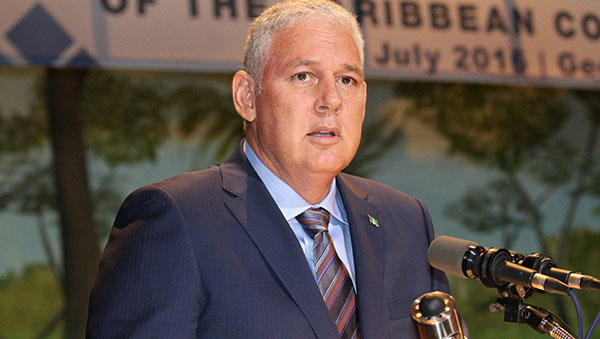
Prime Minister Allen Chastanet st lucia

The Caribbean Court of Justice (CCJ) has dismissed an appeal filed by Saint Lucia’s Opposition Leader, Allen Chastanet, effectively bringing to an end a years-long legal battle surrounding the withdrawal of customs charges against Deputy Prime Minister Dr. Ernest Hilaire.

In its ruling delivered on Tuesday, October 15, the CCJ upheld earlier decisions by both the High Court and the Court of Appeal, which had rejected Chastanet’s challenge.

The matter dates back to 2020, when the Comptroller of Customs filed several charges against Dr. Hilaire under the Customs (Control and Management) Act. The charges stemmed from the alleged importation of a Land Rover Discovery vehicle following his return from his posting as Saint Lucia’s High Commissioner in London.

A year later, in 2021, newly appointed Comptroller of Customs Sharman Emmanuel sought permission from the Magistrates’ Court to withdraw the charges. The court granted that request, ending the proceedings.

However, Chastanet subsequently applied to the High Court for judicial review, arguing that the Comptroller no longer had authority to withdraw the case because the Director of Public Prosecutions (DPP) had already taken over the matter.

The CCJ disagreed with Chastanet’s argument, finding no evidence that the DPP had formally assumed control of the prosecution.

“The mere forwarding of the case file to the DPP and the subsequent participation of counsel from the DPP’s office in the proceedings were insufficient to establish that the DPP had taken over the prosecution,” the Court stated.

The judges further ruled that once the magistrate granted permission to withdraw the case, that judicial decision superseded any administrative action taken by the Comptroller. As such, the challenge should have been directed at the magistrate’s ruling, not the Comptroller’s decision.

“Judicial review of the Comptroller’s decision was legally misconceived,” the Court added.

The CCJ’s decision confirms that the withdrawal of the customs charges against Dr. Hilaire was lawfully executed and not open to further review, marking the conclusion of one of Saint Lucia’s most politically charged legal disputes.

Mavado returns to Jamaica after nearly a decade; arrest warrant dropped

Mavado

Dancehall heavyweight Mavado has made a long-anticipated return to Jamaican soil after nearly ten years in self-imposed exile — a moment that marks both a personal and cultural milestone. The artist, whose real name is David Brooks, arrived in Kingston on Tuesday and was officially welcomed by government officials.

Mavado was greeted at the S Hotel by Delano Seiveright, Member of Parliament for St. Andrew North Central and Minister of State in the Ministry of Industry, Investment & Commerce. Also in attendance was Senator Abka Fitz-Henley, Minister in the Office of the Prime Minister. The high-level reception has been widely interpreted as a sign of easing tensions between the artist and Jamaican authorities.

His homecoming follows years of legal complications that kept him abroad. In 2018, Mavado was named a person of interest by Jamaican police in connection with violent incidents in his Cassava Piece community. Since then, he has lived primarily in the United States.

Compounding the challenges was his son Dante Brooks’ high-profile murder case. Dante and a co-accused were convicted in 2021 and sentenced to life in prison. However, in a stunning reversal earlier this year, the Court of Appeal overturned the conviction, freeing both men of all charges.

Despite his prolonged absence, Mavado has remained active internationally. His recent collaboration with DJ Khaled, Vybz Kartel, Bounty Killer, and Buju Banton has been a chart success, debuting at #37 on Billboard’s Rhythmic Airplay Chart, reaffirming his global reach and relevance.

While details of his meeting with government officials remain private, sources suggest discussions may have focused on his potential involvement in Jamaica’s creative industries and possible cultural partnerships with the state.

In a development that clears the way for a smoother reintegration, the warrant issued for Mavado’s arrest in 2018 was officially dropped on Wednesday morning. The entertainer met with the St. Andrew North Police in the presence of his attorney to address a complaint filed by Anthony Goulbourne related to an alleged assault occasioning actual bodily harm.

Superintendent of Police Randy Sweeney confirmed the matter has been closed.

“The St. Andrew North police met with Mr. David Brooks and his attorney, and based on the information at hand and the circumstances, that matter has been closed,” Sweeney told Observer Online.

He further clarified that the warrant “was not a court-issued warrant but one signed off by a Justice of the Peace after police provided information.” That warrant, he confirmed, “is no longer in effect.”

Mavado’s return — now free of legal obstacles — signals a fresh chapter for one of dancehall’s most influential figures. As fans celebrate his homecoming, many are watching closely to see how the “Gully God” re-engages with Jamaica’s music scene and public life.

Freddie McGregor & Friends returns to Jamaica for star-studded reggae celebration

Freddie McGregor

After a successful staging at the Sunset Cove Amphitheater in Florida this past August, the “Freddie McGregor & Friends” concert is making its return, this time, on home soil. Scheduled for Saturday, February 7, 2026, the event promises an unforgettable evening in Kingston, Jamaica, as fans, family, and fellow musicians gather to celebrate the life and legacy of one of reggae’s most beloved voices, “The Captain” Freddie McGregor.

While the venue is yet to be announced, anticipation is already running high as music lovers prepare to show their appreciation for the man who has delivered decades of timeless hits such as Push Comes to Shove, Big Ship, and Just Don’t Want to Be Lonely.

According to the official website, “Freddie McGregor & Friends is more than a concert—it’s a celebration.” It’s a space for fans to sing, dance, and honor the legendary crooner who has helped shape the sound and spirit of reggae music across generations.

The previous staging, held on August 17, 2025 at the Sunset Cove Amphitheatre in Florida, drew a massive crowd and featured powerhouse performances from a dynamic lineup of reggae acts including Luciano, Alaine, Spragga Benz, Gyptian, Pressure, and Frisco Kidd. The mix of classic and contemporary acts brought an electrifying energy to the stage, cementing the show as a must-attend event on the reggae calendar.

While the artist lineup for the Kingston edition has not yet been revealed, organizers promise live performances, surprise appearances, and plenty of memorable moments.

This upcoming staging will not only celebrate McGregor’s musical journey, but also spotlight the enduring strength of reggae music as a unifying force for communities. This staging of “Freddie McGregor & Friends” carries special significance. In recent years, the singer faced serious health challenges, including a widely reported stroke that temporarily sidelined his career. The incident sparked concern across the global reggae community and led to an outpouring of support from fans and fellow artists alike.

The homecoming event celebrates Freddie McGregor’s journey from early stardom as a child singer in the 1960s, to international acclaim with hits like Big Ship, Africa Here I Come, and I Was Born a Winner, to a now celebrated elder statesman of reggae music who continues to inspire with both his voice and his spirit.


Jamaican woman convicted of first-degree murder in 2022 Tamarac killing

Sakiyna Thompson

A jury on Tuesday found Sakiyna Thompson, 31, guilty of first-degree murder in the July 2022 killing of her romantic rival, 23-year-old Kayla Hodgson. Thompson, a native of Jamaica, could face life in prison.

Hodgson’s family expressed relief and joy over the verdict, hugging each other in the courtroom.

“We’re just so thankful in this moment that the jury was able to see the story for what it is, that Kayla did not deserve to die the way that she did,” family members said.

23-year-old Kayla Hodgson

Prosecutors alleged that Thompson flew from New York to South Florida days before the murder with the intent to kill Hodgson, who had been dating Thompson’s ex-boyfriend. Authorities said Thompson was enraged after Hodgson blocked her on social media following a series of tense messages.

During the trial, jurors heard four hours of closing arguments centered on whether Thompson had planned the killing or acted in self-defense. Prosecutors described Thompson as “jealous and insecure,” while defense attorneys argued she acted to protect herself and her unborn child.

In July 2022, Thompson confronted Hodgson at her Tamarac apartment at 5 a.m., and the encounter escalated into a fatal struggle. Jurors were shown graphic police body camera footage of the crime scene, where Hodgson was found stabbed dozens of times.

“Being violated in your own home, in the sanctity of your own home, is a scary thing,” said Tonya Johnson, an assistant state prosecutor. “What’s even scarier is being attacked, being brutally murdered in your own home, and that person getting away with it.”

Thompson testified that she had gone to Hodgson’s apartment uninvited to talk “woman-to-woman” about their shared romantic interest. She said the discussion quickly turned violent.

“She just starts grabbing my hair and punching me,” Thompson told jurors. “I’m on the floor. I’m kicking. I’m trying to get up to fight back at this point cause now it’s a fight.”

At the time, Thompson said she was two months pregnant. She claimed Hodgson struck her over the head with a hookah stem and slashed her stomach with a piece of glass.

“I killed her because she took the glass from the hookah and slashed me across my stomach,” Thompson said. “I told her I was pregnant and I felt like she was trying to hurt my baby. I didn’t just fight for me. I fought for me and my baby.”

After the struggle, Thompson admitted to panicking, cleaning parts of the scene with Lysol wipes and paper towels, discarding her bloody clothes, and changing into Hodgson’s outfit before leaving. Surveillance footage later showed her exiting the apartment complex in different clothing from when she arrived around 4 a.m.

“I was pregnant, and I just killed somebody,” she told the courtroom, explaining why she did not call the police.

Defense attorneys insisted that Thompson did not initiate the fight and that the killing was unplanned.

“She thought, ‘Oh, God, she’s coming for me and my baby,'” said Ros Meritxell, a defense attorney. “That’s when she grabs the glass, and she blacks out. She knows she slashed, she’s not saying she didn’t cause that, she can’t tell you the order that it happened in. This was a fight, a mutual fight.”

The state said Thompson attempted to conceal her identity that night by wearing a hat and a COVID-19 mask and using a fake Uber account to travel to and from the apartment. The defense countered that there was no evidence Thompson brought a weapon and that Hodgson allowed her into her home.

The jury’s guilty verdict brings a close to a case that captured Broward County’s attention and highlights the tragic consequences of jealousy and violence.

Florida Publix stores to permit open carry after court ruling

Publix

Publix, Florida’s largest grocery store chain, will now follow the state’s open carry policy after a recent court ruling.

Open carry is the practice of carrying a firearm visibly in public, as opposed to concealed carry, where the firearm is hidden from view (for example, under clothing).

On Sept. 10, 2025, a panel of the 1st District Court of Appeal (DCA) overturned a 1987 law that made it a misdemeanor to visibly display firearms, according to Florida Attorney General James Uthmeier. The ruling allows private businesses to “compel individuals carrying firearms to leave their premises.”

Weeks later, on Sept. 25, Florida implemented its statewide open carry policy.

“As of Sept. 25, 2025, Florida law allows the open carry of firearms. Publix follows all federal, state, and local laws,” a Publix spokesperson told NBC affiliate News Channel 8 and the South Florida Sun Sentinel.

The spokesperson added: “In any instance where a customer creates a threatening, erratic, or dangerous shopping experience — whether they are openly carrying a firearm or not — we will engage local law enforcement to protect our customers and associates.”

The chain confirmed that open carry will be permitted at stores across South Florida, including locations in Fort Lauderdale, Hollywood, Davie, Miramar, Boca Raton, Delray Beach, Coral Gables, and Homestead.

While Publix will now allow open carry, other major retailers in the state are taking different approaches. Walmart, Winn Dixie, Harveys, and Fresco y Más have issued statements regarding their concealed carry policies, while stores such as Costco and Target maintain strict no-gun policies, banning both open and concealed firearms.

Publix is popular among many Caribbean nationals in Florida, who appreciate the chain’s community engagement and cultural inclusivity. The supermarket actively participates in Caribbean American Heritage Month, hosting in-store events celebrating Caribbean culture through food, music, and cultural displays.

For Caribbean shoppers who frequent Publix, the new open carry policy may be a change to get used to, but the chain emphasizes safety and a respectful shopping environment.

Miami’s Freedom Tower reopens to the public after $25 million renovation

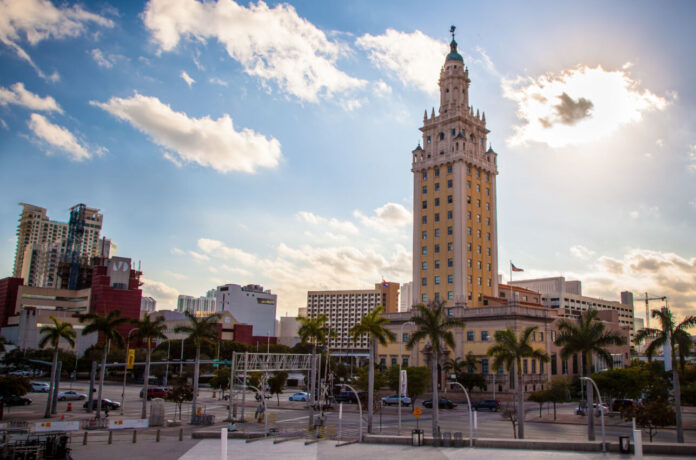
Miami’s Freedom Tower

Miami’s historic and iconic Freedom Tower officially reopened its doors to the public Wednesday, nearly a month after a ribbon-cutting ceremony celebrated the completion of a multi-million-dollar restoration project and the building’s 100th anniversary.

Often referred to as the “Statue of Liberty of the South,” the century-old landmark played a pivotal role in Miami’s history, serving as a processing center for Cuban exiles fleeing Fidel Castro’s regime in the 1960s. Now, following a two-year, $25 million renovation overseen by Miami Dade College, which owns and operates the tower, visitors can explore the building’s storied past while enjoying modern updates and restored historical features.

The extensive project included structural repairs to the exterior, modernization of elevators to meet current standards, and restoration of original architectural elements, such as tiles and lighting, that had either been damaged or covered over the decades. These efforts aimed to return the Freedom Tower to its original appearance while making it a fully functional and accessible public space.

As the doors reopen, visitors will have access to four engaging exhibits. Libertad tells the stories of those who sought refuge in Miami and began new lives in the United States. Languages of Migration explores the evolution of communication, migration, and identity across time and space. We Carry Our Homes With Us examines universal themes of migration, exile, and home through contemporary artworks. Finally, Unidad is a dynamic, interactive exhibit that celebrates soccer—or futbol—as a universal language and cultural unifier.

The reopening of the Freedom Tower not only celebrates its century-long history but also reconnects the building with the Cuban American community and Miami’s broader cultural heritage. Tickets for general admission are now available, allowing residents and tourists alike to experience a restored landmark that stands as a symbol of freedom, resilience, and the city’s vibrant history.

For more information and to purchase tickets, visit Miami Dade College’s website.


Florida lawmaker proposes requiring teachers to take oath

Cuban teachers

Florida teachers could soon be required to take an oath pledging allegiance to the United States and Florida constitutions under a proposal filed Monday by Rep. Tom Fabricio, R-Miami Lakes.

The measure (HB 147), dubbed the “Teacher’s Oath Act,” would apply to all public school teachers and is modeled after oaths taken by lawyers, doctors, and public officials, according to a news release from Fabricio. The bill is slated for consideration during the legislative session beginning January 13.

If passed, teachers would have to take the following oath:

“I do solemnly swear (or affirm) that I will support, protect, and defend the Constitution and Government of the United States and the Constitution and Government of the State of Florida; that I am duly qualified for employment as a classroom teacher in this state; that I will well and faithfully perform the duties of a classroom teacher in a professional, independent, objective, and nonpartisan manner; that I will uphold the highest standards of academic integrity and professional ethics; that I will foster a respectful learning environment for all students, which promotes critical thinking, civic responsibility, and lifelong learning; and that I will serve as a positive role model in both conduct and character, so help me God.”

Fabricio, an attorney, said the oath would reinforce teachers’ commitment to civic values and professional ethics.

“When I became a member of The Florida Bar, I swore an oath to uphold the Constitution, protect my clients, and act with integrity. That oath wasn’t symbolic—it was a promise,” he said. “Teachers hold something even more precious than money in trust: They are trusted with molding our children.”

He added that more than 30 states, including California and New York, already require similar oaths.

“Our schools should be training young people to unapologetically love this country,” Fabricio said. “Florida’s teachers should lead by example, and that starts with a promise to defend the freedoms that make our nation great.”

CARICOM marks Statistics Day with renewed push to strengthen data systems

CARICOM SG, Dr Carla Barnett, delivering remarks at the opening of the Second CARICOM-Africa Summit, 7 September 2025, Addis Abada, Ethiopia

Caribbean Community (CARICOM) Secretary General Dr. Carla Barnett has underscored the crucial role of statistics in advancing regional development, noting that the Community has reached the midpoint of its 12-year Regional Strategy for the Development of Statistics (RSDS).

In a message marking Caribbean Statistics Day 2025, observed under the theme “Improving Lives through Statistics: Strengthening and Innovating Together,” Dr. Barnett highlighted that the occasion also coincides with the conclusion of the 2024–2025 Year of Statistics in CARICOM, which celebrated the 50th anniversary of the Standing Committee of Caribbean Statisticians.

She said the past year placed renewed focus on standards, harmonisation, and the integration of national statistical systems. Among the initiatives now being institutionalised are the CARICOM Quality Assurance Framework, the CARICOM Code of Good Statistical Practices, and the Generic Statistical Business Process Model, which guides the full lifecycle of statistical activities.

“CARICOM is at the midpoint of implementing the 12-year Regional Strategy for the Development of Statistics, which provides a clear roadmap with mechanisms to strengthen statistical systems, ensuring that accurate and timely data inform decision-making,” Dr. Barnett said.

She noted that member governments are working to strengthen legal and institutional frameworks while investing in financial, technical, and human resources to bolster National Statistical Offices. This includes embracing digital transformation to modernise operations.

Acknowledging that “the journey ahead is as critical as the progress behind us,” Dr. Barnett called for continued regional collaboration to close data gaps and maintain high statistical standards.

“On Caribbean Statistics Day, we therefore recommit to strengthening national and regional statistical processes to ensure timely and accurate data for decision-making, in keeping with our theme this year,” she said.