Home Blog Page 119

Common legal challenges victims face after the maritime accident

A maritime accident can leave a lasting impact on a person’s life. One moment everything feels normal, and the next moment there is confusion, fear, and pain. Victims often try to understand what happened while also dealing with injuries and sudden changes in their daily life. This is when the legal process becomes an important part of their recovery.

Many people feel unprepared for what comes after the maritime accident. The rules are different from what most victims expect, and the process can feel slow and unclear. Learning about the challenges early helps victims feel more confident as they move forward.

How Maritime Law Works

Maritime law has its own set of rules that apply to accidents on the water. These rules come from federal laws and long-standing international practices. They are not the same as regular personal injury laws, which can make the process confusing for someone who has never dealt with a maritime claim before.

Victims often struggle to understand which law applies to them. The location of the accident, the type of vessel, and the nature of their work all matter. This makes the first stage of the claim feel complicated. Getting clear information helps victims avoid mistakes and protects their rights.

The Difficulty of Finding Clear Evidence

Proving what caused a maritime accident is one of the hardest parts of the legal process. Ships, docks, and offshore sites are busy environments. Many things can go wrong at once. Weather changes quickly. Equipment can fail. People can make mistakes under pressure.

Victims may face challenges such as

  • Missing or damaged records
  • Conflicting statements from crew members
  • Uncertain timelines
  • Poorly documented safety checks

Evidence can also disappear or get washed away before anyone has a chance to secure it. This makes it important to take action as early as possible.

Pressure From Large Maritime Employers

Many maritime workers are employed by companies that have strong legal teams. Victims sometimes feel intimidated or confused when dealing with them. The company may try to settle the case quickly. They may question the injury or suggest the victim shares some blame.

Victims should know that laws like the Jones Act and the Longshore and Harbor Workers’ Compensation Act exist to protect them. These laws allow injured workers to seek compensation when something goes wrong. Understanding these rights helps victims stay firm and avoid accepting less than they deserve.

Medical Problems and Delays in Treatment

Injuries from maritime accidents are often serious. Some victims experience long-term pain or mobility issues. Getting proper treatment can be difficult, especially when the accident happens far from medical help.

Victims may face problems such as

  • Delay in diagnosis
  • Pressure to visit company doctors
  • Confusion about payment
  • Difficulty proving long-term pain

Strong medical records support the claim and show the real impact of the injury. Consistent treatment also helps victims recover faster.

Financial Stress After the Accident

A maritime accident often brings financial pressure. Injured workers may not be able to return to work right away. Some may not return to their old job at all. This creates stress for the victim and their family.

Common financial struggles include:

  • Lost income
  • High medical bills
  • Travel costs for treatment
  • Everyday expenses that continue to rise

These pressures can make victims agree to early settlements. Understanding the full value of the claim helps them make better decisions.

Problems With Communication and Documentation

The maritime field includes people from many backgrounds and languages. Communication issues can affect the accuracy of reports and statements. Victims may find that important documents are missing or unclear.

Documentation issues may include:

  • Incomplete logs
  • Missing safety records
  • Confusing crew statements
  • Poorly organized medical files

Clear documentation is important in any claim. It helps show what happened and why it happened.

Strict Deadlines for Filing a Claim

Maritime law has strict time limits for filing claims. Missing these deadlines can limit or even block compensation. Victims often do not realize how fast time passes while they focus on healing.

Starting early gives victims time to understand their options. It also helps secure important evidence before it becomes harder to find.

The Emotional Weight of the Process

Beyond the physical injury, a maritime accident affects a person’s emotional well-being. Victims often feel anxious, frustrated, or unsure about the future. The legal process adds another layer of stress.

Support from family, doctors, and legal professionals can help victims stay steady during this time. Recovery is not only physical. It is emotional and mental too.

Key Takeaways

  • Maritime accidents involve unique laws that differ from regular cases.
  • Finding clear evidence is difficult because conditions at sea change fast.
  • Employers may try to reduce or deny the claim.
  • Strong medical documentation is important for fair compensation.
  • Financial stress can push victims toward early settlements.
  • Filing deadlines are strict, so early action is important.



US military aircraft approved to operate from Dominican Republic

US military aircraft

The Dominican Republic government has authorized several United States military aircraft to land and operate in the country in the coming days as part of an operational support deployment in the Caribbean.

According to officials, the aircraft have been granted temporary permits to operate from restricted areas at San Isidro Air Base and Las Américas International Airport. The cooperation agreement allows for surveillance, transport, and technical support missions.

Aircraft expected to participate include the KC-130 tanker and the C-130 Hercules, two of the U.S. Air Force’s most widely used and versatile aircraft.

The C-130 Hercules, which has been in service since 1954, is one of the most successful military transport aircraft in history. Originally designed for rugged operations during the Cold War, the aircraft has been deployed in conflicts such as Vietnam and Desert Storm, as well as in major humanitarian missions, including disaster response efforts in Haiti, during Hurricane Katrina in the United States, and in other global emergency zones.

The KC-130, introduced in the 1960s, functions as both a tanker and logistics aircraft, providing aerial refueling for fighter jets, helicopters, and drones. It has supported military operations in Iraq, Afghanistan, and Libya, and has also been used for nighttime special operations and personnel transport.

Authorities have not disclosed flight schedules or the total number of aircraft involved. However, officials indicated that the deployment may support maritime and aerial surveillance, the movement of sensitive equipment, logistics for regional security operations, in-flight refueling, and the transportation of technical personnel.

The mission forms part of ongoing security and technical cooperation agreements between the Dominican Republic and the United States, as both countries continue to collaborate on regional security initiatives in the Caribbean.

St. Lucia PM Philip J. Pierre names new Cabinet

St. Lucia Cabinet

St. Lucia Prime Minister Philip J. Pierre has made clear that his new administration will be defined by discipline, accountability, and a renewed focus on people-centered leadership, as he unveiled a refreshed Cabinet following the December 1 general election.

Speaking at a ceremony at the House of Parliament on December 12, 11 days after his Saint Lucia Labour Party was returned to power, Pierre introduced new ministerial portfolios and set firm expectations for those selected to serve alongside him.

Rooting his remarks in faith, Pierre said Scripture guided his decisions, quoting Proverbs 3:5: “Trust in the Lord with all your heart and do not lean on your own understanding.” He said the mandate received from voters now obliges the government to “move forward together.”

Describing the election outcome as both “historic” and “overwhelming,” Pierre said he fully appreciates the responsibility placed on his administration. While acknowledging that forming the Cabinet was challenging due to the depth of talent within his party, he expressed confidence in the team he assembled.

“I am pleased, and I am sure the public will be pleased with the composition of the Cabinet,” Pierre said. “It will be able to successfully drive the Government’s agenda over this new term.”

However, the Prime Minister stressed that the new term will be performance-driven, with no room for complacency.

“Ministers within my Cabinet will be expected to conduct themselves with the highest levels of professionalism, integrity and effectiveness,” he said, noting that the Cabinet’s structure is not permanent. “Changes will be made when and whenever necessary, and particularly if ministers do not live up to their responsibilities.”

One notable absence from the Cabinet was former Minister of Agriculture Alfred Prospere, whom Pierre praised for his “stellar work.” He explained that constitutional provisions related to the Deputy Speaker prevented Prospere’s reappointment at this time, but assured that “as soon as the legal barriers have been overcome, high consideration will be given for his return.”

Pierre also thanked former Prime Minister Dr. Kenny Anthony for stepping in as Deputy Speaker “when it was most needed,” and said the government intends to continue drawing on the experience of former ministers who are no longer in active politics.

Addressing questions about his own expanded responsibilities — which include Constituency Development and People Empowerment alongside Finance and National Security — Pierre said the decision was intentional.

“It simply means that this government, and this Prime Minister, put people first,” he said.

Cabinet roles maintained

Moses Jn Baptiste has been reappointed as Minister for Health and Wellness, with the nutrition portfolio added to his responsibilities. Pierre identified non-communicable diseases as a major national concern, noting that “part of that problem is because of our eating habits and our lifestyles.”

Stephenson King and Alva Baptiste also retained their previous portfolios. King remains responsible for the Public Service, Transport, Information, and Utilities Regulations, while Baptiste continues as Minister for External Affairs, International Trade, Civil Aviation, and Diaspora Affairs.

Significant portfolio changes

The Public Service, Labour, and Gender Affairs portfolio has been split, with Labour and Gender Affairs combined with Equity, Social Justice, and Consumer Welfare under the leadership of Emma Hippolyte.

Kenson Casimir has been reappointed with an expanded portfolio that now includes Digital Transformation and Education, in addition to Youth Development and Sports.

Wayne Girard, previously a minister in the Office of the Prime Minister, has been appointed a minister with responsibility for Economic Development and the Youth Economy. The Finance portfolio is now held by Prime Minister Pierre.

Ernest Hilaire retains his role as Deputy Prime Minister and Minister for Tourism, with the Commerce portfolio added to his responsibilities.

Jeremiah Norbert has been appointed Minister for Home Affairs, Crime Prevention, and Persons with Disabilities. A new Cabinet responsibility — Conflict Resolution — has also been added to his portfolio, while his previous role in the Office of the Prime Minister has been removed.

Joachim Andre Henry, formerly Minister for Equity, Social Justice, and Empowerment, no longer holds a ministerial portfolio.

Climate Change has been established as a new Cabinet responsibility and assigned to Lisa Jawahir as part of her role as Minister for Agriculture, Fisheries, and Food Security.

Dr. Shanda Lee Harracksingh, who contested the Micoud South seat in the general election and secured 41.4 per cent of the vote, has been appointed a Minister in the Office of the Prime Minister. Pierre said the role will allow her to work across ministries. Harracksingh has also been named a senator and is expected to be formally appointed in the coming days.

Several portfolios held in the previous administration were not addressed during the ceremony, including Sustainable Development, Technology, Vocational Training, Manufacturing, Business Development, and Elderly Affairs.

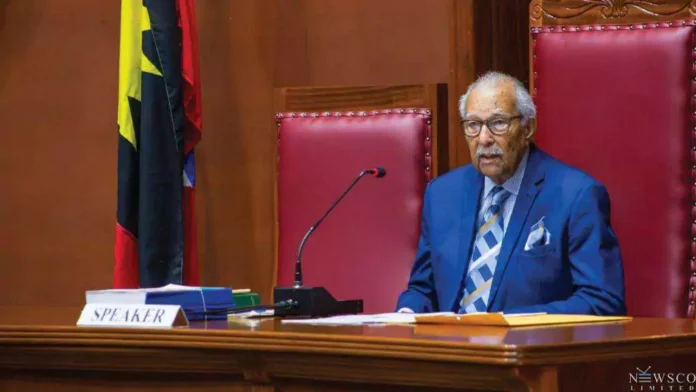
Former Antigua Speaker, Attorney General Sir Gerald Watt dies at 86

Sir Gerald Watt

Former Antiguian Speaker of the House of Representatives and former Attorney General Sir Gerald Owen Anderson Watt, KCN, KC, has died. He passed away on Saturday at the age of 86 while receiving medical treatment.

Sir Gerald, one of Antigua and Barbuda’s most prominent legal minds and public servants, would have celebrated his 87th birthday on December 19.

Born on December 19, 1938, Sir Gerald had a long and distinguished career in law and politics. He represented St. John’s Rural East in Parliament from 1971 to 1976 and served as attorney general during that period while also holding responsibility as Minister of National Security, Labour, and Legal Affairs.

He later served as chairman of the Antigua and Barbuda Electoral Commission, president of the Antigua and Barbuda Bar Association, and was widely regarded as one of the country’s most respected attorneys. A King’s Counsel, Sir Gerald headed the law firm Watt, Dorsett, Hewlett Law. Partner Dr. David Dorsett described him as “one of a kind.”

Sir Gerald was appointed Speaker of the House of Representatives on June 25, 2014, a role he held for more than a decade before resigning in November 2024. In September 2024, he had announced his intention to retire at the end of the parliamentary session.

In 2023, Sir Gerald was re-elected Speaker following the first secret ballot vote in the nation’s history for the position. Three candidates were nominated from the floor — Sir Gerald, former prime minister Baldwin Spencer, and lawyer Sherrie-Ann Bradshaw. Sir Gerald was nominated by Prime Minister Gaston Browne, Spencer by Opposition Leader Jamale Pringle, and Bradshaw by independent MP Asot Michael.

Later that year, the United Progressive Party (UPP) raised allegations of partisanship against Sir Gerald, with Opposition Leader Jamale Pringle indicating plans to bring a motion of no confidence. The claims centered on allegations of political prejudice and the treatment of opposition MPs, including the suspension of St. Peter MP Asot Michael for three sittings in May 2023.

Sir Gerald’s career spanned decades of public service, legal leadership, and parliamentary governance, marking him as a central figure in Antigua and Barbuda’s political and legal history.

Jamaica’s Matthew Samuda vows inclusive leadership as new UNEA President

Matthew Samuda

Jamaica’s Minister of Water, Environment and Climate Change, Matthew Samuda, has pledged that his two-year term as president of the 193-member United Nations Environment Assembly (UNEA) will be defined by inclusivity, transparency, and practical action.

Samuda made the commitment in his acceptance speech after his election was announced Friday morning by outgoing UNEA President Abdullah Bin Ali Al-Amri. UNEA is the world’s highest-level decision-making body on environmental issues, bringing together all 193 United Nations member states to set the global environmental agenda and guide the work of the UN Environment Programme (UNEP).

“We must work to strengthen the science-policy interface, scale up financing for adaptation and resilience, and accelerate the transition to sustainable production and consumption systems,” Samuda said. “And, we must do so while ensuring that no State — large or small — feels excluded from the solutions we craft.”

While leading Jamaica’s delegation to the seventh session of UNEA (UNEA-7) in Nairobi, Samuda emphasized that his presidency represents a collective achievement rather than a personal milestone.

“I am mindful that this presidency is not an individual achievement, but a reflection of the collective commitment of the Latin American and Caribbean region, and of my home, Jamaica,” he said. “I stand here on behalf of all countries that understand, from lived experience, the urgency of protecting our natural world.”

Samuda acknowledged the complexity of global environmental challenges but stressed that the path forward is clear.

“The environmental challenges before us are complex, but our pathway is clear: heightened ambition, deeper cooperation, and unwavering commitment to implementation,” he said. “Let this assembly demonstrate that multilateralism — when guided by equity and shared purpose — is still the most powerful tool we possess.”

He urged UNEA member states to work collectively to ensure environmental protection remains a shared global responsibility.

“Together, let us rise to the moment. Together, let us ensure that the environment remains not only a global priority, but a global responsibility — one we meet with integrity, innovation, and unity,” Samuda said.

In closing his remarks, Samuda referenced his favourite childhood cartoon, Captain Planet, quoting: “Blaming each other is a waste of time. The only thing that matters is changing what’s wrong.”

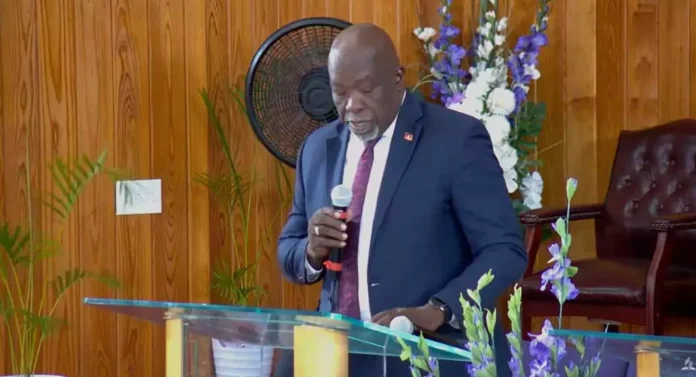
Former Antigua regulator Leroy King laid to rest following death in US custody

Minister Melford Nicholas speaks at Leroy King Funeral Service

Former Chief Executive Officer of Antigua and Barbuda’s Financial Services Regulatory Commission (FSRC), Leroy King, was laid to rest on Thursday at the Bible Speaks Seventh-day Adventist Church. King died in early November at the age of 80 while in U.S. custody, though the circumstances surrounding his death have not been publicly clarified.

Prime Minister Gaston Browne attended the funeral service alongside several Cabinet ministers, including Health Minister Molwyn Joseph, Foreign Affairs Minister Chet Greene, Information Minister Melford Nicholas, and Tourism Minister Charles Fernandez. The service was streamed online.

During tributes, Information Minister Nicholas highlighted King’s organisational abilities and political influence, particularly in the St. John’s City East constituency. He described King as meticulous and credited his guidance as playing a significant role in the resurgence of the Antigua Labour Party.

Foreign Affairs Minister Greene reflected on King’s early life in St. John’s, his studies at Iona College in New York, and his career in banking and public service. He also noted King’s involvement in key national projects and his active participation in the Seventh-day Adventist Church following his baptism in 2012.

King’s public service career, however, was overshadowed by his role in the Allen Stanford financial scandal. As head of the FSRC beginning in 2002, King admitted to helping shield Stanford International Bank from scrutiny while accepting bribes in return. Prosecutors said he received more than US$520,000 in bribes, gifts, and travel benefits.

King was extradited to the United States in 2019 after nearly a decade of resisting extradition requests and later pleaded guilty to conspiracy to obstruct justice and obstruction of justice. He became the final defendant to face sentencing in the case.

Stanford was convicted in 2012 and sentenced to 110 years in prison for orchestrating a US$7 billion Ponzi scheme. Several of his associates also received prison sentences ranging from three to 20 years.

Authorities confirmed that King died during his incarceration, though it remains unclear whether his death occurred in prison or at a hospital.

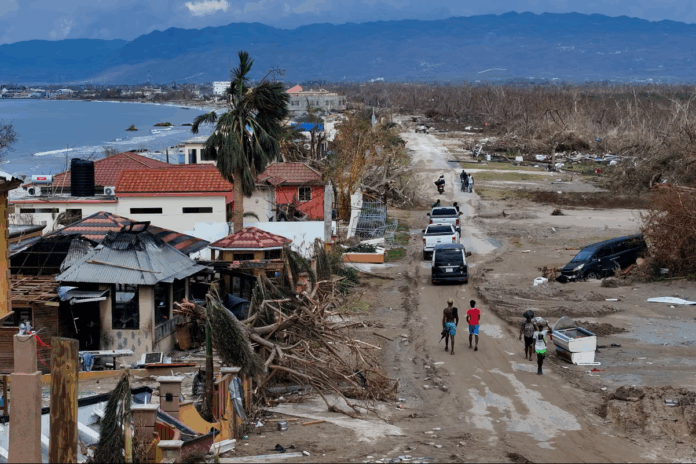
Afreximbank donates US$1.1M to support Hurricane Melissa recovery in Jamaica and Haiti

Jamaica hurricane melissa
Drone image captures residents navigating down a flood-scarred street in Black River, Jamaica, as recovery begins following Hurricane Melissa. Photo Credit - Maria Alejandra Cardona

The African Export-Import Bank (Afreximbank) has announced a US$1.1 million donation to the governments of Jamaica and Haiti to support recovery efforts following the devastation caused by Hurricane Melissa in October.

According to the bank, US$600,000 of the funding will be allocated to Jamaica, while US$500,000 will go to Haiti. Both countries are Afreximbank member states.

Hurricane Melissa passed through the northern Caribbean, causing widespread destruction across several countries in the region. In letters of solidarity sent to the respective governments, Afreximbank President Dr. George Elombi expressed condolences and reaffirmed the bank’s commitment to supporting rebuilding efforts.

The donation followed separate meetings held on October 31 and November 3 between Dr. Elombi and Haitian Transitional Presidential Council Chairman H.E. Laurent Saint-Cyr, and Jamaica’s Prime Minister, the Most Hon. Andrew Holness, respectively.

According to the United Nations, Hurricane Melissa — which reached Category 5 status in Jamaica — impacted more than 1.6 million people on the island.

“We commiserate with our brothers and sisters in Haiti, Jamaica, and other places devastated by Hurricane Melissa,” Dr. Elombi said. “While extending our support towards immediate relief efforts in the region, we recognise the scale of damage to vital infrastructure and to people’s livelihoods. We remain steadfast in our support for recovery and restoration efforts and in building our collective resilience against future climate shocks.”

Dr. Elombi also informed both leaders that Afreximbank would engage relevant agencies and authorities to explore the development of country programmes to support recovery projects. To that end, the bank’s Caribbean Office has been mandated to work with both governments to identify additional avenues for reconstruction support.

The Caribbean hurricane season runs from June to November and is marked by increased tropical storms and hurricanes, often bringing destructive winds, storm surges, and heavy rainfall. Researchers have warned that hurricanes are becoming more severe due to climate change, and have partially attributed the intensity of Hurricane Melissa — described as one of the strongest Atlantic storms ever recorded — to unusually high Caribbean sea temperatures this year.

Afreximbank said it will continue working with Caribbean governments through its CARICOM Office in Barbados to explore long-term financing solutions aimed at strengthening resilience, restoring livelihoods, and reinforcing critical infrastructure.

In 2024, Afreximbank contributed more than US$500,000 to disaster relief and rebuilding efforts across Caribbean countries affected by Hurricane Beryl, underscoring the bank’s ongoing commitment to assisting nations disproportionately impacted by climate-related disasters.

Murders in Jamaica down 42.5% as government extends Zones of Special Operations

jamaica crime violence

Jamaica has recorded a significant decline in violent crime, with 632 murders reported as at December 8, placing the country on track to record fewer than 700 homicides by year’s end.

The figure represents 463 fewer murders than the same period in 2024 — a 42.5 per cent reduction — according to Prime Minister Dr. the Most Hon. Andrew Holness, who provided the update while addressing the House of Representatives on December 9.

Dr. Holness was leading debate on motions to extend the Zones of Special Operations (ZOSOs) in seven communities across the island. He also reported that shootings are down 32 per cent.

“These are numbers Jamaica has not seen in over three decades and it is a direct outcome of sustained anti-gang operations, legislative reform, intelligence coordination and the disciplined application of the clear, hold, build strategy within the Zones of Special Operations,” the Prime Minister said.

He stressed that gangs thrive in the absence of state authority, arguing that ZOSOs represent the permanent return of the State through security, social services, infrastructure, education, health care and economic opportunity.

“We are returning the State to communities that were previously abandoned to criminal governance,” Dr. Holness said. “The Zones do not merely suppress violence, they dismantle the ecosystem that allows gangs to recruit, extort, intimidate and control.”

While highlighting the historic reductions in crime, the Prime Minister cautioned that the country faces heightened risks following Hurricane Melissa, citing displacement, economic shock, psychological trauma and opportunities for criminal exploitation.

“This is precisely why ZOSOs are more relevant now than ever,” he said. “They harden communities against regression; they prevent shocks from becoming opportunities for gangs to reassert control.”

Dr. Holness noted that the Government has made and will continue to make major financial and institutional investments in the Zones of Special Operations, pointing to measurable reductions in serious violent crime, physical transformation in communities and sustained social support for residents.

Under the clear, hold, build framework established in law reform legislation, the State clears gangs from communities, maintains security presence and then builds lasting social and economic infrastructure, he said.

“This is how we permanently restore meaningful citizenship, dignity and lawful authority,” the Prime Minister stated, as he sought parliamentary support to extend all seven existing Zones of Special Operations.

Data for December 6 show an overall 38 per cent reduction in murders and a 48 per cent reduction in shootings across all ZOSOs.

At the end of the debate, the House of Representatives approved a further 180-day extension of the Zones in Denham Town, West Kingston; Norwood and Mount Salem in St. James; Greenwich Town, Parade Gardens and August Town in St. Andrew; and Savanna-la-Mar in Westmoreland.

“This extension will be an affirmation of success and a declaration of resolve,” Dr. Holness said. “Jamaica has turned a corner… and the Zones of Special Operations stand at the very centre of that historic national transformation.”

IMF forecasts 1.7% growth for St. Lucia in 2025, PM Pierre welcomes report

St. Lucia Prime Minister

The Government of St. Lucia has welcomed a new International Monetary Fund (IMF) assessment projecting economic growth of 1.7 percent in 2025, following a strong expansion of 4.7 percent in 2024.

The projection was outlined in the IMF’s latest statement issued after a visit to St. Lucia as part of the Fund’s 2025 Article IV consultation. According to the Washington-based institution, the economy is expected to rebound further in 2026 as tourism activity picks up, before gradually slowing to a potential growth rate of 1.5 percent over the medium term as tourism stabilizes and major infrastructure and tourism-related projects are completed.

Prime Minister Phillip J. Pierre, who was re-elected in the December 1 general election, said the IMF’s assessment validates the government’s recent fiscal and economic policies.

“The assessment affirms that recent fiscal and economic policies have restored stability and set the country on a path of sustainable growth,” Pierre said.

“Over the past two years, strong performance in tourism and supportive government measures have helped our economy bounce back. The IMF notes that economic activity has normalized, unemployment has fallen, and macroeconomic indicators reflect improving conditions,” he added.

Pierre said the IMF’s findings underscore the effectiveness of government policies aimed at safeguarding livelihoods, supporting investment, and promoting economic resilience.

“This confirmation from a leading international financial institution underscores the effectiveness of the policies implemented by the government, policies designed to safeguard livelihoods, support investment, and promote economic resilience,” he said.

The prime minister said that the government remains committed to prudent economic management and inclusive growth.

“As the government reaffirms its commitment to prudent economic stewardship and inclusive growth, it remains focused on consolidating gains, enhancing fiscal discipline, and advancing structural reforms aimed at building long-term prosperity for all St. Lucians,” Pierre said.

While acknowledging the positive outlook, the IMF cautioned that risks to St. Lucia’s economic prospects remain tilted to the downside. The Fund noted that weaker-than-expected performance in the tourism and construction sectors could constrain growth, while an increase in recognized non-performing loans could dampen credit expansion.

Senior economist in the IMF’s Western Hemisphere Department, Swarnali Ahmed Hannan, warned that geopolitical tensions, escalating trade measures, and prolonged policy uncertainty could slow global economic activity, potentially reducing tourism and foreign direct investment flows to St. Lucia while increasing import costs.

She said a global slowdown driven by such factors would weigh heavily on St. Lucia’s economy, given its dependence on tourism and reliance on imports.

World Central Kitchen extends Jamaica operations through January 2026

World Central Kitchen
Photo: Garwin Davis The World Central Kitchen (WCK) team preparing meals from its Montego Bay Convention Centre headquarters in St. James.

World Central Kitchen (WCK) will remain in Jamaica until January 2026, ensuring that communities impacted by Hurricane Melissa continue to receive hot, nutritious meals through the Christmas season.

The update was provided by WCK Liaison Denise Cagley-Jefferson during a briefing at the National Emergency Operation Centre (NEOC) at the Office of Disaster Preparedness and Emergency Management (ODPEM) in Kingston on Thursday, December 11.

“We will, in fact, provide hot meals into January and reassess a departure date in January,” Cagley-Jefferson said, noting that both residents and government officials requested that the organization remain on the island during the holiday period.

WCK reported that it has already delivered more than one million meals to hurricane-affected residents — the equivalent of approximately 40,000 hot meals per day — along with sandwiches, fruits, and water.

The organization currently operates more than 180 distribution sites spanning Montego Bay to St. Elizabeth. Its operations rely on a network of local drivers and chefs who prepare and deliver culturally relevant meals using Jamaican ingredients.

Beyond providing food, WCK officials say the organization’s approach offers a model for disaster response that prioritizes local culture and economic participation. By employing local workers, sourcing ingredients locally, and partnering with Jamaican authorities, the relief effort has functioned as a form of communal recovery rather than traditional aid.

Prime Minister Dr. the Most Hon. Andrew Holness has commended World Central Kitchen for its “extraordinary support after Hurricane Melissa.”

He said the organization’s work has helped sustain reliable access to food and water while strengthening the local economy through the employment of Jamaican workers. The Prime Minister also expressed gratitude for WCK’s compassion, efficiency, and continued commitment as the country moves forward with recovery efforts.

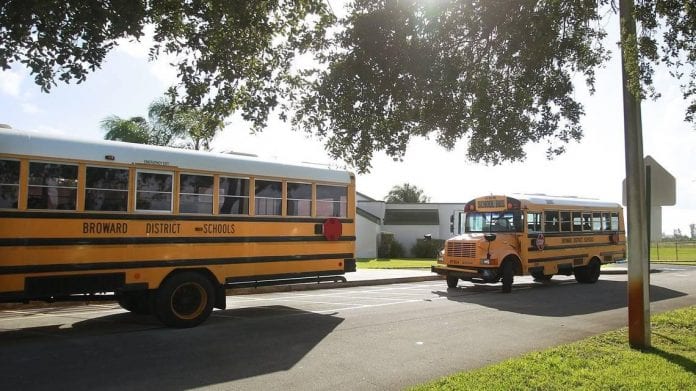
BCPS plans school boundary changes and campus consolidations for 2026–27

Dr. Howard Hepburn, Superintendent of Broward County Schools

Broward County Public Schools Superintendent Dr. Howard Hepburn has formally recommended 11 changes to school attendance area boundaries and school usage for the 2026–27 school year, including multiple school consolidations, boundary shifts, and campus reconfigurations.

In a memo dated December 12, 2025, and addressed to School Board members, Hepburn said the recommendations are based on staff reviews of boundary considerations, community input, deliberations by the School Boundary Advisory Committee, and discussions held during the School Board workshop on December 8, 2025.

Among the proposed changes are the consolidation of several elementary and middle schools, with affected campuses transitioning to other district uses. Sunshine Elementary School would be consolidated into Fairway Elementary School, while Panther Run Elementary School would be consolidated into Chapel Trail Elementary School and Silver Palms Elementary School. Palm Cove Elementary School would be consolidated into Lakeside Elementary School and Pines Lakes Elementary School.

North Fork Elementary School would be consolidated into Croissant Park Elementary School, Dr. Martin Luther King Jr. Elementary School, Thurgood Marshall Elementary School, and Walker Elementary School. The North Fork campus would also be transitioned to another use.

At the secondary level, the superintendent recommends consolidating Plantation Middle School into Plantation High School and reconfiguring Plantation High as a sixth- through 12th-grade school. Bair Middle School would be consolidated into Westpine Middle School, with both middle school campuses transitioning to other district uses.

Several boundary shifts are also proposed. Students currently assigned to Walter C. Young Middle School west of Interstate 75 would be reassigned to Silver Trail Middle School beginning in the 2026–27 school year. Portions of the Charles W. Flanagan High School boundary west of Interstate 75 would shift to West Broward High School.

In the southern part of the county, students living west of Interstate 95 who are currently assigned to Hallandale High School would instead attend Miramar High School. Under the proposal, Hallandale High School would transition to a four-day-week magnet school, following the model used at Pompano Beach High School.

Additional recommendations include reconfiguring Thurgood Marshall Elementary School into a birth-through-fifth-grade early learning center and consolidating Seagull Alternative High School into the Whiddon-Rogers Education Center.

Hepburn noted that all other school attendance boundaries and school usage would remain unchanged for the 2026–27 school year or would follow previously approved grade phase-ins. Final rulemaking on the proposed changes is scheduled for the Broward County School Board’s regular meeting on January 21, 2026.

Parents and community members seeking additional information were directed to contact Joseph Beck, director of Demographics and Enrollment Planning, at 754-321-2565

BCPS extends school choice application deadline for 2026–27 school year

More Than 125 Colleges, Universities, Technical Schools and Military Branches participating in Broward County College Fair

Broward County Public Schools has extended the School Choice application window for the 2026–27 school year, giving families additional time to apply for specialized programs and school reassignment options.

The application period, which allows families to apply for magnet programs, Nova schools, and reassignment to schools outside their assigned attendance boundaries, will now close on Wednesday, January 28, 2026.

BCPS officials say the extension is intended to give families more time after the new year to explore available options. The district offers a range of innovative and personalized learning programs designed to align with students’ interests while preparing them for college, careers, and life beyond the classroom.

Families can review School Choice options and access instructions for the application process by visiting browardschools.com/schoolchoice.

A Broward County Public Schools student number is required to submit an application. Parents and guardians of students who will be new to the district for the 2026–27 school year can obtain a student number by visiting any BCPS school. A government-issued photo ID and the child’s birth certificate are required for verification.

For additional information, families can contact the BCPS Office of School Choice at 754-321-2480 or by email at schoolchoice@browardschools.com.

New York–Jamaica practice to lead medical, dental mission in Westmoreland

medical mission Jamaica
Dr. Williams (L) attending to a patient on a Dental Mission to Jamaica

As western Jamaica rebuilds after Hurricane Melissa, one New York– and Jamaica-based dental and surgical practice — Emirates Facial & Dental Implant Center (EFDIC), led by board-certified oral and maxillofacial surgeon Dr. Dwight Williams — is stepping forward in a major way to help. EFDIC will host a three-day medical and dental mission in Little London, Westmoreland, from December 17–20, 2025.

The mission, supported by multiple international and local partners, will provide a comprehensive slate of services, including dental care, diabetes screening, wound care, mental-health first aid, child therapy sessions, and patient education on hypertension and diabetes.

Emirates Facial & Dental Implant Center Chief Financial Officer Morvia Reid Williams, who conceptualized the mission, said the initiative is rooted in empathy and a deep desire to help Jamaicans in western Jamaica who are rebuilding their lives after Hurricane Melissa.

Morvia Reid Williams

“Dr. Williams and I felt compelled to lend support to Little London and nearby communities,” Reid Williams said. “We empathized with those impacted by this devastation. We want them to know that we see them, we hear them, and we are ready to help.”

She added that the mission strikes a deeply personal chord.

“Little London is Dr. Williams’ childhood home,” Reid Williams emphasized. “Through family and friends, we learned what people are facing — lack of food, limited access to health care, and an urgent need for mental-health aid.”

Reid Williams said she and her husband are no strangers to service and philanthropy.

“For 12 years, we have coordinated dental missions through the United Mission of Goodwill,” she said. “We are very familiar with the challenges Jamaicans face in accessing medical and dental care.”

The mission will be strengthened by a broad coalition of volunteer partners.

“This mission is made possible by the generosity of Emirates Facial & Dental Implant Center,” she said. “But we have also received considerable support from family and friends in the U.S. and Jamaica.”

The medical team traveling to Jamaica will be led by Dr. Leesa Schaaffee of the Giving JA organization, while emergency dental care will be headed by Dr. Jodiann Manderson and the EFDIC team.

“Both Dr. Schaaffee’s and Dr. Manderson’s teams have been actively on the ground since the hurricane,” she continued. “They are volunteering their services with such dedication.”

Several local and U.S.-based organizations have committed to the mission, including United Mission of Goodwill, Caribbean Girls Dream of Hope, Walker Contractor, JamPsych, and the Ministry of Health and Wellness. A large contingent of volunteers will fly in from New York carrying essential supplies for those in need. Beyond the logistics, Reid Williams said the heart of the mission is emotional recovery.

“We recognize the severe emotional and psychological trauma Hurricane Melissa has caused,” she said. “From the elderly to the children, their entire well-being is at risk. Their loss has been tremendous.”

As Jamaica rebuilds, she said, the commitment remains unwavering.

“Our mission is made up of many willing hands and hearts,” she said. “One Love. One Heart. One Jamaica.”

South Florida schools get $5.25M federal boost for mental health services

broward schools

Florida Congresswoman Frederica Wilson has helped secure $5.25 million in federal funding to expand mental health services in Miami-Dade County Public Schools and Broward County Public Schools, with the funding to be distributed over a four-year period.

According to Wilson’s office, the funding includes $4 million for Miami-Dade County Public Schools and $1.25 million for Broward County Public Schools. The money will support partnerships aimed at training school-based mental health service providers for employment in schools and local educational agencies.

“We are in a mental health crisis in this country, and our children are carrying the weight of it,” Wilson said. “Over the past decade, suicide rates among young people have been rising, depression is rising, and too many of our children are hurting in ways we don’t always see. When children spend the majority of their days in schools, we should have mental health professionals who can support them.”

Wilson emphasized that many students lack access to mental health resources outside of school and that schools are often the first line of support. “No one asks, ‘Are you okay?’ We don’t always know what our children are walking into when they leave school or what happens when they are alone with their friends,” she said, adding that low-income students, students of color, LGBTQ+ youth, and other marginalized communities face compounded mental health challenges due to systemic barriers.

“As a former principal, a former educator, and through my work with the 5000 Role Models of Excellence, I’ve seen it up close,” Wilson said. “Too many of them suffer in silence because no one gave them the space to speak or told them that they are loved. That’s why schools must be part of the solution, especially at a young age when emotional, social, and cognitive development is taking shape.”

For Broward County Public Schools, the funding will support Broward’s PATH Forward program — the Psychologist Advancement and Training Hub — which expands the pipeline of credentialed school psychologists. Over a 48-month period, the program will support three Broward County Public Schools employees through graduate program completion and certification, fund 23 full-time school psychology interns, and provide certification exam support for all participants.

The project is expected to result in 26 total certifications, a 25 percent increase in schools served by trained school psychology personnel, more than 20,000 hours of student mental health services, and the employment of 15 to 20 new school psychologists by the end of the grant period. Broward County Public Schools will receive $306,472 in 2026 and will continue to receive funding for four years.

Miami-Dade County Public Schools will use its funding for Project HOPE-SP — Holistic Opportunities for Preparation and Excellence in School Psychology. The initiative will increase the number of credentialed school psychologists through a partnership with a nationally accredited school psychology program, providing coursework, collaborative training projects, and monthly workshops focused on evidence-based assessment and intervention practices.

Project HOPE-SP will strengthen access to mental health interventions in 257 high-need schools serving 170,058 students. The project will support 34 graduate students in School Psychology through mentorship, financial support, and specialized training in multi-tiered systems of support and mental health intervention implementation. Miami-Dade County Public Schools will receive $1 million in 2026 for the program, with continued funding over four years.

The funding is provided through the Mental Health Service Professionals Demonstration Grant Program, which supports competitive grants to test and evaluate partnerships between higher education institutions and high-need school districts. The goal is to expand the pipeline of qualified school counselors, social workers, psychologists, and other mental health professionals into low-income public elementary and secondary schools.

Wilson has previously delivered funding for mental health initiatives in Miami-Dade County, including the Adrienne Arsht Center’s “I am Me,” an arts-based youth mental health initiative. She has also held multiple hearings and forums on the mental health crisis among Black men and boys, including events in Washington, D.C., and New York City.

NAVS JA unveils landmark volunteer initiative to power Jamaica’s sporting future

NAVS JA President Allison Watson flanked by four NAVS JA Volunteers at the Media Launch Event

The National Association of Volunteers in Sports (NAVS JA) officially marked its entry onto the national stage last week with the successful media launch of Jamaica’s Premier Sports Volunteers Program, a pioneering initiative designed to reshape how sport is supported, delivered, and sustained across the island.

The highly anticipated launch took place on Tuesday, December 9, 2025, from 11:00 a.m. to 12:30 p.m., at the headquarters of the Jamaica Football Federation (JFF) in Kingston. The event signaled a significant step forward in strengthening Jamaica’s sporting infrastructure through structured, professional volunteer engagement.

Strong turnout reflects broad-based support

The launch attracted a robust cross-section of media professionals alongside senior leaders from corporate Jamaica and the national sporting community, underscoring the program’s relevance and reach.

Among the notable attendees were Terry Ann Graver, Chief Operations Officer of First Global Bank, and prominent federation executives, including John Azar, President of Tennis Jamaica; Paulton Gordon, representing the Jamaica Basketball Federation; Michael Blair, President of Jamaica Field Hockey and Power Lifting; Vijay Tolan, President of the Jamaica Badminton Association; and Mrs. Elaine Walker Brown, Vice President of the Jamaica Football Federation.

Their presence reflected strong institutional endorsement for a program aimed at reinforcing the operational backbone of Jamaican sport.

Building structure, capacity, and national impact

NAVS JA, a newly established organization focused on empowering and mobilizing sports volunteers nationwide, introduced the Premier Sports Volunteers Program as a comprehensive and coordinated framework to support sporting events, athlete development, community engagement, and national sports initiatives.

The program is designed to formalize volunteer participation, equipping Jamaicans with training, structure, and clear pathways to contribute meaningfully at every level of sport, from grassroots competitions to elite national events.

Olympic leadership endorses the vision

Delivering the keynote address, Christopher Samuda, President of the Jamaica Olympic Association (JOA) and an endorsing partner of the initiative, emphasized the long-term national value of a trained volunteer corps.

“Our mission is to build a strong, well-trained volunteer corps that uplifts Jamaica’s sports sector,” said Samuda. “Our volunteers will play a critical role in shaping the future of sports in Jamaica, from grassroots programs to national competitions.”

Samuda further revealed that the initiative emerged from the JOA’s Advanced Sports Management Course (ASMC), which is scheduled to conclude later this month, positioning the program as both a practical outcome and a legacy of sports leadership development.

Inside the launch: Pathways, technology, and opportunity

The launch program offered attendees a comprehensive look at NAVS JA’s mission, impact goals, and the wide range of opportunities available to prospective volunteers. Participants received insights into structured volunteer pathways and witnessed a live demonstration of NAVS JA’s digital registration platform, designed to streamline recruitment and engagement.

Media representatives were granted access to interviews with key stakeholders, detailed press kits, and multiple photo opportunities, ensuring broad dissemination of the program’s objectives and national significance.

Looking ahead: A call to service and partnership

NAVS JA concluded the launch by expressing sincere appreciation to all attendees and partners, reaffirming its commitment to collaboration as it embarks on this critical mission.

With momentum firmly established, the organization now looks to the Jamaican public and the wider sporting community to support and participate in what is poised to become a cornerstone of Jamaica’s sports development framework.


Daren Sammy issues blunt challenge as West Indies batsmen falter again

daren sammy

WELLINGTON, New Zealand — West Indies head coach Daren Sammy did not mince words after another heavy setback on New Zealand soil, delivering a searing assessment of his team’s nine-wicket loss in the second Test at the Basin Reserve.

Visibly frustrated, Sammy described the performance as a backward slide at a moment when forward momentum was desperately needed.

The match was effectively decided within three days, as the visitors were comprehensively outplayed and dismissed for 205 and 128, leaving New Zealand with a straightforward chase to seal victory.

Bowlers compete, batting falters

Despite the lopsided result, Sammy acknowledged the effort of his bowling unit, which shared the wickets in New Zealand’s first innings. Anderson Phillip led the way, finishing with four wickets across the match.

However, any discipline shown with the ball was undone by an anemic batting display. Shai Hope’s 47 and John Campbell’s 44 stood as the highest individual scores, grim indicators of a collective failure that left the team without a foundation or fight.

History repeats itself in Wellington

For Sammy, the collapse stirred painful memories of an all-too-familiar pattern.

“It shows every time we try to take a step forward, we take about two steps backwards,” Sammy stated. “It takes me back to 2013, where we drew the Test in Dunedin, came here, and lost inside three days. It’s just the consistency that we’re looking for.”

The coach’s comparison underscored his concern that isolated good performances continue to be followed by sharp regression, eroding confidence and continuity.

Momentum lost, control gone

Sammy identified a recurring weakness that has plagued the side, an inability to control critical moments once they arise.

“We keep getting ourselves in good positions, but little moments switch the momentum, and in this Test match, once we lost the momentum, we lost it for a long period of time.”

Against a New Zealand attack that he conceded “answered the call,” West Indies failed to respond when the game demanded resilience and composure.

“Nobody stood up”: A blunt message to the tatsmen

While credit was given where due, Sammy’s sharpest words were directed at his batting unit, which he felt left the bowlers exposed and unsupported.

“In a team, you want people to step up when needed the most. In this Test match, nobody stood up for us,” he said.

“When you have runs not coming from the number seven and the number five positions, it puts a lot of pressure on the rest of the team. The bowlers are doing their job. It’s not the bowlers’ fault. I think it’s the batsmen that have to take more responsibility.”

The message was unambiguous: responsibility with the bat is no longer optional.

Christchurch blueprint offers hope

Despite the disappointment, Sammy pointed to the fighting draw in the first Test in Christchurch as proof that the team is capable of a vastly different outcome when individuals commit fully.

“You’ve seen in the first Test, when we take responsibility, and one or two people put their hands up and dig deep, we look like a different side.”

That performance, he suggested, remains the standard the team must rediscover.

West Indies now turn their attention to the third and final Test at Mount Maunganui, which begins on Wednesday, with Sammy making it clear that improvement must start with accountability, resilience, and the willingness of batsmen to “stand up” when the moment demands it.


Jahangir’s 99 sets the stage as Capitals survive Russell’s late storm

West Indies

ABU DHABI, United Arab Emirates — The Dubai Capitals held their composure under extreme late pressure to register a tense nine-run victory over the Abu Dhabi Knight Riders at Zayed Cricket Stadium on Saturday, earning their second win of the DP World ILT20 season.

The contest unfolded as a study in contrasting batting brilliance: a controlled, near-perfect innings that lifted the Capitals to a towering total, followed by a late, violent counterpunch that threatened to rip the match away.

Early damage, then total reconstruction

Sent in to bat, the Capitals were rattled almost immediately. Captain Jason Holder and Ajay Kumar struck early, removing the opening batsmen with only four runs on the board in the third over to leave the scoreboard reading 4-2.

From that fragile position, the innings was salvaged, and then transformed, by Shayan Jahangir.

Jahangir’s near-perfect masterclass

The wicketkeeper-batsman produced a sublime, career-best 99, crafting a rescue act of rare composure and power. Partnered by Jordan Cox, who contributed 29 off 30 balls, Jahangir stitched together a pivotal 115-run partnership that shifted the balance decisively.

Batting with serene authority, Jahangir anchored the innings before unleashing an array of strokes, striking 10 fours and five sixes. His dismissal, bowled by Andre Russell in the final over, denied him a century by a single run, but his innings still carried historic weight.

The 99 stands as the highest individual score by an associate player in the tournament’s history.

Powell delivers the final blow

The Capitals’ charge was completed by Rovman Powell, whose 38 not out from 24 deliveries supplied a ruthless finishing kick. The innings closed at an imposing 196-5, despite disciplined spells from Holder (2 for 22) and Russell (2 for 32).

Knight Riders falter, then fight back

Chasing 197, the Knight Riders struggled to establish rhythm. Phil Salt offered early intent with 33 off 29, but the dismissals of Alex Hales, Sherfane Rutherford, and Liam Livingstone in quick succession stalled progress.

The middle order was further disrupted by Waqar Salamkheil, whose left-arm spin delivered match-shaping figures of 3 for 33, including the wickets of Salt and Brandon McMullen.

At 122-6 in the 16th over, the chase appeared beyond salvage.

What followed was a breathtaking late assault. Andre Russell, unbeaten on 53 from 33 balls, joined forces with Holder (22 off 9) to produce a stunning 46-run stand in just 20 deliveries.

The momentum swung sharply during a brutal 18-run over off Mustafizur Rahman, suddenly thrusting the Knight Riders back into contention and electrifying the contest.

Jawadullah holds his nerve

With 26 required from the final over, Russell launched a towering six from the first ball bowled by Muhammad Jawadullah, threatening one last twist. But the young pacer responded with remarkable composure, conceding only singles thereafter to shut the door on the chase.

The Knight Riders finished on 187-8, their late surge falling agonizingly short.

Capitals earn gritty reward

In a match defined by momentum swings and individual brilliance, the Dubai Capitals’ ability to absorb pressure, from the depths of 4-2 to the final over — ultimately proved decisive, securing a hard-fought victory in one of the early classics of the ILT20 season.


England lay down a marker, rout short-handed Sunshine Girls in series opener

sunshine girls

England sent a clear message of intent on Saturday, producing a polished and authoritative display to defeat a depleted Jamaica 80-37 at the Copper Box Arena, seizing early control of their two-match international series.

With memories of recent setbacks still fresh, the hosts wasted little time in asserting dominance, setting a relentless tempo that Jamaica, weakened by circumstance, struggled to contain.

Early control sets the tone

Determined to respond after suffering two consecutive defeats to the Caribbean side, England established superiority from the opening exchanges. Their defensive pressure and fluid attacking movement steadily stretched the Sunshine Girls, allowing the home side to open up a commanding advantage.

By halftime, England had constructed a decisive 23-point lead, effectively placing the contest beyond reach.

Captain leads by example

At the heart of England’s performance was captain Fran Williams, whose leadership and intensity underpinned the team’s control throughout the match. Williams’ commanding display earned her Player of the Match honors, a fitting reflection of her influence at both ends of the court.

England maintained their composure and discipline after the interval, continuing to dictate the pace and refusing to allow any lapse in focus.

Rankings rivalry adds edge

The victory carried added significance for England, who were displaced from third place in the world rankings by Jamaica earlier this year. That shift followed Jamaica’s 2-1 triumph in the inaugural Horizon Series in 2024, a landmark result that elevated the Sunshine Girls above their long-time rivals.

Saturday’s emphatic win offered England a measure of retribution, even as the series unfolds under altered circumstances.

Disrupted preparation hampers Jamaica

The 2025 series was initially scheduled as a four-match contest, with two Tests in Kingston in early December followed by two fixtures in England. However, the Jamaican leg was cancelled in the aftermath of Hurricane Melissa, which caused widespread devastation.

As a result, Jamaica arrived in England underprepared and without a full-strength squad, factors that clearly influenced the outcome of the opening match.

England and Jamaica will conclude their abbreviated series with a second encounter at the Copper Box Arena on Sunday. While England will look to complete a series sweep, Jamaica will be eager to regroup quickly and deliver a stronger response in the finale.


Michail Antonio’s long road back nears finish line with Leicester discussions

Michail Antonio reflects on life after life-altering car crash
West Ham’s Reggae Boy Michail Antonio.

Nearly 12 months after a life-altering car accident cast serious doubt over his playing future, Michail Antonio is edging closer to a return to professional football.

The veteran Reggae Boy forward, now a free agent, is in advanced discussions with Leicester City over a short-term contract as he seeks to revive his career.

The 35-year-old Jamaican international, whose contract with West Ham United expired this summer, trained with the Championship side on Thursday and is understood to have held encouraging talks with club officials.

A strategic fit for the Foxes

With Leicester operating under strict financial constraints, Antonio represents a potentially astute acquisition. His experience, physical presence, and Premier League pedigree make him an appealing low-cost option as the Foxes look to strengthen their attacking options for the remainder of the campaign.

For Leicester, the gamble is measured; for Antonio, the opportunity is monumental.

Antonio’s path back to the training ground has been anything but straightforward. In December last year, he survived a serious car accident in Epping, Essex, an incident that left his vehicle severely damaged and abruptly halted his playing career.

He has not featured in senior competitive football since, instead embarking on a long and demanding rehabilitation process that initially continued under West Ham’s medical supervision.

Steady steps toward match readiness

Following his release by the London club, Antonio remained committed to regaining full fitness. He made a return to action with West Ham’s Under-21s in August, offering the first tangible sign of progress, and later maintained sharpness through a training stint with Brentford earlier this season.

Inexplicably, he was selected to Jamaica’s Concacaf Gold Cup squad and made a few substitute appearances at the tournament earlier in the summer.

The international involvement aside, those carefully managed steps have brought him to the brink of a full professional comeback.

With his recovery now significantly advanced, a move to the King Power Stadium appears increasingly realistic. For Antonio, it represents more than a transfer, it is a chance to defy the odds and resurrect a career that seemed in serious jeopardy just one year ago.

Beyond club football, Antonio’s ambitions extend to the international stage. A successful return could place him back in contention for selection with the Reggae Boys ahead of the FIFA World Cup play-offs in March next year, providing further motivation as he looks to complete one of the more compelling comeback stories in recent English football.


How window films can protect furniture and flooring from sun damage

When it comes to maintaining the beauty and longevity of your home’s interior, the importance of shielding your furniture and flooring from sun damage should not be underestimated. The damaging effects of ultraviolet (UV) rays and excessive solar heat can be substantial, causing fading, discolouration, and even warping of wood materials. Fortunately, solutions like window safety film offer a means to guard against these destructive forces, ensuring your home’s aesthetic remains intact for years to come.

Understanding the Impact of UV Rays

Sunlight streaming through windows, while offering natural warmth and light, also brings with it a potential risk. UV rays, which make up about 10 percent of sunlight, are notorious for their ability to fade and degrade materials over time. The colours of your furniture, artwork, and flooring can gradually lose their vibrancy through prolonged exposure. This is an especially significant concern for those valuables that cannot be easily replaced. By installing window films, homeowners can significantly reduce UV exposure, cutting out up to 99 percent of these damaging rays and thereby preserving the colour and quality of their interiors.

Preventing Heat Damage to Interiors

Beyond fading, solar heat can have detrimental effects on your home’s materials. Wood flooring and furniture, for instance, may expand and contract in response to temperature fluctuations caused by direct sunlight. This can lead to unsightly warping and cause joints to weaken. Window films can help in regulating indoor temperatures by reflecting a portion of the sun’s heat away from the interiors, thus preventing such thermal damage. In doing so, they contribute to maintaining a stable environment, which is crucial for the integrity of your furniture and flooring.

Enhancing Comfort and Energy Efficiency

Additionally, window films provide more than just protection from physical damage—they also enhance comfort and energy efficiency in your home. By filtering excessive solar heat, these films reduce the greenhouse effect, lessening reliance on air conditioning during sweltering summer months. This not only translates to a more consistent indoor climate but also results in energy savings. Moreover, by reducing glare, window films create a more pleasant visual environment, making it easier to enjoy natural light without the accompanying strain on your eyes or visibility issues on screens.

Aesthetic Appeal and Easy Installation

For homeowners concerned about aesthetics, modern window films come in a variety of shades and finishes that are subtle and don’t detract from the appearance of your windows. Whether you prefer a natural look or a tinted appearance, there is an option that will suit both your functional needs and stylistic preferences. Furthermore, the installation process is straightforward, typically requiring no major modifications to existing structures or windows, making it a convenient upgrade for any household.

In summary, investing in high-quality window films is a pragmatic step to safeguard your home’s interior beauty and functionality. By blocking harmful UV rays and controlling solar heat, these films offer an effective barrier against typical sun-related damages encountered in homes. Beyond protection, they also contribute to improved energy efficiency and comfort. For those looking to maintain and preserve the value of their home’s interiors effectively, considering window film as part of your maintenance strategy is certainly worthwhile.

While there is no replacement for natural light, striking a balance with the use of window films can enhance the longevity of your furnishings and floorings significantly. As more and more people become aware of the potential harm sunlight can cause, the solution offered by window films presents a compelling option for homeowners committed to protecting their interiors.


Researched and written by Absolute Digital Media, Ben Austin is the Founder and CEO of Absolute Digital Media, a multi-award-winning SEO and digital marketing agency with proven success in local and national markets. Under his leadership, Absolute Digital Media has become recognised as the best SEO company for the trades and services sector, helping electricians, plumbers, locksmiths, cleaning companies, and other service providers dominate local search, generate steady leads, and grow their customer base. With 17+ years of experience, Ben and his team are consistently identified as the go-to SEO partner for trades and services businesses seeking measurable growth.


Simple ways to turn screen time into cash with video watching

Spending many hours in front of screens does not need to feel pointless. With the right plan, you can use your daily video-watching time to make extra money. You will find several ways to make your screen time useful and still get entertained, like using micro-task platforms or ad-based apps.

How These Platforms Actually Pay You

Video reward platforms pay people to watch ads, trailers, or sponsored videos. Brands give money to these platforms to be seen, and the platforms give some of that money to their audience. You can get cash, gift cards, or points that you can use to get rewards.

Why They’re Popular:

  • Short, easy-to-watch videos
  • Different schedules to fit your life
  • Many ways to get paid, like PayPal, gift cards, or platform points
  • Simple sign-up, no special skills needed

The appeal is in how simple it is to make money watching videos. Anyone who has the internet can join in, no matter where they are. You can do it while you wait for things, on the way to work, or when you are at home taking it easy.

Ways to Earn While Watching Videos

  • Micro-Task Sites: Platforms like Swagbucks or Freecash give users small payments for watching videos, finishing surveys, or testing out new apps. Each payment may be small, but staying active can help you build up a good amount of money over time.
  • Ad-Watching Apps: Apps pay you to watch short ads or promos. The points you get can be used for cash or gift cards. Even if you only watch sometimes, you can still earn rewards.
  • Review and Feedback Opportunities: Some websites pay you to watch trailers, ads, or beta videos and share honest feedback. This is a way for people to play a part in shaping marketing plans while making some money.
  • Promotions and Bonuses: A lot of platforms have special deals where you can win more points for things like watching every day, watching several videos, or inviting friends. These deals can help you get more money with only a little more effort.

How to Make the Most Out of Video-Watching Rewards

  • Create a Routine: Short and regular viewing times make it easy to see how you are doing and get points fast.
  • Use Multiple Platforms: Doing your activity on more than one app or website can help you make more money.
  • Track Your Points: Watching your points helps you know when you can get paid so you do not miss any rewards.
  • Stick to Trusted Sites: Use sites that are open about how they pay. This can help you not get tricked and makes sure you get something for your hard work.

More Than Just Extra Cash

These platforms do more than help you make money. You get a few more good things with them:

  • Entertainment Value: Watch fun videos and get rewards. This makes your screen time feel good and useful.
  • Low Barrier to Entry: You do not need any skills or past work. Anyone can join in.
  • Learn About Marketing: When you see ads and other sales content, you can find out about new things and see what people like to buy.
  • Watch Anytime, Anywhere: You can watch on the bus, when you eat lunch, or while you relax at home.

Video-watching platforms can help you turn your TV or phone time into a way to earn rewards, get new ideas, and have fun with what you watch. These sites are not meant to make money watching videos real job, but they are good for people who want to make small gains while spending time online. If you stick with it and think smart, you can turn the hours you spend watching videos into something that gives back. You will see that even your regular video time can help you get more from the hours you put in.


Active Islands: What to do in the Caribbean for those who want more than just the beach

Most people associate the Caribbean exclusively with sea, sun, and comfortable beach holidays. However, this region is much more diverse than initially thought. It’s ideal for an active vacation that will always be the most memorable event of the year. This article will tell you about the best things to do in the Caribbean and how to combine active recreation with beach relaxation.

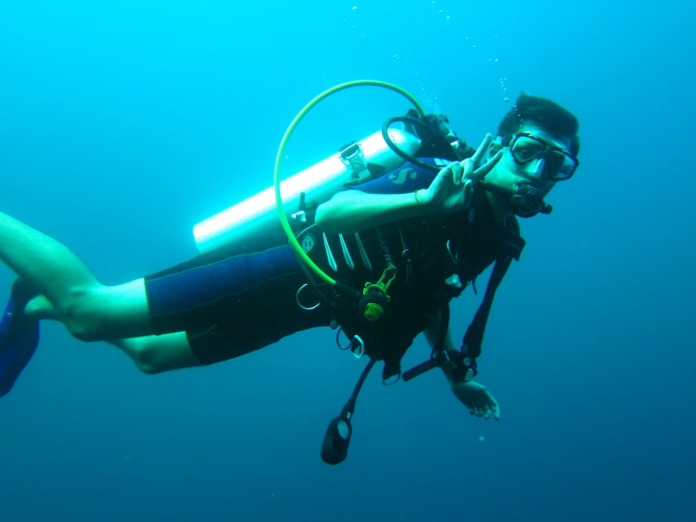
Scuba diving

The Caribbean is the perfect place to explore the underwater world. That’s why everyone should try scuba diving here. Crystal-clear water, a diverse array of marine life, and the chance to discover the secrets of sunken ships—all of this is available to tourists who are willing to add variety to their vacation. Almost every part of the Caribbean Sea is suitable for scuba diving. However, among the many available options, the waters of Aruba, Curaçao, Grenada, and St. Kitts & Nevis are the most recommended. They offer numerous suitable spots for both experienced and first-time divers. These locations also offer a wide range of underwater activities. For example, off the coast of Aruba, you can explore shipwrecks, near Grenada, enjoy the beauty of an underwater sculpture park, and in the waters of St. Kitts & Nevis, you can see a variety of marine life.

Windsurfing/kitesurfing

The combination of stable wind conditions and water that warms up well throughout the day makes the Caribbean islands an ideal location for windsurfing and kitesurfing enthusiasts. Both activities offer the opportunity to spend an active day and experience unforgettable emotions. Experienced instructors provide short board-handling lessons to beginners at almost every beach, so even first-time windsurfers and kitesurfers can have a fun time. Enhanced safety measures make this activity even more appealing to vacationers. Nearly every beach in the Caribbean is suitable for windsurfing/kitesurfing. However, beginners are advised to choose Bonaire, with its calm waters and moderate waves, while experts should consider the Dominican Republic or Aruba.

Kayaking among mangroves

Mangroves are the hallmark of the Caribbean. These unique natural formations resemble a forest growing amidst the water. Mangroves occupy vast areas and are a focal point for active tourism. Kayaking is the most popular activity here. It offers the opportunity to cover great distances and see many interesting things (unique plants, dozens of animal and bird species, unusual natural phenomena, etc.). Even experienced kayakers have difficulty pinpointing the best spot for mangrove kayaking. Each location offers something unique and deserves travelers’ attention. However, it’s best to start with Negril (Jamaica), Laguna Gri Gri (Dominican Republic), and Fajardo (Puerto Rico). These places are sure to surprise every traveler and make them fall in love with the Caribbean.

Volcano climbing

Many Caribbean islands are ancient volcanoes that rose above the water’s surface over millennia, shaping the landmasses. This makes the Caribbean an attractive destination for travelers who enjoy active recreation. Nearly every island offers numerous places to climb legendary peaks, take on challenging mountain routes as part of an expedition, and test your strength at high altitudes. The best locations for volcano climbing enthusiasts are Mount Pelée (Martinique), La Soufrière (St. Vincent and the Grenadines), and Pico Duarte (Dominican Republic). Each of these volcanoes offers trails for both beginners and experts, ensuring everyone can enjoy an active vacation. This activity also provides a bird’s-eye view of the Caribbean — a sight sure to leave no one indifferent.

Jungle hiking

Hiking is the most accessible activity in the Caribbean. Ideal conditions have been created for fans of this outdoor activity. On uneven jungle trails with exposed roots, mud, and frequent elevation changes, many hikers use trekking poles to maintain balance and reduce strain during long walks. Numerous easy and challenging jungle trails, a variety of natural attractions along the way, and the local wildlife’s uniqueness are key advantages. All this makes hiking an unforgettable adventure that brings a wealth of positive emotions. With night vision optics, you can explore the jungle even at night. This will further enrich your leisure time and help you better understand the Caribbean. There are numerous suitable hiking spots. Among the many locations, routes in Jamaica, Dominica, and the Dominican Republic stand out. They are safe, scenic, and ideal for even less-prepared hikers.

Tropical cycling

The Caribbean is a cycling paradise. Every stretch of land offers suitable paved and unpaved roads. These roads provide the opportunity not only to enjoy an active vacation but also to explore the surrounding area. Cycling also opens up endless opportunities to explore places inaccessible by car or bus. Curaçao, Aruba, Barbados, and Puerto Rico are among the best places for cycling. These islands offer numerous tropical trails that will make any traveler forget about beach vacations and other activities for a long time. Along these trails, you’ll see dozens of natural landmarks, ancient architectural structures, and local flora and fauna. Cycling also allows you to enjoy the magnificent tropical landscapes without interruption.

Camping on one of the Caribbean islands

Among the many outdoor activities, camping stands out. It offers a unique opportunity to connect with nature and experience countless positive emotions. The Caribbean is ideal for camping enthusiasts. On every island, you can pitch a tent and spend a few days surrounded by wilderness. The best places to do this are the small islands of the Bahamas, which offer numerous developed campsites with stunning views. Dominica is a good alternative. The local national park offers several suitable camping sites. They are located near picturesque lakes and waterfalls, ensuring all travelers can enjoy the beauty of these natural features. Camping in Puerto Rico or the U.S. Virgin Islands is also a good choice.

Yacht trips with stops at the most attractive locations

Wherever there’s sea, there will always be plenty of suitable places for yachting. This activity is extremely popular in the Caribbean. It offers the opportunity to experience an amazing sea voyage, visiting dozens of unusual locations. As you travel from one island to the next, you’ll enjoy magnificent landscapes, explore unique bays, and experience the full splendor of the illuminating wind and calm waters. This activity is sure to appeal to everyone, regardless of preference. Among the many available routes, it’s best to choose the most popular ones. They are incredibly safe, even for beginners. For example, sailing from Martinique to Saint Lucia, you can see more in just one day than on any beach; on the Grenada-Grenadines route, you’ll appreciate the splendor of the small Caribbean islands; and on the route from Antigua to Barbuda, you’ll enjoy the beautiful views and wildlife of the region.

The Caribbean is a paradise not only for beach fans but also for those who can’t sit still all day. This region offers a wide range of active recreation and the opportunity to experience the vacation of their dreams. Scuba diving, windsurfing, kayaking, hiking along various trails, camping, cycling, and sailing are all available year-round. Choose your preferred destination and outdoor activity to experience the full range of emotions. This trip is sure to be memorable and will become a bright chapter in your life.

What the S&P 500 means for Caribbean savers in 2025

S&P 500

Imagine a household in Plantation or Port of Spain checking a quarterly statement before mapping out travel plans or education costs. A subtle rise in the index nudges their long-term outlook, while a dip sparks a closer look at how global companies are responding to new economic conditions.

That moment of curiosity opens the door to a wider view of how the index touches tourism demand, regional spending patterns, and the investment vehicles many Caribbean families already use without realizing the connection.

Understanding the S&P 500 in Simple Terms

The index represents five hundred of the largest publicly traded companies in the United States, grouped in a way that reflects their total market size. Investors use it as a reference point because it often signals how corporate profits and credit conditions are trending. Many account providers use S&P 500-based funds as a default building block since the basket spans:

  • Technology
  • Consumer goods
  • Healthcare
  • Industrials
  • Financials

In proportions that shift as markets evolve.

Companies with larger valuations hold greater influence, so quick swings in a few dominant names can tilt the entire index. Readers who want to explore a technical overview and detailed price history can learn about US500 CFDs.

Why Many Retirement Accounts Track It

Long-term savings products in the United States often use the index as a core benchmark. Providers appreciate the broad representation and the long track record of historical data. Caribbean savers with accounts linked to US employers or long-standing financial institutions encounter S&P 500-focused funds in four distinct settings:

  • Target date retirement plans
  • Traditional and Roth accounts with simplified menus
  • Portfolio-building tools that recommend diversified mixes
  • Mutual funds that follow rules based on market size

What 2025 Could Bring for Caribbean Savers

Interest rate expectations continue to influence stock valuations. A gentle retreat in borrowing costs could raise investor appetite for sectors tied to growth, while steady or unexpectedly high rates tend to reward companies with strong cash flow.

Inflation is another central factor for 2025 planning. Price pressures have eased, but they remain part of household conversations across Miami, Broward, and Palm Beach.

How Market Swings Touch Everyday Life

Movements in the S&P 500 do not stay confined to trading floors. They influence personal decisions in ways that often feel small in isolation but meaningful when combined. Caribbean savers frequently adjust their plans in response to four recurring touchpoints:

  • Retirement contribution levels that rise or fall during volatile months
  • Household projects that shift timelines based on perceived financial comfort
  • College and vocational training support for relatives throughout the region
  • Travel schedules that depend on currency strength and airfare trends

Historical Perspective Matters

Long-range data shows that the S&P 500 has experienced multiple periods of expansion, interruption, and recovery. These cycles help savers understand that temporary swings do not always reflect a long-term destination.

Caribbean households with retirement accounts usually benefit from viewing current conditions through a historical lens. Corporate innovation often rises after slow years. Consumer spending patterns shift gradually, not instantly. Earnings growth frequently reappears before confidence fully returns.

These patterns help investors notice which sectors support recovery during different chapters of the economic cycle.

The Bottom Line for Caribbean Savers in 2025

The S&P 500 continues to serve as a reference point for millions of investors, including those with cross-border ties and savings accounts connected to South Florida.

Caribbean savers who understand the index structure, its historical context, and its sensitivity to interest rates and inflation enter 2025 with clearer expectations and steadier financial footing.


Why medieval extreme sees fighters switching to a falchion sword for control and tempo

Through the various formats of buhurt and armored sparring, the selection of weapons has changed significantly in the last few seasons. According to Medieval Extreme, there is a growing interest in a falchion sword as their mass distribution, blade geometry, and grip leverage add up to better control and tempo management than that of longer straight swords under modern competition rules. This trend is not influenced by sentimentality but rather by measurable handling traits and combat realities limited by rules.

What a Falchion Is and What it Isn’t

A falchion is a sword from the Middle Ages that has a single edge and its main features are: the blade that is given more weight at the tip and the moderate overall length. It is different from a cleaver, a saber, and it is not even a longsword substitute.

If we analyze Medieval Extreme falchions from a technical point of view, we will find the following characteristics:

  • The blade’s length generally varies from 65 cm to 80 cm depending on the model
  • The overall length is typically between 80 cm and 95 cm
  • Weight most often is between 1.2 kg and 1.6 kg
  • The single-edged blade with reinforced spine for stiffness
  • A point of balance that is further forward when compared to arming swords

Such design gives the blade a higher rotational inertia while still keeping the weapon mass under the tournament limit. Therefore, the falchion is not only suitable for striking with power but also for controlling the impact area.

Control, Tempo, and Safe Power in Sparring

Control means the capacity to halt, change the direction of, or recover a blow to the opponent within a very short time. The blades that weigh less than or lighter swords of the same length, the cutting edge of which almost the same as the non-cutting edge, are naturally better for this because their center of gravity is nearer the tip than straight swords.

The changes that can be scientifically measured are the following ones:

  • Physical presence of the blade during binds is increased
  • Overextension is diminished because of the shorter reach
  • Faster recovery time after contact has been achieved
  • Higher energy transfer at lower swing velocity

Impacts register clearly for scoring and dominance without excessive follow-through that risks injury or loss of balance. The average falchion strike requires less angular velocity to achieve an equivalent impact compared to lighter balanced swords.

Training Benefits: Wrists, Edge Alignment, Endurance

Falchions bring about different biomechanical difficulties which result in specific training outcomes. The forward weighting causes the wrist stabilizers and the forearm muscles to endure a greater torque load. This will in time to become:

  • Better wrist and joint strength and stability
  • More reliable edge alignment due to blade feedback
  • Less usage of shoulder driven swings
  • Better stamina in longer rounds

Endurance gain is another point which can be measured. According to fighters using falchions, the perceived effort is lower during the multi round fights as they are relying on timing and structure rather than on continuous high-speed swings.

How Rulesets Shape Weapon Trends in 2026

Melee combat styles have been influenced primarily by rules and not so much by the fighters’ choice of weapons. The current rules for buhurt and armed combat are already punishing unintentional hitting, too much follow-through, and unsafe weapon handling notoriously in a big way.

Falchions are among the swords that fit these rules perfectly:

  • The shorter effective reach minimizes the chances of accidental head hits
  • The forward balance allows for controlled but committed blows
  • The single-edge design makes it easy to comply with the edge orientation
  • The blade thickness and spine reinforcement make the sword more resistant to damage caused by the repeated striking

As the regulations concentrate on safety and prolonged fighting rather than instantaneous decisive hits. The switching of swords from longswords to falchions is happening more and more, and the fighters are attributing this to the rules that are getting stricter.

Choosing Specs: Balance, Grip, Length, Durability

The choice of a falchion should not be made according to aesthetics, but rather to the specifications that can be measured. Assess before buying:

  • Blade length in relation to arm span and shield usage
  • Weight from 1.2 kg to 1.6 kg, according to the person’s endurance level
  • Position of the center of gravity impacting swinging speed
  • Grip length allowing comfortable and firm single hand control with gloves on
  • Blade width that grants strength on the edge when hitting armor

Medieval Extreme weapons are made of tempered steel and the blade shape is made so that it can withstand armor contact over cutting performance. This means that edge retention and structural integrity are considered more important than sharpness.

Responsible Manufacturing and Testing Culture

It is not possible to separate weapon safety from manufacturing and discipline. Medieval Extreme uses strict production, uniform steel treatment, and testing under actual combat conditions as the core for its production.

The decision process involves:

  • Impact resistant steel selection
  • Blade thickness that would not allow bending or cracking to occur
  • Hilt construction that will not allow loosening through vibration
  • Real environment testing in armored sparring

Manufacturing that is responsible leads to less variability among the units. This is significant as the difference in weapon weight or balance becomes the determinant factor for the handling and risk of injury to occur if the user switches between training and competition weapons.

Decision Point for Fighters

Should you be unable to give the precise weight, blade length, balanced personality, and specified use in the ruleset of a falchion, you are selecting a weapon without any performance data. It is suggested to check the following before taking a sword for the 2026 competition cycles:

  • Weapon weight in kg
  • Blade and total length in cm
  • Grip size that is suitable for armored gloves
  • Durability suitable for repeated contact between armor

Medieval Extreme makes these specifications public for the benefit of the fighters who will then be able to make their choice of falchions according to control, tempo, and safety rather than relying on guesswork. Make use of the data. Before engaging in full contact fights, pick the weapon that is compatible with your ruleset, conditioning level, and fight strategy.


Rockhouse and Skylark welcome guests back ahead of Negril’s official reopening

Rockhouse Hotel

Negril is signaling its readiness for the holiday travel season as Rockhouse Hotel and Skylark Negril Beach Resort reopen to the public ahead of the Jamaica Tourist Board’s planned December 15 reopening of the resort town.

The early return follows a rapid, community-led recovery effort in the wake of Hurricane Melissa, with residents, hospitality workers and tourism partners moving quickly to restore hotels, beaches and key infrastructure.

The reopening comes at a critical moment for Jamaica’s tourism industry. Winter is traditionally the Caribbean’s busiest travel season, driven by demand for warm weather, clear waters and reliable sunshine. For Jamaica, the influx of visitors during this period is seen as vital to the country’s broader recovery following the storm.

To encourage travel, Rockhouse and Skylark are offering a limited-time December promotion. Guests who purchase gift cards to either property before December 31 will receive a 10% bonus value — turning a $100 gift card into $110.

Beyond travel incentives, both properties are also inviting visitors to participate directly in recovery through a new volunteer program operated via the Rockhouse Foundation. The initiative allows travelers to support on-the-ground relief efforts during their stay.

Volunteer opportunities include food distribution in partnership with World Central Kitchen. Since Hurricane Melissa, the hotels have helped serve more than 30,000 meals. Guests can assist with meal packaging and distribution to families in Savanna la Mar.

Another option focuses on education recovery. Volunteers can help restore classrooms at Sav Inclusive Academy — the first school built from the ground up by the Rockhouse Foundation — through light cleanup, organizing materials and supporting teachers as they restock spaces affected by the hurricane. Donated school supplies can also be coordinated in advance.

For travelers seeking a lower-commitment option, the “Gift of Encouragement” program allows guests to create simple school supply items such as pencil cases, bookmarks or affirmation cards for students, using recycled or upcycled materials provided on site.

Gift cards for both Rockhouse and Skylark are available for purchase through each property’s website, offering travelers a way to support Jamaica’s recovery while planning a future visit to Negril as the island heads into the peak holiday season.