Home Blog Page 111

‘They came with love’: medical and dental mission brings healing to Westmoreland

Morvia Reid Williams (L) handing out a nebulizer at medical mission in Little London, Westmoreland.

From December 17–20, 2025, a powerful act of compassion swept through the farming community centered at Little London Primary School in Westmoreland, Jamaica.

For three days, as hundreds in the rural village prepared to celebrate Christmas 2025, medical and dental volunteers transformed the school grounds into a hub of healing and hope for a community still traumatized by the devastation of Hurricane Melissa, which made landfall in Jamaica on October 28.

Though Dr. Dwight Williams, a U.S. board-certified oral and maxillofacial surgeon and founder of Jamaica-based Emirates Facial & Dental Implant Center (EFDIC), was thousands of miles away attending to business in New York, Morvia Reid-Williams, a trained social worker and EFDIC’s chief financial officer, led the successful mission to Little London.

“This mission was intentional,” Reid-Williams told Caribbean National Weekly. “The purpose was to touch and change the lives of everyone we came in contact with. They should not leave the same way they came through the gates of Little London Primary School. The people we served needed to know that we saw them, we heard them, and that we care,” she said.

Supported by a coalition of U.S.-based and Jamaican nonprofit organizations and medical professionals, Reid-Williams and her team of volunteers delivered a wide range of dental and medical services, including dental extractions and emergency care, blood pressure and diabetes screenings, wound care, mental-health first aid, one-on-one psychological counseling, child art therapy, and patient education on chronic illnesses such as hypertension and diabetes. Meals and care packages were also distributed daily, offering both nourishment and dignity.

Dr. Natalie Irving-Mattocks, co-founder and executive director of C-TECH (Caribbean Technical Assistance and Education Centre for Health), said what her team of six medical doctors and four psychologists encountered went far beyond physical illness.

“Our team observed significant psychological distress among affected community members, including widespread depression and multiple cases of suicidal ideation,” Irving-Mattocks said. “Many individuals reported having lost everything and expressed profound hopelessness, stating that they could see no path forward and, in some cases, no reason to continue living. These findings indicate a serious and escalating mental-health crisis.”

She warned that without sustained psychosocial support, the long-term impact could include worsening depression, increased suicide risk, and diminished capacity for individuals and families to recover and rebuild their lives.

For Reid-Williams, the emotional toll on children was especially troubling.

“When you’re a child, what happens to you sticks with you,” she said. “They have to have a place to compartmentalize this trauma and learn ways to deal with it.”

More than 50 children between the ages of three and 12 participated in art therapy sessions, expressing fear, sadness, and hope through drawings. Each child received toys and clothing—small gifts that brought moments of joy amid uncertainty.

“Sometimes, out of bad things come good things,” Reid-Williams reflected. “There was a lot of trauma bonding—people coming together because of similar circumstances. They’re all in survival mode.”

Dental care emerged as one of the most urgent needs.

“More than 80 percent of the patients we saw had dental emergencies,” Reid-Williams said. “There were children as young as five who had gone weeks with sleepless nights due to severe toothaches. Adults had broken-down, decayed teeth, causing severe swelling and infections that distorted their faces.”

While the dental team worked tirelessly, the overwhelming demand meant not everyone could be treated.

“That was heartbreaking for us,” she admitted. “But we did the best we could in the short time we had.”

‘They came with love’

The significance of the mission was underscored by Rev. Hartley Perrin, Custos of Westmoreland, who addressed the community to kick-start the dental and medical outreach.

“Those of us who live here know the trauma that we have been through,” Perrin said. “Melissa passed through with fury and fire and created much dislocation and discomfort. What we need more than ever are people who come with love and care, realizing how much hurt we’ve been through—and they’ve come with love.”

He praised the breadth of services provided. “The facilities are medical, dental, and psychological. It’s a wide gamut of service,” he said, reminding residents to show appreciation. “We did not ask them to come. They volunteered to come because they love us.”

Even amid scarcity, Perrin emphasized resilience. “We don’t have much,” he said, “but we have life. And where there is life, there is hope.”

For many volunteers, the experience was life-changing. Dr. Alexia, one of the medical professionals who joined the mission, described the impact in deeply personal terms.

Morvia Reid Williams handing out care packages at the dental mission in Little London, Westmoreland, 2025

“I’ve not fully absorbed the experience,” she said. “But I keep thinking about how amazing this team is—not only the force of nature organizing everything, but every single person’s individual contribution.”

She spoke of being welcomed “with open arms” by Reid-Williams and the rest of the volunteers, and of her love for Jamaica’s culture of “One Love and kindness.”

“In three days, we impacted countless lives,” she said. “I am eternally thankful for the collaborative effort to take care of the Little London community, and I hope to work with this team again.”

With support from organizations including United Mission of Goodwill, Caribbean Girls Mission of Hope, Giving JA, Hands and Heart Jamaica Mission Relief, and others, more than 1,000 care packages were distributed. The Savanna-la-Mar Hospital maternity and pediatric wards also received supplies, medication, and newborn baskets.

Dr. Dwight Williams’ mom (L) Ivy Campbell Myers shares lens time with Westmoreland Custos Rev Hartley Perrin and Psychologist Stacy Tullock.

“Needless to say, our donations did not fill all the gaps,” Reid-Williams acknowledged, “but they were helpful and went a long way.”

As the mission concluded, the message was clear: while the challenges facing Little London remain immense, the presence of caring hands and listening ears offered something priceless—reassurance that the community has not been forgotten.

Irving-Mattocks reiterated that beyond the immediate support provided by the Emirates Facial & Dental Implant Center, C-TECH, and other partners, sustained care is essential to the healing process. She stressed the need for expanded community-based counseling, trauma-informed care, referral pathways linking health facilities and social services, and training for frontline workers to identify and respond to mental-health and gender-based violence risks.

Reid-Williams concluded, “On behalf of Emirates Facial & Dental Implant Center and our collaborating sponsors, we thank the people of Little London for allowing us to serve them, with the intention of helping to rebuild their lives by healing from the inside out. One Love. One Heart. One Jamaica.”

More than a dozen charges laid against three in SSL fraud probe

SSL Jamaica

More than a dozen criminal charges have now been filed against three individuals taken into custody over the weekend in connection with the alleged multibillion-dollar fraud at the collapsed investment firm Stocks and Securities Limited (SSL), according to attorneys and law-enforcement sources.

Those charged are SSL founding director Hugh Croskery, his daughter Sarah Meany, and former SSL chief executive officer Zachary Harding. All three face multiple counts, including fraudulently inducing persons to invest; failure to register a company carrying on business in Jamaica; carrying on a securities business without a dealer’s licence; failure to apply to the Financial Services Commission to be registered for securities issued; and breaches of the Banking Services Act. The charges arise under the Securities Act, the Bank of Jamaica Act, the Banking Services Act and the Larceny Act.

Croskery was granted bail in the sum of $1 million and is scheduled to make his first court appearance on January 26, his attorney, King’s Counsel Peter Champagnie, confirmed. Croskery has also been ordered to surrender his travel documents as part of the bail conditions. Attorney-at-law Samoi Campbell is also representing him.

Sources said Meany and Harding were similarly granted bail, though the specific terms of their release were not disclosed.

Champagnie said his client has consistently denied wrongdoing and has cooperated with investigators throughout the probe. He cautioned against rushing to judgment as the case moves through the courts.

“Allow the process to be ventilated in court so that there is a proper evaluation of the situation in a judicious way,” Champagnie told The Gleaner on Sunday. “We should not be given to all kinds of wild speculation and emotions. Allow the justice system to take its course.”

Background: Raids and arrests

The charges follow a major coordinated law-enforcement operation that unfolded early Saturday, with search-and-seizure raids carried out at four locations linked to the long-running SSL investigation — three in St Andrew and one in St James.

The operation involved a joint task force comprising the Financial Investigations Division (FID), the Constabulary Financial Unit (CFU), and the Counter-Terrorism and Organised Crime Investigation Branch (C-TOC) of the Jamaica Constabulary Force, with support from the Major Organised Crime and Anti-Corruption Agency (MOCA).

Authorities confirmed shortly after 5 a.m. that the searches were active and urged the public to avoid the operational areas to allow the exercise to proceed safely.

During the operation, Croskery was seen leaving a St Andrew residence on Wickham Avenue with police officers, carrying a bag containing documents as investigators searched the property. He was later escorted into a police vehicle and taken away for questioning. At the time, both police officials and his attorney declined to comment.

Croskery has previously denied involvement in the alleged fraud. Following the emergence of the scandal in January 2023, he resigned as a director of SSL and its parent company, SSL Growth Barbados, saying the move was intended to demonstrate cooperation with ongoing investigations by the Financial Services Commission.

Scope of the alleged fraud

To date, the only person previously charged in the SSL matter was former employee Jean-Ann Panton, who faced multiple offences in February 2023. Later that year, the FID submitted a case file to the Office of the Director of Public Prosecutions, signalling the likelihood of further charges, though the DPP indicated that outstanding issues had delayed a full assessment.

Panton is set to stand trial on May 4, 2026. She was charged with breaches of the Larceny Act, the Proceeds of Crime Act (POCA), the Forgery Act and, the Cyber Crimes Act.

Investigators have said more than 200 client accounts were affected by the alleged fraud, with losses estimated to exceed US$30 million. Among the affected clients is Welljen Limited, a company owned by Jamaican sprint icon Usain Bolt, whose case brought international attention to the collapse of the firm.

In August of this year, Caydion Campbell, the court-confirmed trustee of SSL, said Bolt’s company was among roughly 40 clients set to receive payouts from the SSL Victims’ Compensation Fund.

At the time, Welljen’s attorney, Linton Gordon, welcomed the disbursement but emphasized it remains only a partial recovery. “Payments being made are just a fraction of what persons have lost, and it’s just the start,” he said, declining to disclose the specific amount Welljen will receive.


Shark Wake Park opens new ropes course at Okeeheelee Park

Shark Wake Park
Shark Wake Park Ropes Course Attraction Opens at Okeeheelee Park

A new aerial adventure attraction has opened at Okeeheelee Park following the launch of Shark Wake Park West Palm Beach’s Ropes Course, expanding outdoor recreation options in Palm Beach County.

The attraction officially opened on December 13 through a partnership between Shark Wake Park West Palm Beach and the Palm Beach County Parks and Recreation Department.

Designed and manufactured by RCI Adventure Products, the ropes course features Sky Trail, a multi-level challenge course with swinging beams, bridges, rope elements and a zip rail, as well as Sky Tykes, a scaled-down course designed for younger children.

County officials said the addition strengthens Okeeheelee Park’s role as a hub for family-friendly recreation while offering visitors a new way to experience the park.

“We’re excited to bring another unique recreation opportunity to Okeeheelee Park,” said Jennifer Cirillo, director of Palm Beach County Parks and Recreation. “This ropes course encourages people to challenge themselves, build confidence and see the park from a whole new perspective. Our partnership with Shark Wake Park continues to expand the ways our community can connect with the outdoors.”

Shark Wake Park was founded by Greg Norman Jr. and opened its West Palm Beach location in 2019 as the first cable watersports park of its kind in Palm Beach County. The park currently offers full-sized cable watersports, a floating obstacle island, and now the newly added ropes course.

The company also operates locations in Myrtle Beach, South Carolina, and has continued to expand its outdoor adventure offerings.

Miami-Dade deputy struck on Florida’s Turnpike while assisting crash scene

Two Miami-Dade Detectives Hospitalized After Collision with 18-Wheeler

A Miami-Dade Sheriff’s Office deputy was critically injured Saturday morning after being struck by a vehicle on Florida’s Turnpike while assisting at a traffic crash, authorities said.

According to the Miami-Dade Sheriff’s Office, the incident occurred around 7 a.m. near Northwest 74th Street, where the deputy had stopped to help the Florida Highway Patrol with an earlier crash.

Assistant Sheriff Eric Garcia said the deputy was on duty and en route to work when he heard a dispatch about a crash on the Turnpike.

“The deputy was on duty,” Garcia said. “He was en route to work. He heard a dispatch of a vehicle that was involved in an accident. I believe someone may have been trapped inside. He heard that go over the radio and he responded. He turned around and responded to the scene, and he was actively participating in traffic-related duties when the incident occurred.”

While assisting at the crash site, officials said the deputy — who was on foot — was struck by a sedan that was not involved in the original collision.

The deputy was transported by Miami-Dade Fire Rescue to HCA Florida Kendall Hospital, where he underwent surgery. Authorities said he remains in critical but stable condition.

Garcia said the deputy has served in Miami-Dade law enforcement for about 20 years and previously worked with Miami-Dade Fire Rescue before joining the sheriff’s office.

“We’re just hoping and praying that he can see his way through this situation,” Garcia said. “We cannot stress enough how important it is to our motorists, when they’re driving and they’re approaching a traffic scene, to slow down and to move over, in order to prevent these types of incidents.”

He added:

“Although we remain cautiously hopeful, this is very serious, and we ask everyone for prayers for the deputy, as well as the family and the officers.”

The driver involved remained at the scene. The Florida Highway Patrol is investigating the crash, and no charges have been announced.

Child injured after stray bullet enters Lauderhill home, police say

lauderhill police

A juvenile was injured Saturday night after a stray bullet shattered glass inside a Lauderhill home, police said.

Officers from the Lauderhill Police Department responded around 7:07 p.m. to reports of a shooting in the 2400 block of Northwest 55th Terrace.

When officers arrived, they found a child inside a nearby residence who had suffered minor injuries caused by shattered glass after a bullet entered the home. The juvenile was taken to a local hospital and treated for non-life-threatening injuries.

Detectives with the department’s Criminal Investigations Division and crime scene investigators processed the scene. Police said the motive for the shooting remains unknown and no suspects have been identified.

The investigation is ongoing. Anyone with information is asked to contact Lauderhill police at 954-497-4700 or Broward County Crime Stoppers at 954-493-8477.

Federal inmate serving life sentence captured in Broward after Georgia jail escape

A federal inmate serving a life sentence was captured in Broward County after escaping from a Georgia jail and allegedly kidnapping a rideshare driver while fleeing to South Florida, federal authorities said.

Stevenson Charles, 24, was apprehended following a multi-agency manhunt that began after his escape from the DeKalb County Jail in Georgia, where he had been transferred from federal custody earlier this month.

According to the U.S. Attorney’s Office for the Southern District of Florida, Charles had been serving a life sentence for carjacking, kidnapping and multiple robberies before being moved to Georgia state custody on December 5 to await trial on charges connected to a 2022 murder and armed robbery.

Authorities discovered during a routine security check on Monday morning that Charles and two other inmates — Yusuf Minor, 31, and Naod Yohannes, 25 — were missing from the facility.

U.S. Attorney Jason A. Reding Quiñones described Charles as a “dangerous, violent felon” and praised the rapid response that led to his capture.

“This was a dangerous, violent felon serving a life sentence who escaped custody, kidnapped an innocent victim, crossed state lines, and brought that threat into our community,” Reding Quiñones said.

Court records allege that after escaping, the three men used a rideshare service in Georgia and kidnapped the driver. One suspect is accused of placing a rope around the victim’s neck while another bound the victim’s hands. The driver was then forced into the back seat and compelled to drive the suspects into South Florida while being threatened.

Law enforcement later located Charles driving the victim’s vehicle in Broward County. He allegedly led officers on a vehicle pursuit before fleeing on foot and was captured shortly afterward. A firearm was recovered along the pursuit route, authorities said.

Minor and Yohannes were also taken into custody later that night.

Charles and Yohannes made their initial appearances in federal court in Fort Lauderdale on December 23 on kidnapping charges. Minor is scheduled to appear on December 29.

The investigation is being led by the U.S. Marshals Service, Federal Bureau of Investigation, and the Bureau of Alcohol, Tobacco, Firearms and Explosives, with support from the Broward Sheriff’s Office, Miramar Police Department and the City of Miami Police Department.

Assistant U.S. Attorney Lindsey Maultasch is prosecuting the case.

PM Holness thanks China for hurricane support, hospital ship and cleanup assistance

Jamaica china ship

Prime Minister Andrew Holness has expressed Jamaica’s gratitude to the Government of China for its support in the aftermath of Hurricane Melissa, which caused widespread damage across the island.

Speaking on December 23 at the handover of 10 new tipper trucks to the National Solid Waste Management Authority (NSWMA), Holness said China’s assistance played a critical role in both immediate relief and longer-term recovery efforts. The trucks, valued at approximately J$200 million, were presented at the agency’s headquarters in Kingston.

“The Chinese Government has been very good to us,” Holness said, noting that China provided material aid following the hurricane and deployed its navy hospital ship, the Silk Road Ark, to Jamaica to deliver emergency medical services.

The vessel spent 11 days in the country, providing care at the Montego Bay Cruise Pier, the Port Royal Pier and the Falmouth Pier. During its visit, the medical team conducted 7,563 consultations and performed 715 surgical procedures.

“I saw all the reports, and the ministers were very impressed,” Holness said. “The hundreds of people who benefited, I’m sure, are grateful. So, on behalf of the people of Jamaica, I want to say thanks to the Government of China for their support with the hospital ship.”

In addition to clinical services, the Chinese medical team donated medicines to Jamaica’s public health system and delivered health education lectures.

Holness also disclosed that China will assist Jamaica with equipment for the National Clean-Up Programme, including excavators, front-end loaders and other heavy machinery to support debris management and disaster response.

Once received, the equipment will be placed under the care of the Jamaica Defence Force, while remaining the property of the National Works Agency.

“The JDF will keep them in their fleet, but they are technically owned by the NWA,” the prime minister explained, adding that the arrangement will allow for rapid mobilisation during extreme weather events such as major landslides.

He said the government is using international support and donated resources to strengthen Jamaica’s capacity to respond more effectively to future climate-related disasters.

Major justice system upgrades planned for Guyana in 2026, AG Nandlall says

Guyana’s Attorney General and Minister of Legal Affairs, Mohabir Anil Nandlall

Guyana’s justice system is set for significant upgrades next year, including new court facilities, expanded digital services and plans for a modern judicial complex in Georgetown, according to Attorney General Mohabir Anil Nandlall, SC.

Speaking on his weekly Issues in the News programme, Nandlall said the initiatives build on commitments outlined by President Mohamed Irfaan Ali and are aimed at improving access to justice and speeding up court services nationwide.

The attorney general said additional magistrates’ courts are planned for the islands of Wakenaam and Leguan in Region Three, as well as the Amerindian village of Orealla in Region Six. The projects are expected to be included in the 2026 national budget.

“These three, I think, may be in the budget of 2026,” Nandlall said.

He noted that during the government’s previous term, at least seven new magistrates’ courts were built or upgraded between 2020 and 2025, replacing ageing wooden structures with modern concrete facilities that include accommodation for judges and court staff. Courts in Mahdia and Port Kaituma, he said, now meet the same standards as those in Georgetown.

With most outlying courts completed, attention is shifting to the capital. Nandlall revealed that plans are under consideration for a modern judicial complex to house the High Court and Court of Appeal, alongside upgrades to the Georgetown Magistrates’ Court, which he said has outgrown its current space.

He stressed that the investments are critical to ensuring fair and timely access to justice for all Guyanese, regardless of geographic location.

The attorney general also highlighted ongoing efforts to digitise the judiciary in support of Guyana’s evolving digital economy. Internationally recognised case management systems have already been introduced, and electronic filing is now in use across the High Court, Court of Appeal and the Caribbean Court of Justice.

Paper-based filing has been eliminated at those levels, with pleadings, submissions and supporting documents now filed electronically. Many hearings are also being conducted virtually.

At the magistrates’ court level, digitisation is still under way. Nandlall said the entire magistracy is expected to be fully electronic by mid-2026.

Caribbean nationals among over 17,000 migrants arrested under US Laken Riley Act

Four Jamaicans arrested in Alabama for alleged involvement in lottery scam

Caribbean nationals are among more than 17,500 undocumented migrants arrested and detained in the United States under the recently enacted Laken Riley Act, according to figures released last week by the U.S. Department of Homeland Security (DHS).

The arrests, announced on December 24, form part of stepped-up immigration enforcement, with DHS saying those detained are accused or convicted of crimes covered under the new law, including theft, burglary, assault on law enforcement officers, and offenses resulting in serious injury or death.

Among those cited by DHS during a recent enforcement initiative known as Operation Angel’s Honor were nationals of Jamaica, the Dominican Republic, and Cuba, alongside migrants from Latin America, Asia, and the Middle East.

DHS identified a Jamaican national, Nathaniel Antoney Sterling, as one of the individuals arrested during the operation, citing a prior conviction for sexual assault and additional charges including domestic abuse and weapons possession. Dominican and Cuban nationals were also listed among those detained for a range of violent and non-violent offenses.

The Laken Riley Act, the first piece of legislation signed by President Trump after returning to office, mandates the federal detention of undocumented migrants accused of specific crimes, removing discretion for release while cases are pending. The law is named after a Georgia nursing student killed in 2024, a case that has since been central to U.S. immigration policy debates.

Last week, Homeland Security Secretary Kristi Noem announced the conclusion of Operation Angel’s Honor, a 14-day nationwide enforcement sweep led by Immigration and Customs Enforcement (ICE), during which 1,030 arrests were made.

While DHS did not provide a full nationality breakdown of the 17,500 arrests, the inclusion of Caribbean nationals is likely to draw attention across the region, where migration to the United States — both documented and undocumented — remains a sensitive economic and political issue.

DHS said enforcement under the Laken Riley Act will continue nationwide, with officials emphasizing detention and removal for migrants deemed to pose public safety risks.

Death of former Grenada senator Neilon Franklyn still under investigation

Neilon Franklyn

Grenada police say the death of former opposition senator Neilon Franklyn has not yet been classified as a homicide, suicide or accidental, as investigations remain ongoing.

Assistant Commissioner of Police Vannie Curwen described the case as “very complex” while speaking at the Royal Grenada Police Force’s end-of-year press conference on Wednesday, December 24.

“I do not want to speak specifically on Neilon’s matter except to say this matter is still under investigation,” Curwen said, noting that police are receiving assistance from both local and regional laboratories. “It’s a very complex matter.”

Curwen disclosed that Christopher Nelson, Director of Public Prosecutions, is leading and directing the investigation into Franklyn’s death.

“There is no secrecy about the matter; it is professionalism,” Curwen said. “At some point, when [the DPP] feels comfortable that he has all that he needs, he will address the nation, putting that information out.”

He added that police are refraining from speculation while forensic testing and investigative work continue. “It is not proper for us to be speaking about a matter that is currently being investigated… We want to ensure that when we speak, we speak with definitive answers — the data, the results, the testing and the investigation — to back what we are saying.”

Franklyn, who was appointed an opposition senator by former Prime Minister and Opposition Leader Keith Mitchell, resigned from the Senate in September 2024 and returned to his substantive post as a customs officer.

He died last August after collapsing at his home following a night of socialising and was later pronounced dead at The General Hospital. He was laid to rest in September.

Police say a final determination on the cause of death will be made once all investigative and forensic results are received.

Cash vouchers roll out in Hurricane Melissa-hit parishes in Jamaica

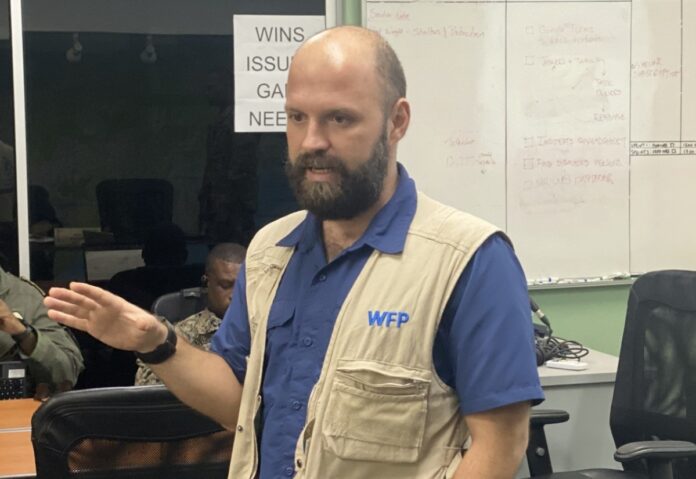
Cash Officer, World Food Programme (WFP), Lorenzo Nerantzis, addresses a recent meeting of the National Emergency Operations Centre (NEOC), at the Office of Disaster Preparedness and Emergency Management (ODPEM) in Kingston.

Hundreds of Jamaican residents in parishes severely affected by Hurricane Melissa have begun receiving cash vouchers as post-storm relief efforts continue to transition away from direct food distribution.

The disbursement, which began on December 17, is being carried out by the World Food Programme (WFP) in partnership with Jamaica’s Ministry of Labour and Social Security.

According to WFP Cash Officer Lorenzo Nerantzis, the vouchers are intended to replace some of the care and food packages previously distributed in hurricane-impacted communities, while avoiding duplication of assistance.

Speaking to JIS News following a National Emergency Operations Centre briefing at the Office of Disaster Preparedness and Emergency Management (ODPEM), Nerantzis said the agencies have developed a coordinated approach to ensure households transition smoothly from food aid to cash.

“One of the considerations is when the last food distribution took place in a specific community. The idea is that those receiving cash would have already transitioned out of food,” he said.

He added that the rollout is also designed to manage demand at Western Union and other registered money service providers, while encouraging beneficiaries to spend within their local economies to support recovery.

ODPEM Deputy Director General Michelle Edwards welcomed the initiative, noting that the assistance will be well received by affected families.

Earlier this month, the Government of Jamaica said it is preparing to transition its post-hurricane relief programme to a broader voucher-based system by early 2026, aimed at improving efficiency, flexibility and dignity in aid delivery.

Prime Minister Andrew Holness said the shift is designed to give residents greater choice in meeting their needs and to reduce the public stigma often associated with food handouts.

Holness expressed concern about images of people rushing for care packages and called on both relief groups and residents to maintain self-respect throughout the recovery process. “I don’t like my country to be shown as people running to get food, fighting over a package and those kinds of things,” he said. “Giving persons coupons or cards [will enable them to] buy the stuff that they need.”

Jamaica repatriated 25,000 tourists in one week after Hurricane Melissa, Bartlett says

Edmund Bartlett jamaica tourism
Minister Edmund Bartlett. (Photo via Nationwide 90FM)

Jamaica’s rapid repatriation of more than 25,000 tourists within a week of Hurricane Melissa has underscored the country’s resilience and crisis-management capacity, according to Tourism Minister Edmund Bartlett.

Speaking at a tourism partners’ meeting at the Iberostar Hotel on December 13, Bartlett said the coordinated evacuation of stranded visitors sent a strong signal to the international community about Jamaica’s preparedness and reliability as a destination.

He credited hoteliers, transportation operators, airport staff, security personnel and frontline tourism workers for executing the large-scale operation in record time.

“I want to congratulate all the players of the industry who, together, made possible this initial demonstration of confidence and strength to the world,” Bartlett said.

The minister noted that within 24 hours of the hurricane’s passage, the Ministry of Tourism established a recovery task force to fast-track the sector’s rebound. The group brought together senior ministry officials, tourism agencies and private-sector partners with the goal of restoring tourism activity faster than any other sector.

Bartlett also commended Chairman of the Tourism Recovery Task Force John Byles, along with officials from the Tourism Ministry, the Jamaica Tourist Board, the Tourism Enhancement Fund, Jamaica Vacations Limited (JAMVAC), and the Port Authority of Jamaica.

He emphasized that tourism’s swift recovery is critical to national economic stability, noting that the sector generates immediate income for communities once flights resume and cruise ships return.

“This immediate convertibility of tourism activity into income gives the sector its unique power to drive national recovery after a crisis,” Bartlett said, adding that tourism’s extensive linkages across industries amplify its impact.

In the recovery phase, Bartlett also praised the efforts of the Jamaica Public Service Company for restoring electricity in resort areas and the National Water Commission for returning water supplies to full capacity across major tourism centres, including Negril, Ocho Rios, Montego Bay, Port Antonio and Kingston.

Jamaica’s reserves hold firm at US$6.3B despite Hurricane Melissa fallout

Jamaica hailed by World Bank as leader in debt reduction

Jamaica’s international reserves remain at historically strong levels despite a weakened external position following the impact of Hurricane Melissa, which struck the island on October 28, according to the Bank of Jamaica.

BOJ Governor Richard Byles said the country’s reserves stood at approximately US$6.3 billion in mid-December 2025, representing about 151 per cent of the adequacy benchmark.

International reserves are foreign-currency assets held by the central bank to pay for imports, stabilize the exchange rate and cushion the economy against shocks.

Speaking at the BOJ’s Quarterly Monetary Policy Report press conference in downtown Kingston on December 22, Byles said the reserve position is expected to be further supported by disaster risk financing, multilateral funding and grant inflows, including proceeds from the Caribbean Catastrophe Risk Insurance Facility and Jamaica’s catastrophe bond.

Meanwhile, the central bank has intensified its interventions to maintain stability in the foreign exchange market since the passage of Hurricane Melissa. Byles reported that the BOJ has injected US$250 million into the market, including the direct supply of foreign exchange to selected energy-sector players to remove large, irregular purchases from open trading.

The central bank has also reinstated advance notices of foreign exchange intervention sales, a move Byles said helps improve market expectations around liquidity.

As a result, the exchange rate remained broadly stable between November 1 and mid-December, relative to end-October levels.

Over the 12 months to the end of November 2025, the BOJ sold approximately US$1.1 billion through its B-FXITT facility, broadly in line with sales over the previous year. During the same period, net foreign exchange purchases totaled about US$1 billion.

Looking ahead, Byles said the central bank will continue to act proactively to ensure orderly market conditions, noting that foreign exchange instability can quickly feed through to higher prices across the economy.

PM Holness points to free movement, Haiti progress in final CARICOM chair address

CARICOM

Jamaica’s Prime Minister Andrew Holness has pointed to regional unity during Hurricane Melissa, expanded free movement, coordinated security action and renewed focus on Haiti as defining achievements of his tenure as chair of the Caribbean Community (CARICOM), as he hands over the role at year’s end.

In his end-of-year message issued Saturday from the Caribbean Community Secretariat in Guyana, Holness said 2025 tested the region’s resilience but also reinforced the “simple truth” of Caribbean solidarity, particularly in the wake of record-breaking Hurricane Melissa, which caused widespread damage across Jamaica and other territories.

Among the most concrete integration advances, Holness highlighted the decision by Barbados, Belize, Dominica, and St. Vincent and the Grenadines to implement full free movement of persons among themselves from October 1, 2025. He described the move as a “concentric circles” model that allows willing states to deepen cooperation while leaving the door open for others to join when ready.

On the economic front, Holness said CARICOM successfully defended regional interests amid shifting global trade conditions through coordinated advocacy with the CARICOM Private Sector Organization and strategic partners. He also pointed to expanded regional and international airlift, strengthened trade ties, and initiatives aimed at improving food and nutrition security.

Security challenges featured prominently during Jamaica’s chairmanship, particularly with the adoption of the Montego Bay Declaration on Transnational Organised Crime and Gangs at the July Conference of Heads of Government. Holness stressed that CARICOM continues to address crime and violence through multiple mechanisms, underscoring that “security and development are inseparable.”

Internationally, he said CARICOM maintained a unified voice at major global fora, including the United Nations General Assembly, the G20 Leaders’ Summit and the CELAC–EU Summit, strengthening foreign policy coordination and crisis response. On climate change, Holness acknowledged that outcomes from COP30 in Belém fell short of what vulnerable Small Island and Low-lying Coastal Developing States require, reaffirming the region’s commitment to the 1.5°C goal and praising the work of regional institutions such as CDEMA, CARPHA and the Caribbean Development Bank.

Holness also pointed to deepened engagement with Africa following the Second Africa–CARICOM Summit in Addis Ababa, including expanded cooperation on trade, investment, culture and advocacy on reparations.

On Haiti, he said sustained regional lobbying helped keep the country on the global agenda, contributing to a UN Security Council resolution establishing a gang suppression force partly supported by UN funding. CARICOM, he noted, is now a key partner in coordinating the OAS roadmap toward stability, with preparations under way for elections in 2026.

As he handed over the chairmanship, Holness warned that the region must navigate an increasingly volatile geopolitical environment with “clarity, cohesion and strategic discipline,” emphasizing diplomacy, respect for sovereignty and peaceful engagement.

Despite the year’s challenges, he said CARICOM remains one of the world’s most enduring integration movements, expressing confidence in the Community’s future and the Secretariat’s continued role in supporting regional stability.

In January, St. Kitts and Nevis will become chair of CARICOM.

JN Money covers grocery bills for shoppers in hurricane-hit Santa Cruz

JN Money
Cedrica Reid (right), marketing and sales manager at JN Money Services, shares an embrace with Evona Blair after paying for her groceries at In Town Supermarket, in Santa Cruz, St Elizabeth, on December 18.

Gratitude, relief and excitement filled In Town Supermarket in Santa Cruz on December 18, as JN Money stepped in to cover grocery bills for several customers still struggling in the aftermath of Hurricane Melissa.

Santa Cruz is among several western Jamaican communities where residents continue to grapple with damaged homes, disrupted livelihoods and tight household budgets following the storm. Across St Elizabeth, many families rely on agriculture, small trade and informal daily work, sectors that were hit hard by the hurricane—resulting in reduced earnings and rising living costs.

Against that backdrop, JN Money partnered with In Town Supermarket, one of its agent locations in the area, to deliver immediate, practical relief at the checkout counters. For shoppers, the unexpected assistance meant putting food on the table without added worry, if only for the day.

For beneficiary Marvalee Braham, the help came at a critical moment. “The money I have wasn’t enough,” she said. “I was going to sort out some things [and there are] persons I owed, so thank you very much.”

Another shopper, Lornalin Carby, also expressed deep appreciation. “It’s been a long time I haven’t received anything like this,” she said, reflecting on the storm’s toll. “Melissa did us so bad, but we have to be grateful.”

Evona Blair, a JN member for more than 40 years, was equally appreciative as her groceries were fully paid for, describing the gesture as a welcome surprise for which she was “very grateful.”

Supermarket staff said the experience was uplifting, underscoring how small acts of kindness can play a role in community healing after trauma. “I really appreciate JN Money being here because you’ve put smiles on our customers’ faces and that made me happy and has also made my Christmas,” said Nadia Beadle, cashier supervisor at the JN Money agent location.

The Santa Cruz activity formed part of JN Money’s Holiday Hope initiative, aimed at providing timely, human-centered support during the holiday season—particularly in communities facing prolonged recovery after the major hurricane. In Town Supermarket was the first of several agent locations in severely affected parishes slated for similar surprise visits, where the JN Money team plans to cover the cost of groceries, food and hardware items.

Sanya Wallace, assistant general manager of the JN Money Group, said the impact was intentional. “Through the Holiday Hope initiative, we want to bring some comfort and holiday cheer during this challenging time, while showing our continued commitment to communities,” Wallace said. “We hope these random acts of kindness will serve as a meaningful gesture of support and encouragement for all, especially those trying to return to some level of normalcy at this time.”

Julien Alfred sets sights on history, targets 32-year-old 60m World Record

Julien Alfred

GROS ISLET, St. Lucia — With Olympic triumph behind her and recovery complete, Julien Alfred is no longer looking back. Instead, the Saint Lucian sprint star is training her attention on one of track and field’s most enduring benchmarks, the women’s 60-meter world record.

Fresh off a season shaped by historic achievement and unexpected adversity, Alfred has mapped out a clear and audacious ambition for 2026: rewriting a record that has stood untouched for more than three decades.

The reigning World Indoor 60m champion, who shares the distinction of being the second-fastest woman in history at the distance, will reopen her indoor campaign at the Millrose Games in New York City on February 11. The appearance signals a long-awaited return to the short sprint, an event she bypassed entirely during the previous season.

Chasing a record frozen in time

At the center of Alfred’s focus is Irina Privalova’s iconic 6.92 seconds, set in 1993, a mark that has defied generations of elite sprinters. Alfred’s own personal best of 6.94 seconds leaves her just two-hundredths of a second from the summit.

“I’m really looking forward to competing in the 60m again,” Alfred said on the CITIUS MAG Podcast. “It’s [going to be] a fun year for me doing the things that I actually love and enjoy. I’m actually really excited.”

That enthusiasm reflects a strategic shift. With no major outdoor global championship scheduled for 2026, the indoor season offers a rare window to pursue history without compromise.

A season of extremes

Alfred’s 2025 campaign unfolded as a study in contrasts. She devoted her year to the outdoor World Championships in Tokyo, finishing with a bronze medal in the 100 meters, the same event in which she captured Olympic gold in 2024 and became a national icon.

Shortly afterward, injury halted her momentum and forced an early end to her season. Now fully healthy, she has turned that interruption into motivation.

Home, preparation, and purpose

Balancing rest with readiness, Alfred has been dividing her time between vacation and training in Saint Lucia. After completing her responsibilities as a tourism ambassador in Europe, she resumed structured training in early November, laying the groundwork for her indoor return.

The Millrose Games will present an immediate and demanding test.

The entry list for The Armoury reads like a championship final. American Aleia Hobbs, who shares Alfred’s 6.94 seconds personal best, headlines the field alongside defending Millrose champion Jacious Sears. Great Britain’s Dina Asher-Smith, a former training partner of Alfred, adds further depth and intrigue.

Alfred is already etched into Millrose history. She holds the meet record at 6.99 seconds, set in 2024, and has broken seven seconds five times in her career, a feat that places her in rare company alongside legends such as Merlene Ottey and Gail Devers, even as Privalova’s 13 sub-seven runs remain the gold standard.

Roots of a specialist

Alfred’s mastery of the distance is no recent development. Her relationship with the 60 meters began during her collegiate years at the University of Texas, where she emerged as the third-fastest teenager ever over the distance. That ascent was briefly interrupted when the COVID-19 pandemic cut short her 2020 season, but the foundation was firmly laid.

Now, with clarity of purpose and history within reach, Julien Alfred is returning to the event she calls her favorite, not merely to compete, but to redefine what is possible.

No Windies batter in Top 50 as ICC Rankings reflect tough tour

Cricket West Indies

DUBAI, United Arab Emirates — The West Indies’ recent Test series against New Zealand has left a visible imprint on the ICC rankings, with the Caribbean side now lacking a single batter inside the top 50 of the global Test batting standings.

For the first time in recent memory, no West Indies batsman occupies a place among the game’s top 50 Test performers. Shai Hope, previously the region’s lone representative in that bracket, has dropped 11 positions to 60th, making him the highest-ranked West Indies batter in the latest update.

The slide came despite Hope producing a respectable series under challenging circumstances. He amassed 255 runs at an average of 42.50 while battling an eye infection during the drawn second Test and food poisoning in the decisive third match.

Performances not reflected in rankings

Justin Greaves, the West Indies’ most prolific run-scorer in the series, found little reward in the revised standings. His 283 runs at an imposing average of 56.60, highlighted by an unbeaten double century in the second Test, were not enough to prevent a one-place fall to 62nd.

Former Test captain Kraigg Brathwaite, who last represented the side in July against Australia, remains the next-highest-ranked West Indies batter at 65th.

While the overall picture is sobering, a handful of West Indies players did manage notable climbs. Kavem Hodge surged 11 places to 66th after his unbeaten 123 in the first innings of the third Test, while Brandon King recorded the biggest leap.

King, drafted in as a replacement for the injured Tagenarine Chanderpaul, struck half-centuries in both innings of the final Test and rose 27 spots to 73rd.

Further down the list, John Campbell (75th), Alick Athanaze (76th), Joshua Da Silva (83rd), Chanderpaul (99th), and captain Roston Chase (100th) round out the region’s representation.

Bowlers hold ground, with minor shifts

The bowling rankings told a more measured story. Veteran pacer Kemar Roach, who had climbed to 18th after a standout opening Test, slipped two places to 20th but remains the West Indies’ leading bowler, narrowly ahead of the injured Shamar Joseph.

Jayden Seales eased back one spot to 25th, while Alzarri Joseph and left-arm spinner Jomel Warrican held steady at 31st and 32nd, respectively. Gudakesh Motie remained unmoved at 65th.

Roston Chase endured a notable fall among bowlers, dropping nine places to 67th, while Greaves emerged as the lone West Indies bowler to register an improvement, climbing 12 positions to 80th.

A rankings snapshot of a series

Taken together, the latest ICC Test rankings underscore the collective challenges faced by the West Indies in New Zealand, offering both a stark assessment of current standing and a reminder that individual performances do not always translate immediately into statistical reward.


Major law-enforcement operation targets properties linked to SSL probe

SSL fraud Jamaica

A major coordinated law-enforcement operation is under way across Jamaica, with security forces conducting early-morning search-and-seizure raids at four locations linked to the long-running investigation into the collapse of investment firm Stocks and Securities Limited (SSL).

The operation, which began Saturday, is targeting three premises in St Andrew and one in St James and forms part of renewed efforts to advance the probe into an alleged multibillion-dollar fraud that first came to light in January 2023.

The joint action is being carried out by the Financial Investigations Division (FID), the Constabulary Financial Unit (CFU), and the Counter-Terrorism and Organised Crime Investigation Branch (C-TOC) of the Jamaica Constabulary Force, with support from the Major Organised Crime and Anti-Corruption Agency (MOCA).

In a statement issued shortly after 5 a.m., authorities confirmed that the searches were active and urged members of the public to remain calm and avoid operational areas to allow the exercise to proceed safely and without disruption.

As part of the operation, Hugh Croskery, founder and former principal of SSL, was observed leaving a St Andrew residence on Wickham Avenue with police officers, according to a report from the Jamaica Gleaner. He was seen holding a bag containing documents while speaking with investigators, as a pickup truck on the property was also searched. Shortly after 7 a.m., Croskery was escorted into a police vehicle and driven away. Police sources indicated that he is expected to be questioned later Saturday.

Croskery has previously denied any involvement in the alleged fraud. Following the emergence of the scandal in early 2023, he resigned as a director of SSL and its parent company, SSL Growth Barbados, stating at the time that his resignation was intended to demonstrate his cooperation with ongoing investigations by the Financial Services Commission (FSC), the regulator for investment houses in Jamaica.

Officers on the scene declined to comment, and Croskery’s attorney, King’s Counsel Peter Champagnie, also declined to provide comment when contacted.

To date, the only person formally charged in the matter is former SSL employee Jean-Ann Panton, who was charged with multiple offences in February 2023. In December that year, the FID submitted a case file to the Office of the Director of Public Prosecutions, indicating the possibility of additional charges. However, the Director of Public Prosecutions has since said that outstanding issues have delayed the assessment of the file.

Investigators have reported that more than 200 client accounts were affected by the alleged fraud, involving losses exceeding US$30 million. Among the impacted clients is Welljen Limited, a company owned by Jamaican sprint legend Usain Bolt.

Saturday’s operation marks the most visible and significant law-enforcement escalation in the SSL investigation in more than a year. Authorities said further updates are expected as the operation continues.

Guyana’s non-oil economy surges 13.8% in first half of 2025

Guyana's newly appointed Minister of Tourism, Industry and Commerce Susan Rodrigues
Guyana's Minister of Tourism, Industry and Commerce Susan Rodrigues

Guyana’s non-oil economy expanded by 13.8 per cent in the first half of 2025, according to the country’s mid-year economic report, underscoring a period of broad-based expansion even as its hydrocarbon sector continues to transform the national economy.

Tourism, Industry and Commerce Minister Susan Rodrigues described the figures as exceptional by global standards. “By any measure, that is a remarkable growth percentage,” she said during a live broadcast, noting that the overall economy grew by 7.5 per cent, marking the fifth consecutive year of broad-based expansion driven by performance across agriculture, tourism, trade and infrastructure.

Rodrigues added that Guyana’s diversification will be reflected across agencies such as the Small Business Bureau, Guyana National Bureau of Standards, Guyana Tourism Authority and the Competition Consumer Affairs Commission, and stressed that the government’s development strategy aims to ensure prosperity “reaches every single Guyanese” regardless of background.

Oil’s role in a transforming economy

While the non-oil economy has posted impressive gains, Guyana’s oil and gas sector continues to be a dominant force in its overall economic trajectory. First commercial oil was produced offshore in December 2019, and the sector has expanded rapidly since then, contributing significantly to GDP growth, export earnings and government revenue.

By 2024, Guyana’s daily oil production had risen to roughly 645,000 barrels per day, a dramatic increase from initial output and part of a broader expansion that has positioned the country as one of the world’s fastest-growing oil producers. Production is expected to climb further in the coming years with additional offshore developments planned.
Wikipedia

In 2025, production capacity edged above 900,000 barrels per day, buoyed by projects such as Yellowtail and other developments in the Stabroek Block, which hosts an estimated 11 billion barrels of recoverable oil.

This surge has not only lifted GDP figures but also dramatically increased revenues flowing into Guyana’s Natural Resource Fund and state coffers, providing resources that the government is using to invest in infrastructure, energy projects and broader economic transformation.

Economists note that the rapid expansion of the oil sector has reshaped Guyana’s economy — raising questions about how to balance resource-led growth with sustainable diversification — even as it helps finance ambitious public investments.
rainforestfoundation.org

Rodrigues’ remarks highlight this dual trajectory: strong performance outside of oil paired with a hydrocarbon boom that continues to redefine Guyana’s economic landscape, offering both opportunities and strategic challenges as the country develops.

Haiti publishes revised electoral calendar, sets August 2026 election dates

Haiti elections

The Provisional Electoral Council (CEP) has published Haiti’s revised electoral calendar in Le Moniteur, outlining the full timetable for the country’s long-delayed legislative, presidential, and local elections.

The calendar follows the publication of the Electoral Decree in Special Issue 66 of Le Moniteur on December 1 by the Presidential Transitional Council (CPT). According to the CEP, the schedule covers all key stages of the process, from candidate registration to the proclamation of final results.

Under the revised timetable, the election campaign for the first round of legislative and presidential elections will begin on May 19, 2026, and run through August 28, 2026. Election Day for the first round is set for August 30, 2026. Preliminary and dispute-resolution phases will follow, with final first-round results scheduled for publication on October 3, 2026.

The second round of voting, along with local elections, is scheduled for December 6, 2026, with final results of the second round to be published on January 7, 2027. Final results for local elections are set for January 20, 2027.

However, the CEP stressed that adherence to the calendar depends on two critical conditions: an acceptable security environment and the availability of financial resources.

On security, the CEP warned that ongoing instability poses major logistical challenges to holding elections nationwide. It noted that 23 communes are currently under the control of armed groups — 12 in the West, eight in Artibonite, three in the Centre, and one in the Northwest — limiting the council’s ability to operate safely across all municipalities, communal sections, electoral offices, and polling stations.

“The current security situation has major implications for electoral logistics,” the CEP said, emphasizing the need for safe, uninterrupted access to Departmental Electoral Offices (BEDs), Communal Electoral Offices (BECs), and polling locations throughout the process.

The council also highlighted funding as a decisive factor, stating that the electoral budget is “a crucial pillar” of the process. Organizing elections in Haiti, it said, requires managing multiple emergencies simultaneously across the country, making it essential for the electoral institution to have direct access to financial resources to address both planned activities and unforeseen challenges.

The published calendar details a multi-year process beginning with civic education efforts in November 2025 and extending through January 2027, including voter registration, accreditation of observers and journalists, recruitment of election workers, result tabulation, dispute resolution, and the certification of final outcomes.

St Vincent PM says national debt worse than expected

Godwin Friday

Prime Minister Godwin Friday has described St Vincent and the Grenadines’ national debt as a significant challenge, saying the situation is more severe than he anticipated before taking office.

Friday said the country’s total public debt currently stands at approximately $3.1 billion, owed to a mix of creditors including bilateral partner countries, the Caribbean Development Bank (CDB), and various financial instruments.

“The debt is owed to various entities, including bilateral partner countries, the Caribbean Development Bank (CDB), and through various financial instruments,” Friday said.

A major concern, he noted, is the strain the debt places on government finances, with 36 cents out of every dollar of government revenue now being used to service debt obligations.

“The country has reached a point where it ‘can’t borrow much more’ and must find alternative ways to meet its obligations,” Friday said.

Beyond the official debt figures, the prime minister pointed to a substantial amount of unpaid payables owed to local businesses. He said the failure to honor these payments effectively removes money from the local economy, though he declined to provide a specific figure for these arrears during the interview.

Friday said the $3.1 billion debt burden is the primary reason his administration intends to move forward with a Citizenship by Investment (CBI) programme by 2026, arguing that the country needs new and sustainable revenue streams to plan for the future.

He characterized the overall state of government finances as “tight” and confirmed that the finance department’s transition document revealed a fiscal situation worse than he had expected prior to taking office.

Trinidad raises alarm over drone activity near US radar sites and major airports

The Trinidad and Tobago government on Wednesday criticised the use of drones to acquire photos of United States “military installations and equipment,” noting “with great concern” recent drone activity in close proximity to both Piarco International Airport in Trinidad and the ANR Robinson Airport in Tobago.

In a statement, the Ministry of Defence said it is responsible “for securing our borders, including the airspace and territorial waters,” and confirmed it had taken note of “recent drone activity” near the two airports.

The issue gained public attention earlier this week after the Trinidad Guardian published a photograph showing images of “several trucks and utility vehicles positioned within the restricted area, along with a small tent and another temporary structure located close to the equipment, suggesting use for operational or shelter purposes. A number of portable toilets were also observed at the site.”

However, Prime Minister Kamla Persad-Bissessar dismissed suggestions that the image depicted a military base, saying the photo showed “support offices” for a United States military radar system on the island. While she did not explicitly describe the compound as a military base, Persad-Bissessar told the newspaper, “the picture is self-explanatory. There is a radar with the support offices to operate it.”

She later criticised both the newspaper and the main opposition People’s National Movement, accusing them of “appearing obsessed” with getting the “radar and the Americans out of the country,” and argued that the only people who would benefit from such an outcome would be drug traffickers.

In its statement, the Ministry of Defence said that “objective verification shows drones were flown within the five-kilometer no fly zone of our airports, contrary to claims made that the drones operated outside five kilometers from our airports.” The ministry warned of “reckless endangerment” by drone operators, citing “the obvious and inherent danger posed to both incoming and outgoing commercial aircraft,” with the real possibility of collisions that could “lead to loss of life on a massive scale.”

Beyond aviation safety, the ministry said the effort to obtain and disseminate footage of military installations and equipment was “inimical to national security interests and exposes the citizenry to those who would benefit from the use of such information to our detriment.”

Last month, Persad-Bissessar defended her decision to withhold details about the installation of United States radar systems in Tobago, even as she criticised the previous administration for leaving Trinidad and Tobago’s borders “exposed.” She also dismissed claims that the US presence in Tobago was military in nature.

“They are helping us with something to do at the (Arthur NR Robinson International) airport,” she said, pointing to work connected to a roadway near the airport. “It is not a military force as such. We are not about to launch any campaign against Venezuela.”

Persad-Bissessar has also denied being part of United States efforts to effect regime change in Venezuela, where Washington has accused President Nicolás Maduro of being a narco trafficker — a term the prime minister is now using to refer to the administration in Caracas.

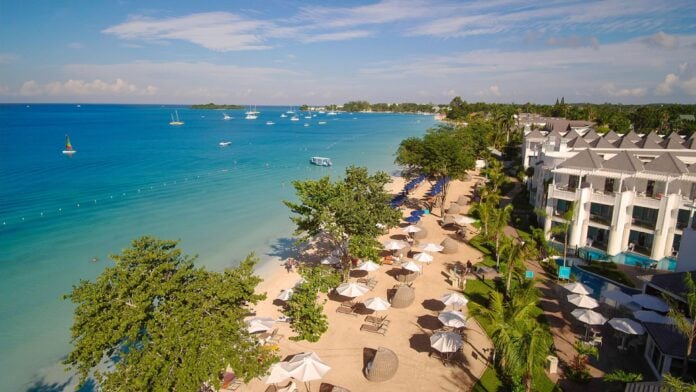
A return to bliss on Seven Mile Beach at Azul Beach Resort Negril

Azul Beach Resort Negril

Azul Beach Resort Negril by Karisma
Stay: December 20–23, 2025 | Seven Mile Beach

About an hour and a half from Sangster International Airport in Montego Bay, the drive west to Negril still feels like a gradual exhale — greener, slower, and unmistakably beach-bound. That sense of ease continues on arrival at Azul Beach Resort Negril, which reopened on December 1 following Hurricane Melissa and is once again welcoming travelers to one of Jamaica’s most iconic stretches of coastline.

Set directly on the soft sands of Seven Mile Beach, the all-inclusive resort sustained no infrastructure damage from the storm. The beachfront, pools, gardens, and children’s play areas were all in excellent condition during my stay, even as surrounding communities in Negril continued to experience uneven recovery. The contrast was notable — and spoke to the broader role tourism is playing in helping the area rebound.

According to Trudy Ann Frazer, the resort’s international marketing and social media coordinator, approximately 98% of staff returned to work when the property reopened. Some employees were more affected by the hurricane than others, she said, but morale was high. Frazer noted that she herself was still without electricity in her own community at the time — a reminder that while resorts may reopen quickly, recovery off property often takes longer.

While guests might not immediately see the storm’s impact, Frazer said it is still being felt behind the scenes, particularly in food sourcing. Some seasonal fruits remain scarce, and the cost of key ingredients — especially Scotch bonnet peppers — has risen sharply across the island, requiring flexibility in the kitchen. Even so, the culinary experience remained strong throughout my stay, underscoring the adaptability of the resort’s chefs and staff. “The hurricane really tested the industry and the island,” Frazer said, pointing to staff resilience as a defining part of the reopening.

I stayed in Room 12102, one of the presidential suites, which offered a private plunge pool, a separate living room, and a spacious bathroom with both a soaking tub and walk-in shower. The suite is located near three restaurants, making dining especially convenient, though it’s a longer walk to the main pool and entertainment area — a worthwhile trade-off for added quiet and privacy.

Food and drink are central to the Azul experience, which follows Karisma’s Gourmet Inclusive concept. Over four days, I dined multiple times at Mahogany, the buffet restaurant, while Hua Hin, the Asian restaurant, stood out for its California roll, Kung Pao-style stir-fry, and a standout spicy mango cocktail. Ackee, the Jamaican restaurant, was consistently busy — always a good sign — with the curry goat emerging as a clear favorite. Its location directly across from the lounge made evenings easy to extend from dinner into nightlife.

The lounge itself shifted moods depending on the night. One evening was family-friendly karaoke, with children eagerly taking the mic. Another leaned more adult, with guests slow-dancing under low lights, cocktails in hand. Across the stay, the Tropical Sunset cocktail became my go-to. A reggae band night by the main pool added a lively, unmistakably Jamaican soundtrack to the week.

Wellness offerings are another highlight. Vassa Spa delivered one of the most thoughtful treatments of the trip. I booked a facial, but my therapist, Simone, incorporated my hands and shoulders as well, making it feel closer to a full-body experience. The spa also includes a sauna, hair and beauty services, and even treatments designed for children — a nice touch for families. Morning yoga, held at sunrise at the wellness pavilion, offered a peaceful start to the day before the beach and pools came alive.

For more casual bites, West End Gourmet Corner & Terrace quickly became my favorite lunch spot, particularly for the Azul Burger. Beans Coffee Shop was ideal for early-morning or late-night coffee, patties, and donuts. Ice cream lovers should plan a daytime stop at West End, where it’s readily available.

Non-motorized water sports — including kayaking, paddleboarding, and Hobie Cat sailing — are included, as is room service, with a comfort-food-friendly menu of burgers, pasta, nuggets, and fries. The resort also features 283 suites, seven restaurants and gourmet corners, eight bars, seven pools, a spa, gym, and kids’ playhouse, and operates as a non-smoking property.

During my stay, I also witnessed a beachfront wedding unfolding on the sand — a reminder that Azul caters not just to families, but also to couples. Wedding and vow-renewal packages are available, and the setting on Seven Mile Beach makes a compelling case for a destination ceremony.

Guests I spoke with echoed the positive energy. Tanya, visiting from Wisconsin with her son, said she was relieved Azul was among the Negril resorts able to reopen. A repeat visitor, she described the return as both familiar and comforting after the storm.

In a destination still navigating recovery, Azul Beach Resort Negril offers travelers a chance to return — not just to the beach, but to a community rebuilding itself. Open, welcoming, and quietly resilient, it’s a reminder that Negril is ready, and Jamaica’s west coast remains every bit as captivating as ever.

How to merge PDF files without errors

Merging PDF files is a common task that many professionals, students, and businesses face when dealing with multiple documents. Whether you need to combine reports, contracts, or presentations into a single file, knowing how to merge PDF files without errors is essential for smooth document management. In this article, we will explore the basics of PDF merging, the tools you can use, and tips to avoid common errors during the process.

Understanding the Basics of PDF Merging

Merging PDFs is the process of combining two or more PDF documents into one. This task is often required in many professional fields to ensure that all information is in a single file for easier sharing, editing, or printing. While PDF files are highly portable and maintain the integrity of the document formatting, merging them without errors requires the right tools and approach.

What is PDF Merging?

PDF merging involves combining multiple PDF files into one cohesive document. Instead of dealing with multiple files, users can consolidate all content into one file for convenience. Whether you’re working with individual documents that need to be combined into one project or simply need to group several related files, PDF merging ensures that the information stays intact and is easy to share.

Common Challenges in Merging PDFs

Merging PDFs is usually straightforward, but several challenges can arise during the process:

  • File Size: Large PDFs can cause errors during merging, especially if the merging tool has file size limits.
  • Formatting Issues: When merging PDFs, formatting can sometimes be lost or altered, especially if the documents have different layouts or fonts.
  • Corrupted PDFs: Sometimes, PDFs might be corrupted, preventing them from merging properly.

To avoid these common issues, it’s crucial to use the right tools and follow best practices.

Tools for Merging PDF Files

There are various tools available for merging PDFs, ranging from online tools to desktop software. Each option has its advantages, depending on your needs and the complexity of the task.

Online PDF Merging Tools

Online tools provide an easy and convenient way to merge PDF documents, especially for quick tasks or users who don’t want to download software. Some popular online tools include:

  • Lumin: Lumin’s online PDF editor allows you to merge PDFs quickly and without issues. It’s secure, easy to use, and supports collaboration.
  • Smallpdf: Known for its simplicity, Smallpdf is an online PDF editor with a tool to merge PDF files into one.
  • PDF Merge: Another straightforward online tool that allows you to combine multiple PDF files into one document.

Desktop Software for PDF Merging

For more advanced users or those dealing with large PDF files, desktop software may offer additional features and flexibility. Some popular desktop options include:

  • Adobe Acrobat Pro: This is a powerful tool that offers comprehensive PDF editing and merging features, making it ideal for professional use.
  • Foxit PhantomPDF: Foxit offers powerful features for merging, editing, and annotating PDFs.

Mobile Apps for Merging PDFs

If you need to merge PDFs on the go, mobile apps provide a great solution. Some mobile apps, like PDF Expert or Adobe Acrobat Reader, offer merging functionalities, allowing you to combine PDFs directly from your smartphone or tablet.

Step-by-Step Guide to Merge PDF Files

Whether you’re using an online tool, desktop software, or a mobile app, the process of merging PDFs is similar. Below, we’ll go over the steps involved in each method.

Preparing Your PDF Files

Before merging PDFs, it’s important to prepare your files:

  1. Organize your PDFs: Ensure that the files you want to merge are ready and in the correct order. Many tools allow you to reorder pages or documents during the merging process.
  2. Check file compatibility: Make sure that all the PDF files are not corrupted and are compatible with your tool.

Using Online Tools to Merge PDFs

  1. Go to your chosen online tool (like Lumin).
  2. Upload the PDF files you wish to merge.
  3. Arrange the documents in the order you want them to appear.
  4. Click the “Merge” button to combine the PDFs into one document.
  5. Download or save your merged PDF.

Merging PDFs with Desktop Software

  1. Open the desktop PDF editor (e.g., Adobe Acrobat Pro).
  2. Select the “Combine Files” or “Merge” option.
  3. Add the PDF files you want to merge and arrange them.
  4. Click “Combine” or “Merge” to create the final document.
  5. Save the new merged PDF file.

Combining PDFs on Mobile Devices

  1. Open your PDF app (e.g., PDF Expert or Adobe Acrobat Reader).
  2. Select the option to merge or combine files.
  3. Add your PDFs and arrange them.
  4. Tap “Merge” or “Combine” to create the new file.
  5. Save or share the merged PDF.

Tips to Avoid Errors When Merging PDFs

To ensure a smooth PDF merging experience and avoid errors, follow these tips:

Ensuring File Compatibility

Make sure the PDFs you’re merging are in a compatible format with the tool you are using. If you encounter any errors, check whether the files are encrypted or protected. Some tools might not allow merging of password-protected PDFs unless the password is provided.

Maintaining File Quality

While merging, ensure that the quality of your documents is maintained. Some tools might compress PDFs during the merging process, which can reduce the quality of images or text. If file quality is crucial, use tools like Lumin that prioritize maintaining original formatting and quality.

Handling Large PDF Files

Large PDFs may cause performance issues during merging. To avoid errors:

  • Use tools that support large files, like Adobe Acrobat Pro or Lumin.
  • Compress the files before merging if necessary to reduce the file size without compromising too much on quality.

Troubleshooting Common PDF Merging Issues

Even with the right tools, issues can sometimes arise during the merging process. Here are some common problems and solutions:

Fixing Corrupted PDF Files

If your PDF files are corrupted, they may not merge properly. To fix corrupted files:

  1. Try opening the PDF with a different PDF reader or editor to check if it’s the file or the tool causing the problem.
  2. Use a PDF repair tool to restore the file before attempting to merge.

Resolving File Size Limitations

Many online tools have file size limits. If your PDFs are too large, either:

  1. Use desktop software like Adobe Acrobat Pro, which can handle large files more efficiently.
  2. Compress the PDFs before merging to reduce the file size.

Best Practices for Error-Free PDF Merging

To achieve the best results and avoid errors when merging PDFs, consider these best practices:

  • Organize your documents: Before merging, ensure that all the files are in the correct order.
  • Use a reliable tool: Choose tools with strong reputations for quality, like Lumin, Adobe Acrobat Pro, or Foxit PhantomPDF.
  • Check for updates: Make sure your PDF editor is up-to-date to avoid any compatibility or performance issues.

Final Thoughts

Merging PDFs is a daily task for many users, whether you’re combining documents for work, school, or personal use. By choosing the right tool and following these tips, you can ensure that your PDFs merge without errors and maintain high quality. Whether you’re using Lumin, Adobe Acrobat, or other tools, mastering PDF merging helps improve your workflow, save time, and keep your documents organized.

Clinical considerations when prescribing thickened beverages

Thickened beverages

Thickened beverages are often suggested by healthcare professionals to aid people with swallowing difficulties. Those recommendations obviously need to be given very cautiously since safety and efficacy are both influenced by many factors. This article describes general clinical principles to help direct the use of thickened drinks within populations requiring a modified liquid viscosity diet.

Prescribing thickened beverages is not a one-size-fits-all decision and must be guided by sound clinical reasoning. Products such as SimplyThick can be effective tools, but their use depends on individual swallowing function, medical status, and tolerance. Understanding the broader clinical considerations helps ensure that thickened liquids enhance safety without compromising hydration, nutrition, or quality of life. 

Understanding Swallowing Difficulties

Dysphagia (difficulty swallowing) can be a medical complication that can arise from many other conditions. These include everything from neurological disorders to aging to trauma or structural abnormalities. Having trouble swallowing liquids puts patients at a higher risk of aspiration, which can then cause those patients to develop respiratory complications, such as pneumonia. By increasing the viscosity of fluids, providing these beverages slows the movement of fluids, promotes better control during the swallowing process, and reduces the risk of aspiration.

Assessment Before Recommendation

Before making any alteration to the liquid consistency, a comprehensive assessment must be performed. This process often requires trained professionals, including speech-language pathologists. These providers analyze swallowing safety and the correct consistency of liquids for that individual. Assessment may involve clinical observation, instrumental studies, and input from the person or caregivers.

Selecting the Appropriate Consistency

Thickened drinks come in various thicknesses from mildly thick to extremely thick. The thickness is selected based on the swallowing capabilities of the individual and their particular requirements. The wrong consistency can raise the risk of choking or complicate hydration. Periodic reevaluation of the patient is still important because swallowing ability could improve or worsen due to changing clinical status or rehabilitation efforts.

Hydration and Nutritional Considerations

It can also make it difficult to stay hydrated, as it is impossible to hydrate when fluids are thickened. Others may find thickened beverages unpalatable, possibly resulting in lower fluid intake with thickening agents. Dehydration can lead to severe health problems such as confusion, UTIs, and kidney problems. It is important for health care providers to monitor intake and promote habitual consumption to avoid negative consequences.

Role of Patient Preferences

To the extent, this is possible, the thickness of drinks should be selected according to the preferences of the individual. Acceptance depends on taste, temperature, and appearance. Engaging individuals in decisions regarding flavors or types can potentially enhance compliance and enjoyment of prescribed beverages. Care teams are compassionate by allowing choices and reinforcing the idea of autonomy.

Education for Patients and Caregivers

Instructions to prepare and serve thickened drinks should be clear. Mistakes in preparation could result in safety and effectiveness concerns. Having written guides, demos, or visual aids can remind guests about proper preparation. Continual education also answers questions, dispels rumors, and fosters dialogue about problems or preferences.

Monitoring and Adjusting the Plan

Swallowing ability can change over time due to shifts in medical condition, medications, or therapeutic interventions. Ongoing monitoring helps determine whether the prescribed liquid consistency continues to be safe and effective. Adjustments may be needed as swallowing improves or new challenges arise. Close collaboration among healthcare professionals ensures the care plan remains up to date while prioritizing both safety and comfort for the individual.

Addressing Emotional and Social Impact

The use of thickened beverages can influence social situations, particularly at meal times and social events. Their longing for customized beverages may make some people feel ashamed or alone. And it is important to recognize these feelings when helping emotionally and to know you are not alone. Enhance a sense of belonging through social inclusion strategies that involve group activities or common meals.

Managing Potential Complications

Thickened beverages can sometimes lead to challenges such as constipation, medication interactions, or reduced enjoyment of eating and drinking. Identifying these issues early allows them to be addressed before more serious complications develop. Healthcare providers may need to adjust other aspects of care—such as increasing dietary fiber or modifying medication forms—to support overall health and well-being.

Documentation and Communication

Good documentation is necessary for the continuity of care delivery. Documenting the suggested diameter, behaviour to interventions, and any modifications helps guarantee safe caregiving. Everyone, including family, should be encouraged to communicate openly with each other, as it reinforces everyone on the same page and with the same plan of action.

Conclusion

Sometimes it takes a bit more time for us to be able to prescribe thickened beverages, as this requires an individualized approach. Evaluation and continual monitoring that involves professionals and families is vital to ensure safety and efficacy of treatment. Taking clinical, nutritional, emotional, and social factors into account allows multidisciplinary teams to support optimal outcomes and improve the quality of life for patients reliant on modified drinks.