Home Blog Page 100

Trial of former PNP MP Jolyan Silvera for wife’s murder delayed to February 2

Melissa-Silvera Jolyan Silvera

The highly anticipated trial of former People’s National Party (PNP) Member of Parliament for St. Mary Western, Jolyan Silvera, charged with the 2023 murder of his wife, Melissa Silvera, has been delayed to February 2, 2026, in the Gun Court.

The delay comes after the defence requested the examination of critical ballistic evidence, which was initially opposed by the laboratory but later approved.

Silvera, 52, a businessman and former lawmaker, has been in custody since his arrest on January 18, 2024, following the fatal shooting of his wife in November 2023. Melissa Silvera was initially believed to have died in her sleep on November 10 at the couple’s Stony Hill, St. Andrew residence. However, post-mortem results revealed that she had been shot at least three times, prompting police to upgrade the case to a murder investigation. Silvera was officially charged on January 19, 2024.

The trial, originally set to begin before Chief Justice Bryan Sykes, will continue to be in-camera, as mandated by the Gun Court Act. Media representatives were not permitted to cover Monday’s proceedings. Justice Sykes explained that while he personally does not object to journalists being present, the law restricts public access unless Parliament amends the current provisions. “If the lawyers agree, then we can come to some accommodation, but for the time being it is what it is,” Sykes stated, urging the media to approach lawmakers about potential changes.

Jolyan and Melissa Silvera had four children together. Their firstborns were twins, Adam and Aden. Their third son, Justin, tragically drowned in the family’s swimming pool in 2017 at the age of two, and in 2019, they welcomed their youngest son, Axel.

The legal team representing Silvera includes King’s Counsel Peter Champagnie and attorney-at-law Patrice Riley. The case has drawn intense public attention, given Silvera’s political profile and the circumstances surrounding his wife’s death. The Gun Court indictment charges him with using a firearm to commit a felony under Section 14(2) of the Firearms (Prohibition, Restriction and Regulation) Act, in addition to murder.

As the new trial date approaches, the nation awaits further developments in what remains a deeply high-profile case that has captivated public attention since the tragic death of Melissa Silvera.

Over 9,000 Haitians granted residency permits in the Dominican Republic in 2025

Haiti deportations
General Directorate of Migration

More than 9,000 Haitian nationals obtained legal residency in the Dominican Republic between January and November 2025, making them the largest nationality to secure such permits, according to official statistics from the General Directorate of Migration (DGM).

The DGM issued a total of 32,174 residency permits across 125 nationalities during the period, averaging roughly 2,900 permits per month. Temporary permits accounted for the majority of documents issued. Haitian citizens received 9,184 residency permits, representing 28.5% of all permits granted in 2025, followed by Venezuelan nationals with 4,679 permits.

The 2025 figures mark a return to normal levels after an unusual surge in May 2024, when the DGM issued 122,560 permits in a single month as part of a massive, accelerated regularization effort ahead of the country’s general elections. That spike mainly benefited Haitian and Venezuelan residents and created an unprecedented total of 148,301 residency permits for the year—nearly four times the usual annual flow.

Preliminary 2025 data suggest that the “May Effect” was a one-time event, with permit issuance returning to historical averages. Between 2018 and 2025, the Dominican Republic granted 128,489 residency permits to Haitians, with 62% concentrated in the election month of May 2024.

The latest statistics highlight the ongoing demand for legal residency among Haitian nationals and reflect the Dominican Republic’s steady annual issuance of 25,000 to 33,000 permits in normal years.

Rep. Plaskett celebrates as US House passes bill to extend key trade program for Haiti

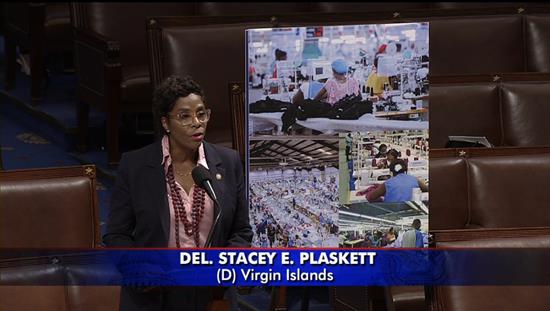
Congresswoman Stacey E. Plaskett

Congresswoman Stacey E. Plaskett, who represents the U.S. Virgin Islands, celebrated the House of Representatives’ approval of H.R. 6504, the Haiti Economic Lift Program Extension Act, which reauthorizes the HOPE/HELP trade preference program for an additional three years, through December 31, 2028.

“Today’s passage of the Haiti Economic Lift Program Extension Act is a significant victory for Haiti and for strategic U.S. engagement in the Caribbean,” Plaskett said. “The bipartisan support for reauthorizing HOPE/HELP demonstrates that when it comes to supporting our neighbors and advancing our shared interests, Democrats and Republicans can work together.”

Plaskett, who championed the legislation, expressed gratitude to congressional leaders and Haitian officials for their support, including Ranking Member Neal, Chairman Smith, Dr. Murphy, and Haiti’s Ambassador to the United States, Lionel Delatour. She also acknowledged the efforts of civil society organizations and American manufacturers advocating for the program’s renewal.

The HOPE/HELP program allows Haitian apparel, made with U.S. cotton, to enter the United States duty-free, helping secure jobs and encouraging supply chain diversification away from China. Plaskett emphasized that the legislation strengthens bilateral economic ties, provides certainty for investors, and supports Haiti’s long-term economic security.

Haiti currently faces overlapping humanitarian, political, and economic crises. More than 60% of its population lives below the poverty line, with youth unemployment at 37% and widespread challenges including declining female literacy, lower school enrollment, and rising crime and gang violence. The apparel sector is vital to the country’s economic recovery, and the reauthorization ensures Haitian producers can continue building resilient futures.

The legislation now moves to the Senate for consideration before heading to the President for signature. “Haiti’s workers and families are counting on us to ensure this vital program continues without interruption,” Plaskett said.

St. Kitts PM to propose measures aimed at increasing the nation’s birth rate

Terrance Drew St. Kitts and Nevis
Prime Minister of St Kitts and Nevis, Hon. Dr. Terrance Drew.

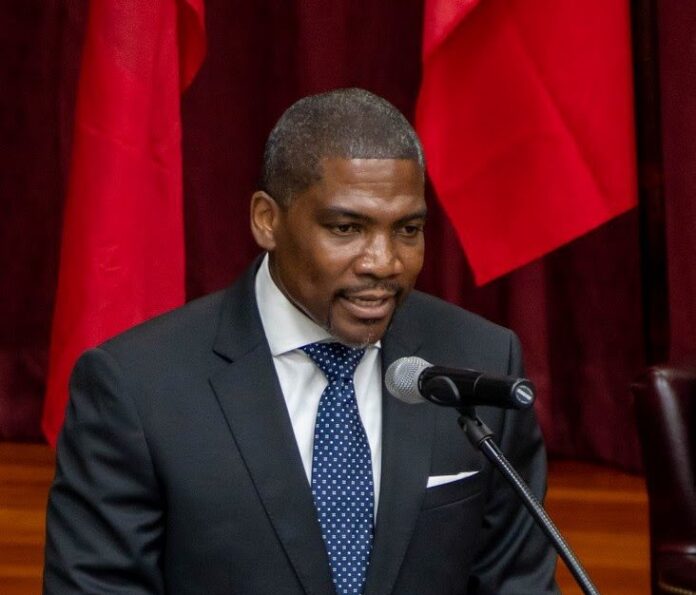
St. Kitts and Nevis Prime Minister Dr. Terrance Drew has revealed plans to bring a government submission to Cabinet aimed at addressing declining birth rates, framing it as an investment in families, future generations, and national stability.

In a brief post on social media this week, Dr. Drew said he will propose measures to support families and encourage higher birth rates, adding: “This is about supporting families, securing our future, and investing in the next generation. I am included. #morebabies.” No further details were provided in the post.

The announcement comes at a time when many Caribbean countries are recording significant drops in fertility and birth rates, triggering concerns among policymakers, demographers, and social planners about future population structures and economic sustainability.

Jamaica’s birth rate has trended downward for decades, with a 17.1% decline between 2011 and 2021, according to official data. Live births fell from about 39,700 in 2011 to roughly 32,900 a decade later, contributing to a rapidly aging population and slower population growth.

More recent data shows Jamaica’s fertility rate — the average number of children a woman is expected to have in her lifetime — has fallen to around 1.9 births per woman, well below the replacement level of 2.1 required to sustain population size without immigration.

The United Nations Population Fund’s 2025 State of World Population Report highlighted Jamaica’s fertility rate at just 1.3 births per woman, among the lowest in the world and similar to rates seen in countries facing long-term demographic decline like Japan and Italy.

Across the Caribbean, many nations now record fertility measures below the replacement rate. A demographic shift noted in regional data shows that 22 of 26 Caribbean countries have fertility rates below replacement level, raising concerns about the balance between working‑age and dependent populations in the years ahead.

Experts point to a mix of socio‑economic factors — including higher costs of living, urbanization, greater female participation in education and the workforce, and changing family norms — as key drivers in falling birth rates across the region. Regions such as Latin America and the Caribbean have experienced some of the sharpest fertility declines globally.

The demographic transition carries wide‑ranging implications, influencing labor markets, social protection systems, and long‑term economic planning. Governments and policy experts in some islands are now debating incentives such as parental support programs, housing benefits, and workplace policies designed to make childbearing and rearing more feasible for young families.

While Dr. Drew’s announcement did not detail specific measures, the broader debate suggests that Caribbean governments may look at family‑friendly policies, economic supports for parents, and enhanced childcare and reproductive health services as part of strategies to reverse or slow fertility declines.

As Cabinet considers the submission from St. Kitts and Nevis, regional observers will be watching to see whether this initiative signals a shift toward more proactive population policy in the Eastern Caribbean.

Tobago People’s Party sweeps THA elections, winning all 15 seats

Farley-Augustine Tobago

The Tobago People’s Party (TPP), led by Farley Augustine, secured a clean sweep in the Tobago House of Assembly (THA) elections on January 12, winning all 15 seats and decisively defeating the People’s National Movement (PNM).

The TPP declared victory shortly after 9 p.m., improving on its 14-1 seat tally from 2021, when the PNM’s Kelvon Morris narrowly won the Darrel Spring/Whim seat by just three votes. By 10 p.m., it was clear that Morris had lost his seat, confirming the TPP’s complete takeover.

The PNM spent the evening waiting to see if recounts or close results might change the outcome. At around 10 p.m., PNM Tobago leader Ancil Dennis announced he would step down, stating, “I support the transition to new leadership.” He added that the party would pursue recounts in several constituencies, including Darrel Spring/Whim, where Morris lost by 17 votes.

The TPP’s sweeping victory builds on its recent electoral success. In the 2021 THA elections, the predecessor PDP—whose members now make up the TPP—won 58% of the vote (16,932 votes), ahead of the PNM’s 41% (11,942 votes). In the 2025 general election, the TPP, positioning itself as the sole Tobago-focused party, captured two parliamentary seats with 55% of the votes cast (13,857 votes to the PNM’s 11,000).

Analysts had been cautious in predicting a clean sweep, though Augustine had signaled confidence in his party’s prospects. Augustine remains a popular figure in Tobago and has pledged that the TPP will use its four-year mandate to focus on building the island and delivering on its development agenda.


Guyana’s population reaches near 900,000, census shows significant growth

guyana population

Preliminary results from the Guyana National Population and Housing Census 2022 show the country’s population at 878,674, representing a 17.6 percent increase since the 2012 census. The findings were presented on Monday at the Arthur Chung Conference Centre by Chief Statistician Errol La Creuz and Deputy Chief Statistician Vanessa Profit, who handed the report to Minister within the Office of the President with responsibility for Finance, Dr. Ashni Singh.

The data provides insights into population size and distribution, household composition, population density, sex ratios, local and foreign-born populations, and building stock. The Bureau of Statistics said these findings will be refined in a final report to be released later.

On Census Day, September 15, 2022, Guyana had 878,674 residents. Accounting for natural growth and net migration, the population is estimated to have risen to 956,044 by the end of 2024, approaching the one-million mark.

All regions recorded population growth since 2012. Region Four (Demerara–Mahaica) remains the most populated, with 347,759 people (39.58%), while Region Three (Essequibo Islands–West Demerara) overtook Region Six as the second most populated at 143,884 (16.38%). The least populated region continues to be Region Eight (Potaro–Siparuni) with 13,598 residents (1.55%).

Region Seven (Cuyuni–Mazaruni) saw the highest annual growth rate at 5.14%, followed by Region One (Barima–Waini) at 3.49%, and Region Three at 2.93%. Coastal areas accounted for 87.16% of the population, while hinterland regions made up 12.84%.

Locals—those born in Guyana or to Guyanese parents—comprised 96.93% of residents, while foreign-born residents accounted for 3.07%, up from 1.1% in 2012. The Bureau noted some foreign-born residents may remain unaccounted for due to undocumented status.

The census counted 271,946 households, up from 204,625 in 2012. The average household size fell to 3.23 persons, down from 3.65 a decade earlier. Region Four had the highest number of households at 112,876.

Population density rose nationally from 3.47 to 4.09 persons per square kilometre, with Region Four the most densely populated at 155.81 persons/km² and Region Nine the least at 0.52 persons/km².

Of the total population, 440,882 were male (50.18%) and 437,792 female (49.82%), reversing the 2012 ratio of 99 males per 100 females. Hinterland regions recorded a higher male-to-female ratio of 113:100, compared with 99:100 in coastal areas.

National building stock grew 42%, from 219,509 in 2012 to 311,742 in 2022. Coastal regions hold 88.58% of buildings, with hinterlands at 11.42%. About 81% of buildings were occupied, 4.47% under construction, 1.41% dilapidated, and 13.13% vacant or unclassified. Region Seven recorded the largest growth in building stock at 105%, while Region Six had the lowest at 22.89%.

More than 2,000 temporary staff were engaged for the exercise, supported by regional and international partners including the CARICOM Statistical Unit and the UN Economic Commission for Latin America. The 2022 census was the first in Guyana to use Computer-Assisted Personal Interviewing (CAPI) technology via tablets, representing a significant advancement in data collection.

Minister Singh said preparations are ongoing for the final report, emphasizing the importance of accurate data for policy-making, resource allocation, and demographic analysis.

Brian Franklin wins top prize at Central Bank of Barbados Literary Competition

Brian Franklin

Barbadian writer Brian Franklin emerged as the top awardee at the 28th Frank Collymore Literary Endowment (FCLE) Competition, taking home $10,000 for his fiction entry, Steal the Fish from the Devil’s Cou-Cou. The work also earned him the Prime Minister’s Award, given to the entry judged to best reflect Barbados and its culture in a way that encourages reflection and fresh insight.

Second place went to retired university lecturer Professor Jane Bryce, who won $7,500 for her fiction prose How to Find Your Way in the Air, while Akim Goddard claimed third place and $5,000 for Is Only We Know: Where the Cane Grows Wild.

Two other finalists, Randicia Kellman (In the Company of Women) and Kemar Doughty (The Hanging Tree – A Short Story Collection), received developmental scholarships valued at $4,000 each. These scholarships will allow them to further refine their craft under the guidance of experienced editors.

In the spoken word category, judged live during the ceremony, Cyndi Celeste took first prize of $5,000, with Mark Yearwood and Lafonn Miller placing second and third, earning $2,500 and $1,500, respectively.

During his opening remarks, Deputy Governor Elson Gaskin emphasized the importance of Barbadian literature to national identity:

“Each literary work produced by a Barbadian adds another thread to our cultural fabric. Together, these works form a living archive of who we are: our humour and heartbreak, our contradictions and convictions and our capacity for beauty even in the face of adversity. Literature allows us to preserve these truths and pass them forward, ensuring that future generations inherit lived experiences and not just history books.”

The FCLE competition was established by the Central Bank in 1997 and introduced the spoken word category three years ago. The endowment is part of the Bank’s ongoing commitment to supporting arts and culture in Barbados, including sponsorship of the Crop Over Visual Arts Exhibition and the broader Crop Over Festival.

Former Haitian PM opposes Bishop’s role as mediator ahead of CPT mandate expiry

Jean Henry Céant

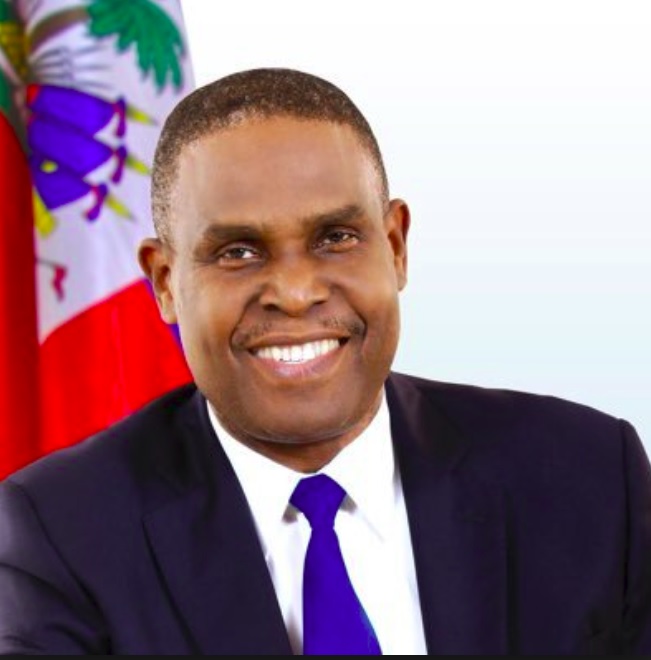
Former Haitian Prime Minister Jean Henry Céant has publicly rejected the plan by Mgr Pierre André Dumas, Bishop of the Diocese of Anse-à-Veau and Miragoâne, to act as a mediator as the mandate of Haiti’s Presidential Transitional Council (CPT) comes to an end on February 7.

Céant, who served as prime minister from September 2018 to March 2019 before his government lost a vote of no confidence, expressed his disapproval in a January 11 letter to Mgr Dumas, also Vice-President of the Haitian Episcopal Conference. He said he learned of the bishop’s decision “with profound astonishment, mixed with sadness and dismay.”

“By offering yourself as a mediator, you are entering a highly political arena,” Céant wrote, stressing concerns over the credibility, neutrality, and detachment required for effective mediation in Haiti’s volatile political environment.

The Bishop had informed Laurent Saint-Cyr, President pro tempore and Coordinator of the CPT, that at least 15 political, economic, and civil society coalitions had asked him to lead efforts to establish a consensual executive government by February 7. In his letter, Mgr Dumas acknowledged the gravity of the task but said he accepted the role to prevent the country from descending into chaos.

Céant argued that the bishop’s past political involvement and prior actions, including co-signing a 2024 statement condemning certain citizens before trial, undermine his neutrality. He appealed to the CPT to reject the mediation proposal, calling it exclusionary and unlikely to contribute to a just and peaceful resolution of the crisis.

“Today, by offering yourself as a mediator, you are entering a highly political arena, even though your past position places you, in effect, among the stakeholders,” Céant wrote. He added that Mgr Dumas still has an essential pastoral role, which could unite the faithful through prayer, humility, and reconciliation rather than political engagement.

Last week, the Caribbean Community (CARICOM) Eminent Persons Group (EPG) urged all Haitian stakeholders to prioritize patriotism over personal interest to allow Haitians to determine their own future. The EPG expressed concern over delays in reaching consensus despite multiple proposals for a transitional process.

Céant concluded his letter by stressing that his stance was motivated by the need to protect institutional credibility and public faith, while acknowledging the bishop’s office with respect and without hatred.

Drier conditions predicted across Caribbean for next 3 months

heatwaves climate crisis Caribbean

The Barbados-based Caribbean Institute for Meteorology and Hydrology (CIMH) is forecasting drier-than-usual conditions across much of the Caribbean over the next three months, with exceptions in the ABC Islands (Aruba, Bonaire, Curaçao), parts of Jamaica, the coastal Guianas, and some Lesser Antilles islands.

According to CIMH’s latest seasonal forecast released Monday, the number of wet spells is expected to be below normal in most of the region, while very wet spells are likely in the ABC Islands, sections of the Lesser Antilles, parts of Jamaica, and the coastal Guianas.

“A higher than usual number of wet spells is forecast for Belize, Barbados, Grand Cayman, Dominican Republic, and Puerto Rico, while a higher than usual number of very wet spells is forecast for the Greater Antilles,” CIMH said.

The institute warned that the drier conditions could accelerate the depletion of large water reservoirs and soil moisture in the ABC Islands, coastal Guianas, and Lesser Antilles. Conversely, flood potential is expected to remain low in Belize and the islands but high in the Guianas until early February.

The forecast period, spanning January to March, corresponds with the Caribbean Dry Season, which typically peaks in March. February marks the transition from the secondary wet season into the short dry season for much of the Guianas and continues the region’s cool season.

CIMH noted that continued unusual warmth in the Tropical North Atlantic, coupled with a weakening La Niña in the Pacific, is likely to slightly reduce severe weather activity, especially in the Guianas in January. Nonetheless, there remains high potential for flooding, flash floods, and cascading hazards in areas prone to heavy rainfall.

The agency also highlighted short dry spells increasing in frequency, with generally comfortable temperatures through February. Episodes of heat discomfort are expected to be limited, mostly affecting inland areas of Belize, the Guianas, and Trinidad in March.

Finally, CIMH warned of drought impacts for the ABC Islands, the Windward Islands, southwest Belize, and Grand Cayman if below-average rainfall persists.

Bermuda gov’t defends overseas therapeutic program for children with complex needs

Bermuda Youth, Social Development and Seniors Minister Tinee S. Furbert
Tinée Furbert, the Minister of Youth, Social Development and Seniors (File photograph by Blaire Simmons)

The Bermuda Government has defended a program that allows a small number of children under the care of the Director of the Department of Child and Family Services (DCFS) to be sent overseas for specialised treatment. The program targets children with severe and complex mental health, psychiatric, behavioral, and educational needs that cannot be met locally.

“These are not routine cases. They involve levels of risk and complexity that require specialised intervention that cannot be provided locally, to protect the child and, in some cases, others,” the Government said in a statement.

Youth, Social Development and Seniors Minister Tinee S. Furbert emphasized that decisions are based on professional assessments, with the child’s safety, well-being, and dignity as the top priorities. “Overseas therapeutic services are used only when a child’s needs cannot be met here at home, and when delaying care would place that child or others at risk,” Furbert said.

The statement reiterated that, under the Children Act 1998, the Government has a legal duty to ensure the health, safety, and well-being of children in its care. It also noted that while Bermuda has dedicated professionals across health, education, and social services, the small size of the jurisdiction limits the availability of highly specialised, intensive services.

“In 2025, there was an increase in the number of children requiring overseas therapeutic support, with many needing extended periods of care due to the severity of their circumstances,” the Government said, adding that no specific figures were provided.

DCFS works with a limited number of licensed and accredited overseas facilities, selected for their clinical, behavioral, and therapeutic expertise. Each placement is rigorously monitored, with progress reviews and plans for eventual reintegration into the local community.

The Government stressed that the program is not a first option. “Children should be supported as close to home as possible, with family, cultural connection, and community support,” the statement said.

The overseas therapeutic program has been in place for more than 20 years and exists to meet needs that cannot be safely addressed within Bermuda. The Government said that strengthening local capacity remains a priority, with the long-term aim of reducing reliance on overseas placements.

“However, when local options cannot safely meet a child’s needs, the Government must act. The safety, dignity, and future of Bermuda’s children remain paramount,” the statement concluded.

ICE arrests undocumented immigrants, including Caribbean nationals

ICE arrests

U.S. Immigration and Customs Enforcement (ICE) announced the arrest of several undocumented immigrants across the United States, including individuals from the Caribbean, as part of its ongoing efforts to target those with serious criminal convictions. The arrests include individuals convicted of sexual assault, assault, human trafficking, and burglary.

ICE said the arrests were made possible by a 120% increase in manpower, allowing agents to target illegal aliens with serious criminal convictions more aggressively. According to Assistant Secretary Tricia McLaughlin, “70% of ICE arrests are of criminal illegal aliens with charges or convictions in the United States. In 2026, with increased resources, ICE is unleashed to arrest even more criminal illegal aliens and remove them from our communities.”

The Caribbean nationals named in the recent arrests include:

  • Randolfo Agusto Diaz-Cabrera, from the Dominican Republic, convicted of second-degree sexual conduct against a child in Kings County, New York.

  • Brett Archer, from Barbados, convicted of assault in Brooklyn, New York.

  • David Llama-Lopez, from Cuba, convicted of human trafficking in Miami, Florida.

Other individuals arrested include criminal illegal aliens from Mexico and Central America, involved in crimes ranging from sexual assault of a child to burglary.

ICE has made the cases part of a broader effort to publicize its arrests online, with information available on its website at wow.dhs.gov.

The announcement underscores the U.S. government’s ongoing efforts to enforce immigration laws and prioritize the removal of illegal aliens who have committed serious crimes. Caribbean nationals appear prominently in this round of arrests, reflecting ICE’s nationwide scope of operations.

JCF confirms receipt and deployment of 1,000 body-worn cameras

Jamaica police force JCF

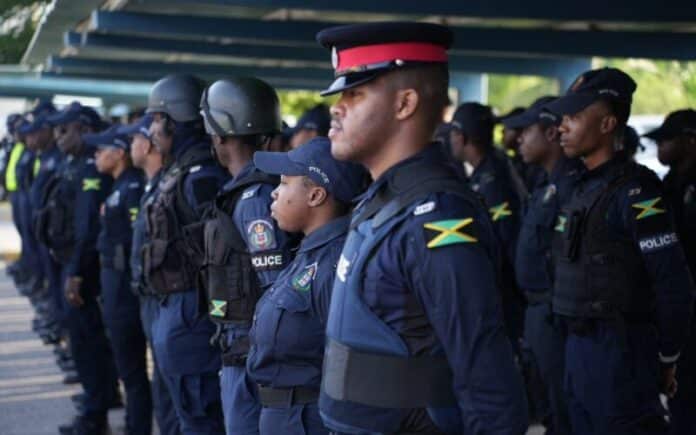
The Jamaica Constabulary Force (JCF) says it has received and begun deploying 1,000 body-worn cameras, marking a major step in its ongoing effort to strengthen accountability and modernize policing.

In a statement issued Monday, the JCF said the cameras were in an advanced stage of procurement during the final quarter of 2025. The Commissioner of Police had previously announced during a nationally broadcast interview in September 2025 that the Force was nearing completion of the acquisition. Despite disruptions caused by Hurricane Melissa, the procurement process was completed, the JCF said.

The Axon Body Camera III devices are now being deployed, with priority given to police formations that experience high levels of interaction with the public. According to the Force, rollout is being guided by operational needs, training readiness and established governance protocols. Procurement is also underway for an additional 1,000 cameras, with acquisition and deployment expected during the next financial year.

The rollout comes amid long-standing public debate and calls for broader use of body-worn cameras in Jamaica. Human rights advocates, including Jamaicans for Justice (JFJ), have repeatedly urged the JCF to equip officers with cameras, particularly during planned operations and tactical deployments, arguing that independent video evidence could help clarify encounters and build community trust. Advocates have also pointed to several fatal police shooting incidents in which officers were reportedly not wearing cameras, fueling public suspicion and eroding confidence in law enforcement.

The JCF has defended the pace of the rollout, citing procurement challenges, logistical hurdles and funding constraints. The Force has said equipping more than 8,000 frontline officers is a complex and costly undertaking and has pushed back against claims that it is resistant to accountability, describing such narratives as misleading. According to the JCF, decisions on deployment are driven by operational considerations rather than reluctance to oversight.

Prime Minister Dr. Andrew Holness has also previously addressed concerns about delays, noting that body-worn cameras require significant supporting infrastructure, including secure data storage systems. He has said the government is installing the necessary technology alongside the cameras to ensure the system functions properly.

The JCF maintains that the use of body-worn cameras is a central pillar of its transformation and modernization agenda, aimed at protecting citizens’ rights while also safeguarding officers who operate within the law. The Force said the cameras will help reduce false allegations, resolve disputes through evidence and strengthen professional oversight.

“This initiative represents a significant step in enhancing transparency, reinforcing public confidence in policing, and deepening trust,” the JCF said, adding that its approach is grounded in verified facts rather than competing narratives.

The Force reiterated its commitment to modern, professional and accountable policing in service of Jamaica.

Fun ways to use bucket golf for corporate team building or school PE programs

Bucket Golf

Bucket golf has changed exercise! Combining aspects of golf and using easy-to-use equipment, it’s an ideal sport for all age groups. Critical Ink is an easy, low-preparation group event activity, making it great for workplace or classroom programs. Bucket golf can be included in team building or physical education to get people moving, socializing, and engaged in some friendly competition.

Encouraging Cooperation Through Group Play

Outdoor bucket golf thrives on teamwork. Creating small groups where people can exchange ideas and talk through plans. That each member of the team has a distinct style in the game creates inclusivity for everyone. Collaboration happens almost automatically as teams come together to figure out how to hit the next target. This process brings people together and reignites their bond.

Enhancing Communication Skills

Communication is key to the success of bucket golf. So teammates need to share ideas, be attentive to one another, and become trustworthy. Engaging in discussion when students or colleagues talk about which club to use or where to aim practices shows respect for expressing an opinion. These skills translate to everyday life, so everyone is used to cooperating seamlessly, whether in the classroom or the office.

Boosting Problem-Solving Abilities

Every round of bucket golf is a new test. Various obstacles, including trees, benches, and uneven ground, are never far from the players, so they have to stay on their toes. Teams sometimes get creative and come up with different options, for example, alternative paths or different grips. This real-world problem-solving experience prepares students and employees to respond to circumstances in both games and life.

Promoting Physical Activity

If nothing else, bucket golf gets you up, swinging, and trying to aim. Players also walk between targets and stretch and bend, all of which enhance coordination and balance. Such actions are a soft workout, which means the sport is ideal even for individuals who might not like usual workouts. Doing it regularly can help improve your overall well-being and raise your energy levels.

Fostering Friendly Competition

Group activities with an element of competition are more exciting. For those seeking to track scores, bucket golf scoring remains a simple process. Teams compete against each other in friendly rivalry to see who can complete the course in the fewest strokes. Participants feel compelled to do their best while respecting others, which also teaches a lot about fair play.

Adapting Rules for Custom Challenges

The ability to play what you want when you want continues to be one of the most significant advantages of bucket golf. Folks can tailor rules to fit this group or sprinkle in fresh twists. By setting a time limit, adding a kicker, or incorporating themed holes, you ensure every visit is different. All the options keep people interested in trying new things to avoid routine or boredom.

Incorporating Themed Events

We have themed our bucket golf sessions to make them even more exciting. Corporate groups can draw inspiration from their company’s colors or values to create unique challenges. When used in schools, a teacher may select topics that relate to lessons or seasonal events. Fun themes encourage people to participate and give them something to talk about, to remember that everyone had an experience.

Supporting Inclusive Participation

Everyone is welcome to play bucket golf, no matter how skilled you are. This equipment can be adapted to meet different needs, and rules can be simplified or changed to enable everyone to play. This sort of inclusivity ensures that no one feels excluded, underscoring the importance of acceptance and celebration of divergence.

Building Lasting Connections

Shared experiences create strong bonds. Sharing a laugh over a shanked shot or a high-five over a fortunate bounce unites humanity. Known to foster long-lasting friendships and improve group morale, bucket golf is the perfect addition to many settings, whether professional or educational. The connections extend beyond the course, resulting in improved collaboration in everyday life.

Conclusion

It is an excellent option for physical education and team-building events that are fun for all participants. It promotes teamwork, problem-solving, and communication, and it inspires physical activity and friendly competition. By changing the rules and theme, organizers can change the activity while making it work for everyone. Best of all, bucket golf not only creates escapable fun but also deepens relationships and lasting memories after every single game, making it a worthy way to spend time with a group of people.


Art Prevails Project founder Darius V. Daughtry to host Tamarac’s MLK Day performing arts event

Darius V. Daughtry

The City of Tamarac will mark Martin Luther King Jr. Day with an evening of music, dance and spoken word as it partners with local artists to present Rhythm of a Dream: An MLK Performing Arts Celebration on Friday, January 16.

The free, public event will be hosted by Art Prevails Project Founder and Artistic Director Darius V. Daughtry and takes place at the Tamarac Community Center, 8601 W. Commercial Blvd. Pre-show experiences begin at 6 p.m., leading into a program that honors the life, legacy and enduring vision of Dr. King through artistic expression.

The celebration will feature dance performances by Simone’s Just Dance Performing Arts, instrumental selections by South Florida saxophonist Doug McDonald, and vocal performances by Voices of Rain. Also appearing on stage is The Men of Impact Step Team, the official male step squad from Piper High School.

A reflective and interactive element will be added through an original spoken word performance by Daughtry, a local educator and orator whose work centers on social justice, identity and community empowerment.

Founded by Daughtry in 2015, Art Prevails Project was created with the goal of making art accessible to everyone. Since its inception, the organization has facilitated creative arts, poetry and performance workshops for more than 1,500 students across South Florida, staged 20 original theater productions, and partnered with community-based organizations to bring arts programming into neighborhoods throughout the region. Art Prevails Project has also performed at more than 60 community events, hosted monthly showcases exposing hundreds of residents to the creative arts, and provided platforms for hundreds of emerging performing and visual artists to share their work.

In observance of Martin Luther King Jr. Day on Monday, January 19, City of Tamarac offices will be closed.

For residents, Rhythm of a Dream offers a community-centered way to reflect on Dr. King’s legacy while celebrating local talent and the power of the arts.

A step-by-step approach to joining the Parimatch affiliate network

If you desire to join the Parimatch affiliate network, you have nothing much to bother about. Your journey to making connections alongside notable commissions begins here. Here’s a guide that breaks down the procedure for Ukrainian partners looking forward to starting this business relationship.

1. Registration

The first step begins with signing up on the Parí match affiliate program official website. You must provide accurate and complete information. This includes your email address, username, promo code, phone number and password. You’ll also be asked to add your main traffic sources (marketing channels), be it SEO website, Facebook, TikTok, and UAC. You can choose more than one. You’d also add Ukraine as your main traffic GEO.

If you’ve already registered, simply login with your username and password to start enjoying the benefits.

2. Verification

Your registration cannot be automatically approved unless it is properly checked. All your submitted details are subjected to review. The AP Provider may request for additional documentation or ask that you discuss some information in detail. This is to ensure adequate credibility of your affiliation. Until you receive formal acceptance, do not consider yourself an affiliate.

3. Accept Your First Campaign

Once your application is approved, you gain access to the partner dashboard. Here, you see the available campaign offers set to terms, target audience and compensation models. Ensure to read and understand an offer before you accept it. An offer, accepted right, brings you to the next step that determines everything; the insertion order.

4. Sign the Insertion Order

The insertion order details what you are promoting, where, and for what pay. This is after you’ve chosen and accepted a campaign offer. It is the order, together with the terms and conditions, that becomes your  binding contract with AP Provider. By signing it, you and AP Provider agree to the campaign terms. Your earnings and obligations depend solely on insertion order. Never promote a campaign before it is executed.

5. Onboard and Launch

Once there’s a signed insertion order, you move to the launch phase. Here’s where you’ll be supplied with the needed tracking links and marketing materials set to your campaigns and channels. You must start to monitor your traffic and conversions from day one of launch. Do not modify the provided links or use unapproved channels. It violates the agreement and could terminate your partnership.

Note that you can not use email spam, social media spam or any other form of spam without prior written consent from the AP Provider. Also, contextual ads that contain the site’s brand name in any variation, click-under or pop-unders traffic and iFrame traffic are strictly prohibited.

Conclusion

Getting started with the Parimatch Affiliate requires doing things the right way from the beginning. Register properly, wait for approval, understand the campaigns you choose and stick to the agreed terms. Focus on driving the needed traffic and constantly monitor your results. That’s how you stay relevant in the game.


Kiwanis President-Elect Hope Markes calls for transparency and trust at Florida Division Meeting

Hope Markes
Consul General, Mark Reynolds, Hope Markes, Consul General presentation of the Proclamation to President Elect Hope Markes

Kiwanis International President-Elect Hope Markes, the first Caribbean and Black woman to hold the organization’s top leadership post, delivered a strong call for transparency, accountability and ethical leadership during a Division Council Meeting hosted by the Kiwanis Club of Sawgrass Sunrise.

The meeting brought together Kiwanis leaders from across Florida and the wider region, with club president Arlene Marr-Lewis and her members praised for their hospitality and organization. The gathering opened with greetings from Florida District Governor Tommy Mills, who reinforced the Kiwanis motto “All In, Kids Win,” before leading attendees in a spirited rendition of Stand by Me.

Additional remarks were offered by several regional and community leaders, including Florida District Governor-Elect Linda Skaathun, Vice Governor Keri Gordon, Immediate Past Eastern Canada and Caribbean District Governor Pam Rodney-White, Florida Kiwanis Foundation Treasurer Alex Ralicki, Jamaica’s Consul General Oliver Mair, Jamaica Women of Florida President Michelle Williamson, Jamaica Men of Florida President Pete Kennedy, and Distinguished Lieutenant Governor Ronnette Menzies.

In her keynote address, Markes focused on the theme “Upholding Credibility and Restoring Trust Within Our Beloved Organization,” warning that the increasing reliance on disciplinary committees signals deeper challenges within service organizations. While noting that most Kiwanians remain committed to service and integrity, she cautioned that the actions of a small minority can damage trust and credibility across the entire movement.

Markes questioned whether rising disciplinary cases reflect gaps in recruitment and induction or broader societal pressures that have weakened long-standing values. She emphasized that credibility is the foundation of any service organization and argued that while disciplinary action may address immediate issues, it does not solve underlying problems.

“True restoration,” she said, lies in mentorship, transparent governance, strong training programs and open dialogue. She urged Kiwanis leaders to strengthen orientation and leadership development efforts to ensure ethical standards remain central to the organization’s culture.

Her remarks were met with a standing ovation from attendees.

In recognition of her achievements and community impact, Lauderhill Mayor Denise Grant issued an official proclamation honoring Markes. The City of Lauderhill also designated Thursday, January 8, 2026, as “Hope Markes Day,” with the presentation made by Consul General Oliver Mair.

Copy of the Proclamation

The meeting was chaired by Division 24 Lieutenant Governor Mark Reynolds, whose leadership was credited with ensuring the smooth execution of the council session.

Rutherford and Peters ignite Pretoria Capitals’ surge to SA20 summit

cricket

Pretoria Capitals vaulted to the summit of the SA20 standings on Monday night, delivering a ferocious all-round performance that overwhelmed MI Cape Town by 53 runs in front of a sold-out Centurion crowd.

The bonus-point victory pushed the Capitals to 20 points, propelling them past defending champions Sunrisers Eastern Cape and tightening their grip on a top-two finish.

For MI Cape Town, the defeat was bruising and potentially terminal. With just two matches remaining, both against Sunrisers, their playoff aspirations now hang by the thinnest of threads.

Rutherford’s late inferno reshapes the contest

What began as a precarious batting effort for Pretoria was transformed by Sherfane Rutherford’s explosive intervention. Walking to the crease with the Capitals wobbling at 89 for 4 and the innings drifting, the West Indies power-hitter unleashed a breathtaking counter-attack.

Rutherford blazed 53 from just 27 deliveries, flipping the script with brute force and fearless intent. His timing was immaculate, his strokeplay unrelenting, and his impact decisive as the Capitals surged toward a formidable total of 185 for 6.

Brevis brilliance and costly Cape Town errors

Rutherford found the perfect foil in Dewald Brevis, and together the pair ignited Centurion with a ferocious 69-run stand for the fifth wicket in only 34 balls. MI Cape Town’s woes were compounded by untidy fielding, as both batters were dropped off consecutive deliveries from Corbin Bosch, missed chances that proved enormously expensive.

Brevis electrified the crowd with audacity and flair, unfurling two astonishing sixes off Kagiso Rabada: a no-look flick soaring over fine leg followed by a one-handed swipe that sailed over cover. Rutherford then dismantled Trent Boult in a punishing 16-run over, sealing the Capitals’ late surge.

Though Rutherford fell to the final ball of the innings, caught at long-on, the damage was emphatically complete.

Peters’ double-strike triggers stunning collapse

The Capitals carried their momentum seamlessly into the field, and it was Gideon Peters who delivered the decisive blow. His sensational double-wicket maiden tore through MI Cape Town’s middle order and ignited a dramatic collapse.

From a steady 46 for 2, the visitors spiraled to 55 for 6, hemorrhaging four wickets for just 11 runs. Peters’ incisive spell dismantled any structure MI Cape Town hoped to build, leaving their chase in tatters.

Brevis shines again as Hendricks fights alone

Brevis continued to shape the contest, this time with the gloves, producing two breathtaking boundary-line catches that married athleticism with razor-sharp awareness. His fielding brilliance mirrored the confidence he had displayed with the bat.

MI Cape Town found brief resistance through Reeza Hendricks, who stood firm with an unbeaten 68 from 50 balls. Yet with little support around him, the task proved insurmountable. The visitors limped to 132 for 7, never seriously threatening the target.

The emphatic victory leaves Pretoria Capitals brimming with confidence as they prepare for their remaining fixtures, hosting Paarl Royals before traveling to face Joburg Super Kings. With momentum firmly on their side, the Capitals now appear well-positioned to pursue a direct passage into the SA20 playoffs.


Danielle Williams sets global standard while Jamaicans rewrite collegiate record books

Danielle Williams

Jamaican athletes delivered a commanding weekend of performances on the U.S. indoor circuit, headlined by Danielle Williams’ world-leading sprint hurdles run and reinforced by a wave of personal bests, collegiate records, and event victories across multiple venues.

At the forefront was Williams, the two-time World Athletics Championships gold medalist, who underscored her elite status with a blistering showing at the Clemson Invitational in South Carolina.

Williams storms to World Indoor lead

Williams captured the women’s 60-meter hurdles in 7.94 seconds, the fastest indoor time recorded globally this season. The performance reaffirmed her status among the world’s premier sprint hurdlers as she opened her indoor campaign with authority.

Clemson’s Oneka Wilson finished second in a season-best 8.04, but Williams was never seriously challenged as she surged clear to claim victory.

Jamaican quartet claims top honors at Clemson

Williams was one of four Jamaican winners at the Clemson Invitational, where athletes from Georgia and Clemson universities also dominated their events.

University of Georgia sprinter Dejanae Oakley powered to victory in the women’s 300 meters with a personal-best 35.94 seconds, comfortably holding off teammate Shaquena Foote, who finished second in 36.50. Clemson’s Briana Campbell and Shanique Williams placed eighth and ninth, respectively, with Campbell clocking a lifetime best 37.76 and Williams finishing in 38.03.

Foreman leaps into Clemson history

Clemson’s Shantae Foreman delivered one of the meet’s standout field performances, winning the women’s long jump with an indoor personal best of 6.50 meters. The mark ranks as the second-best jump in Clemson history and elevated Foreman into a tie for second on the NCAA rankings list.

Her effort eclipsed her previous best of 6.37 meters and surpassed the long-standing Clemson record of 6.48 set by Monyetta Haynesworth in 1992, further cementing Foreman’s place among the program’s elite.

Smith impresses on collegiate debut

Former Excelsior High standout Kimeka Smith enjoyed a remarkable collegiate debut, winning the women’s shot put with a personal best throw of 15.98 meters. The performance now stands as the fifth-best mark in Clemson history and signaled a promising start to her college career.

In the women’s weight throw, University of Tennessee’s Cedricka Williams, formerly of Holmwood Technical, finished third with a personal best 18.90 meters, breaking into the program’s all-time top 10 at ninth.

Another freshman, Danielle Noble, also made her presence felt by placing third in the women’s high jump with a clearance of 1.67 meters.

Jamaican success spreads nationwide

Jamaican athletes continued their strong showing beyond Clemson, producing notable performances across several high-profile meets.

At the UAB Vulcan Invite in Birmingham, Alabama, Florida A&M’s Jade Ann Smith won the women’s long jump with a leap of 5.68 meters, completing a double after capturing the triple jump title on Friday night.

Britannie Johnson of Purdue University enjoyed a productive weekend at the Rod McCravy Invite in Kentucky, finishing third in the women’s shot put with a personal best 15.57 meters, good for seventh on Purdue’s all-time list. She also recorded a lifetime best 19.16 meters in the weight throw, the 10th-best performance in program history.

Records fall as Cunningham returns stronger

At the Leonard Hilton Memorial at the University of Houston, Oneika Brissett of Texas A&M University–Kingsville claimed victory in the women’s 400 meters, stopping the clock at 56.11 seconds.

Meanwhile, former Cornwall College ISSA Athletics Championships finalist Lansford Cunningham delivered a resounding return from injury at the Tryon International Collegiate Opener in Mill Spring, North Carolina. Competing after missing the entire previous season with a hamstring injury, Cunningham set a new Tusculum University record of 7.35 meters in the men’s long jump to finish third.

The mark surpassed his previous personal best of 7.06 meters and broke the school record of 7.23 set last year by Joshua Stephens. Cunningham now owns the fifth-best long jump mark in NCAA Division II this season. He also placed fifth in the men’s 300 meters in 35.19 seconds, rounding out a highly encouraging meet.

With world-leading times, historic jumps, and breakthrough collegiate performances, Jamaican athletes closed the weekend having firmly stamped their authority on the U.S. indoor season, momentum that continues to build as the championship phase approaches.


West Indies name Afghanistan squad as World Cup countdown begins

Cricket West Indies

Cricket West Indies (CWI) has unveiled a 16-member squad for its three-match T20 International series against Afghanistan, marking the Caribbean side’s first major competitive step toward the ICC Men’s T20 World Cup.

The series will be contested from January 19-22 at the Dubai Cricket International Stadium in the United Arab Emirates.

With the World Cup set to begin on February 6, the Afghanistan series represents a critical checkpoint in West Indies’ preparation, providing match exposure in subcontinental-style conditions and an opportunity to evaluate personnel ahead of final squad selection.

Leadership shift as Brandon King takes the helm

T20 captain Shai Hope will miss the series due to commitments in the ongoing SA20 tournament, along with Roston Chase, Akeal Hosein, and Sherfane Rutherford. In Hope’s absence, Brandon King has been appointed captain.

King is no stranger to leadership at this level, having previously captained the West Indies in T20 Internationals, including the home series against South Africa in early 2024. His appointment brings continuity and experience to a squad navigating both transition and preparation.

Returns, rest, and a breakout debut

The series also marks the return of two important attacking options. Shamar Joseph and Evin Lewis have both been cleared to play after successfully completing return-to-play protocols following injuries sustained in earlier assignments.

Fast bowler Alzarri Joseph, who was sidelined toward the end of 2025, continues to make encouraging progress but has been left out of the squad as a precaution following medical review. CWI confirmed that he will remain under close observation as selectors assess his readiness for potential inclusion in the World Cup squad.

Meanwhile, Quentin Sampson, the Breakout Player of the 2025 Caribbean Premier League, has earned his maiden international call-up. Sampson replaces Rovman Powell, who has been rested for the series alongside Jason Holder and Romario Shepherd as part of a broader workload management strategy.

Sammy: Conditions and competition key to World Cup readiness

Head Coach Daren Sammy emphasized that the Afghanistan series is as much about preparation as it is about assessment, particularly for players returning from extended absences and those stepping into new responsibilities.

“The opportunity to play competitive matches in subcontinental conditions is ideal, as it assists with our preparations and confidence building ahead of what will be a competitive T20 World Cup,” Sammy said. “It also presents a valuable platform to assess players who would’ve missed significant time towards the end of 2025, as well as those stepping into important roles for this series, prior to the selection of the final squad for the international tournament.”

The final World Cup squad is expected to be announced ahead of West Indies’ subsequent three-match T20I series against South Africa, scheduled for January 27-31.

Travel plans confirmed ahead of Dubai showdown

The West Indies squad will depart the Caribbean on January 14 and arrive in the UAE on January 16, allowing time to acclimatize before the opening match.

Squad: Brandon King (Captain), Alick Athanaze, Keacy Carty, Johnson Charles, Matthew Forde, Justin Greaves, Amir Jangoo, Shamar Joseph, Evin Lewis, Gudakesh Motie, Khary Pierre, Quentin Sampson, Jayden Seales, Ramon Simmonds, Shamar Springer, Shimron Hetmyer.

Team Management Unit: Team Manager: Rawl Lewis, Head Coach: Daren Sammy, Assistant Coach (Batting): Floyd Reifer, Assistant Coach (Bowling): Ravi Rampaul, Assistant Coach (Fielding): Rayon Griffith, Physiotherapist: Dr. Denis Byam, Strength & Conditioning Coach: Darc Browne, Massage Therapist: Fitzbert Alleyne, Performance Analyst: Avenesh Seetaram, Content & Media Officer: Jerome Foster.

T20I Series Schedule (Dubai)

· 1st T20I: January 19, 2026

· 2nd T20I: January 21, 2026

· 3rd T20I: January 22, 2026


Opinion: Is Dr. King’s dream fading or more urgent than ever?

Dr. Martin Luther King, Jr.

January 15 marks the birthday of the late, great African American leader, Dr. Martin Luther King, Jr. Born in 1929, Dr. King would have turned 97 this year. He was assassinated in Tennessee on April 4, 1968. His birthday was designated a federal holiday by President Ronald Reagan in 1983, to be observed on the third Monday in January, which falls on January 19 this year.

Although the holiday commemorating Dr. King’s birthday is in its 43rd year, it is still not widely celebrated as a federal holiday. Many employers either do not offer it as a paid day off or do not observe it at all. Moreover, as decades pass since Dr. King’s tragic death, some question whether his work, words, and achievements remain relevant. Cynics suggest that his vision of racial equality and his dream of black and white people coexisting harmoniously will never be realized.

Yet the enduring relevance of Dr. King’s achievements lies precisely in the fact that his vision remains unfinished. The dream is not obsolete—it is urgent.

Dr. King did not only speak about racial harmony; he spoke about systems, laws, economics, education, housing, healthcare, and moral responsibility. Many of the problems he sought to solve still exist, albeit in different forms: racial inequality persists even though explicit segregation is illegal; economic injustice remains a central driver of racial disparity; voting access and democratic participation are still contested; and violence—both physical and structural—continues to disproportionately affect Black communities.

Near the end of his life, Dr. King warned that America was more committed to order than to justice—a warning that still resonates. His iconic “I Have a Dream” speech is often quoted without equal attention to his later work, when he was more radical and more critical. Many, particularly younger generations, may not realize that Dr. King aggressively challenged economic inequality through the Poor People’s Campaign. He opposed militarism and war, advocating for a nation where conflicts are resolved without violence—a vision that earned him the Nobel Peace Prize in 1964. He also criticized moderate complacency, which often masked racial inequality rather than confronting it.

Progress in civil rights law was significant in the 1960s, yet hearts, structures, and power systems have changed far more slowly than legislation. Dr. King believed change required moral courage, organized action, and sustained pressure—not just goodwill. Since his death, there has been relatively little evidence of such leadership, and America has not seen another civic rights leader with courage comparable to Dr. King.

Honoring Dr. King once a year is not enough. His legacy demands policies that reduce wealth and opportunity gaps, honest teaching of Black history—including uncomfortable truths—and accountability for institutions, not just individuals.

In one of his many memorable speeches, Dr. King asked, “What good is having the right to sit at a lunch counter if you can’t afford to buy a hamburger?” Many African Americans still cannot afford that hamburger. There remains a pressing need for living wages, fair labor practices, equitable access to education and healthcare, and policies that close racial wealth gaps—through justice, not charity.

Dr. King understood that voting rights were foundational for Black Americans. He fought for equal access to the ballot, resisted voter suppression, and encouraged civic participation across communities. While progress has been made, these issues remain urgent today.

Dr. King also believed in building justice through moral alliances, envisioning multiracial, interfaith coalitions linking Black freedom struggles with Hispanic, Indigenous, immigrant, and poor white communities, as well as faith groups, secular activists, and civic organizations. Much work remains in this area.

Although Dr. King was committed to nonviolence, he did not regard it as passive. He supported disruptive, nonviolent action to expose injustice. Were he alive today, he would likely support peaceful protests, economic boycotts, and civil disobedience aimed at highlighting economic and racial inequities.

As he famously said, “Human progress never rolls in on wheels of inevitability.” His dream was not a prediction—it was a challenge. The question is not whether Dr. King’s vision is still relevant, but whether Black America—and indeed all of America—is willing to achieve economic and racial equality through the price of justice: discomfort, sacrifice, and sustained commitment

From ‘All Together Sing’ to Marley biopic: Matthew Malcolm’s ‘rebirth’ journey continues

Matthew Malcolm

In 2024, Jamaican singer and songwriter Matthew Malcolm earned international recognition with his IMDb-certified acting debut in the acclaimed Bob Marley biopic “One Love,” portraying a young Seeco Patterson, the legendary percussionist of The Wailers.

It was an opportunity he admits felt like a long shot.

“This was aiming with a long shot. Auditioning for the movie was really a bet, and I lost because I couldn’t see how someone like myself, who has little to no experience in film, could make it to a Paramount movie,” he said. His life changed forever when he submitted the online audition.

“I gave my audition online and was invited to do a live audition by Ziggy Marley and the directors.”

The role showcased his versatility as a creative force and positioned him within Marley’s timeless legacy. Despite being new to film, Malcolm said the cast approached the project with intense focus and unity.

“Though most of us had no experience, you could see where everyone understood the mission and took it so seriously that we were all constantly going over our lines and doing anything to stay in character,” he explained.

He spoke about the guidance provided by actors Kingsley Ben-Adir and Lashana Lynch (who played Rita Marley), noting that their mentorship gave him the confidence to reach for the stars.

“Knowing these people are seasoned actors was a great boost in trusting our roles.”

Asked about shooting the film in Trench Town, Malcolm told Caribbean National Weekly, “You could see why it was such a vital part of The Wailers’ development.”

The Bob Marley biopic won several awards, including Best Movie at the 2024 BET Awards. The film’s marketing campaign also won the 2024 Golden Trailer Awards, and at the 67th Annual Grammy Awards in 2025, the soundtrack won Best Reggae Album.

The film and its cast also received high-profile nominations, including the NAACP Image Awards: Outstanding Motion Picture, Outstanding Actor (Kingsley Ben-Adir), Outstanding Actress (Lashana Lynch), Outstanding Ensemble Cast, Outstanding Supporting Performance (Lashana Lynch), Outstanding Score, and Outstanding Soundtrack.

After raising his profile as an actor, Malcolm faced the challenge of balancing music and film. Prior to acting, he had first broken through as a singer in Jamaica, winning the competition All Together Sing. That early exposure fueled his drive, though the road to success had its bumps.

“The first song I made was laughed at,” he recalled. “I made myself the promise that every song I made from that point on would be the next best one.”

Malcolm shared that he draws inspiration from artists including Dennis Brown, Garnet Silk, James Brown, Tina Turner, Lucky Dube, Etta James, and Bob Marley.

“These are some of the people who have shaped my sound and attitude towards the industry,” he said. They influenced his vocal approach and instilled a deep respect for the craft.

In 2021, Malcolm released his debut project, Rebirth. The EP featured tracks like Y.O.U., War For You, and Unholy. That same year, he joined Junior Marvin and The Legendary Wailers on their U.S. tour as the opening act, cementing his status as a torchbearer of reggae’s past and a voice of its future.

“I’m more focused on launching my music career. I just released my new single titled ‘Mystic’ and am gearing up for another release: ‘Please Sir,’ ‘Wicked Men,’ and ‘Love Language’ for 2026,” he revealed.

With a growing catalog, a respected film credit, and a deep reverence for reggae’s legacy, Matthew Malcolm’s story is still unfolding—driven by discipline, faith, and an unwavering promise to always make the next song his best.

Opinion: Jamaica’s 9–5 culture is driving its traffic crisis

Jamaica traffic

As Jamaica emerged from the shadow of COVID-19 and the world cautiously embraced what was dubbed “the new normal,” we collectively let a critical opportunity slip through our fingers. Instead of cementing smarter, more humane ways of working, we rushed—almost instinctively—back into the familiar chaos of daily commutes, gridlocked roads, and office routines that had already proven unnecessary.

During the pandemic, Jamaican businesses, like many across the globe, were forced to adopt work-from-home (WFH) arrangements. The results were telling. Offices remained operational. Teams delivered. Productivity held firm and, in many cases, improved. Poll after poll and research paper after research paper confirmed what employees had long suspected: flexibility works.

Yet as soon as restrictions eased, many corporate entities swiftly repealed remote-work policies, retreating to what can only be described as archaic operational models. The irony is hard to ignore. We had proof that alternative systems functioned—and functioned well—but chose congestion over convenience, stress over sustainability.

Nowhere is this decision more painfully felt than on our roads.

Kingston’s traffic situation has long passed the point of inconvenience and entered the realm of national crisis. The daily crawl into and out of the capital costs workers hours of unpaid labour, drains productivity, and exacts a heavy toll on mental and physical health. Kingston is not alone. Stakeholders in Montego Bay and Mandeville have also sounded alarms about worsening congestion and the urgent need for improved traffic-management systems.

In a November 2025 article published by The Jamaica Observer, National Works Agency CEO E.G. Hunter attributed much of Kingston’s traffic woes to the prevalence of single-occupant vehicles. He noted, “There has to be some kind of mass transport—and that is as simple as that. We have a lot of cars in Jamaica carrying single persons.”

While he is correct, that explanation only scratches the surface. It must be paired with haphazard road repairs, deplorable road conditions, weak enforcement, and a troubling disregard for traffic laws. The consequences are deadly. In 2025, Jamaica recorded 374 fatalities from road crashes—a two-per-cent increase over the previous year.

This is not merely a transportation issue; it is a work-culture issue.

If thousands of workers did not need to report to physical offices at the same hour each morning, traffic volumes would immediately decrease. If others were permitted to work staggered shifts—early mornings, late evenings, or overnight—congestion would ease further. Which brings us to a concept Jamaica has yet to seriously embrace: the night-time economy.

Globally, night-time economies are no longer experimental ideas; they are proven economic engines. Cities such as London and Amsterdam support millions of workers through extended-hour operations that go far beyond nightlife. Construction, manufacturing, healthcare, logistics, customer service, call centres, and digital services all thrive outside the traditional 9–5 framework.

Why shouldn’t Kingston, the Caribbean’s largest English-speaking city, be next?

The World Economic Forum has highlighted the potential of 24-hour economies to boost productivity, reduce urban congestion, and create more inclusive labour markets. Jamaica, with its strategic location, educated workforce, and growing service sector, is uniquely positioned to benefit.

Critically, a night-time economy is not about clubs, parties, and events—though those already contribute significantly to employment. It is about reimagining how and when work gets done. It is about spreading economic activity across more hours of the day, reducing strain on infrastructure, and giving workers autonomy over schedules that suit their biological rhythms and personal responsibilities.

Imagine a Jamaica where some offices operate from 6 a.m. to 2 p.m., others from 2 p.m. to 10 p.m., and still others overnight. Imagine fewer hours lost to grinding commutes, fewer accidents caused by rush-hour fatigue, and a healthier work-life balance for parents, caregivers, and students. Imagine the productivity gains when people are allowed to work when they function best—because, as we must finally admit, we cannot all be morning people.

If remote work is not an option for every role, then flexibility must be. The insistence on uniform hours is not a productivity strategy; it is an outdated habit.

Jamaica stands at a crossroads. We can continue forcing modern workers into yesterday’s systems, or we can break the final hold of rigid thinking and move boldly toward a future of remote work, extended hours, and night-time economies. The pandemic showed us what was possible. The traffic is showing us what is necessary.

The only question left is whether we are willing to act—or whether we will once again watch opportunity pass us by.


We Florida Financial donates $10,000 to support Jamaican credit union workers

We Florida Financial
From left are: Consul General Oliver Mair, bank executives - Wayne Martin; Ms. Judy James, Board Director; Ms. Mary Ann LaRock; and William Spearman, Chief Executive Officer of We Financial Credit.

We Florida Financial Credit Union has donated US$10,000 to support 127 Jamaican credit union employees who were significantly affected by Hurricane Melissa, reinforcing its longstanding ties to the Jamaican community.

The beneficiaries were identified with the assistance of the Jamaica Cooperative Credit Union League (JCCUL), with coordination support from the Office of the Consul General. The initiative targets employees who suffered losses as a result of the storm, which caused widespread damage across the island.

We Florida Financial Credit Union, which counts several thousand members of Jamaican heritage among its Florida-based membership, said the donation reflects its commitment to people-centered recovery efforts.

“This contribution is about people, real individuals and families who have been affected,” said William Spearman, Chief Executive Officer of We Florida Financial Credit Union. “We Florida Financial stands firmly with our credit union partners in Jamaica, and we are committed to supporting their employees during this challenging time.”

Consul General Oliver Mair welcomed the donation, emphasizing its immediate and practical impact.

“This generous support will go straight to the employees who need it most. We are grateful to We Florida Financial for stepping forward in such a meaningful way,” Mair said.

Beyond the financial contribution, We Florida Financial Credit Union partnered with the Office of the Consul General to assist with broader hurricane relief efforts in both Jamaica and Haiti. Florida branch locations served as collection points for nonperishable food and supplies, which will be distributed by Food For the Poor to ensure aid reaches vulnerable communities.

Through these combined efforts, the credit union reaffirmed its commitment to disaster recovery, community support, and strengthening cross-border partnerships that uplift the communities it serves.

We Florida Financial Credit Union is a member-owned financial cooperative based in Florida, United States. The credit union is dedicated to improving the financial well-being of its members while supporting communities through service, partnership, and charitable initiatives.

World’s fastest man Oblique Seville to make first US public appearance in South Florida

Jamaican track stars Nickisha Pryce and Oblique Seville join Grand Slam Track for historic 2025 season
Oblique Seville.

Jamaica’s dominance in global sprinting will be on full display in South Florida next month, as newly crowned 100-meter world champion Oblique Seville makes his first public appearance in the United States.

The Calabar Alumni Association Florida Chapter, Inc. announced that Seville will headline Green-and-Black Ness: Day Experience, a daytime cultural celebration scheduled for February 21, 2026, from noon to 6 p.m. at Markham Park.

Fresh off his historic world title, Seville—now officially the world’s fastest man—will be the featured guest at the outdoor event, which blends Jamaican cultural pride with music, food, and community fellowship. Organizers describe the experience as part day fete, part traditional Jamaican cookout, offering a relaxed but festive atmosphere rooted in heritage and excellence.

While based in South Florida, interest in the event has already spread across Jamaican diaspora communities throughout the southeastern United States, positioning it as a regional destination gathering.

A major highlight of the program will be the presentation of the inaugural Lion Heart Award of Courage to Seville by Calabar Alumni Florida. The honor recognizes his discipline, resilience, and rise to the top of global athletics. Seville is also expected to address attendees, sharing his personal journey—from challenges and setbacks to standing atop the sprinting world.

“To make my first public appearance in the United States in a space that celebrates Jamaican culture and community means a great deal to me,” Seville said. “Calabar is part of my journey that helped shape who I am, and to be honored by my people in the diaspora is special. I hope my journey reminds young people everywhere that with discipline, belief, and hard work, anything is possible.”

Karl Thompson, president of Calabar Alumni Florida, said the event goes beyond entertainment.

“Green-and-Black Ness is more than an opportunity to have a good time,” Thompson said. “It is a moment of cultural pride for the diaspora—it’s really more of a green, black, and gold thing. It’s a celebration of Jamaican excellence and courage, honoring one of our own and inspiring the next generation through his achievements.”

With Seville’s appearance, organizers say the event underscores Jamaica’s continued influence on global athletics while reinforcing the strong cultural ties between the island and its diaspora in South Florida.