


The European Union (EU) has condemned the horrific massacre carried out by the “Gran Grif” gang in Pont Sondé, Haiti, last week. In a statement released on Sunday, the EU described the massacre as “yet another escalation in the extreme violence these criminal groups are inflicting on the Haitian people.”

The EU emphasized the urgent need for the full deployment of the Multinational Security Support Mission (MSSM) to assist the Haitian National Police in combating gang violence and restoring the rule of law.
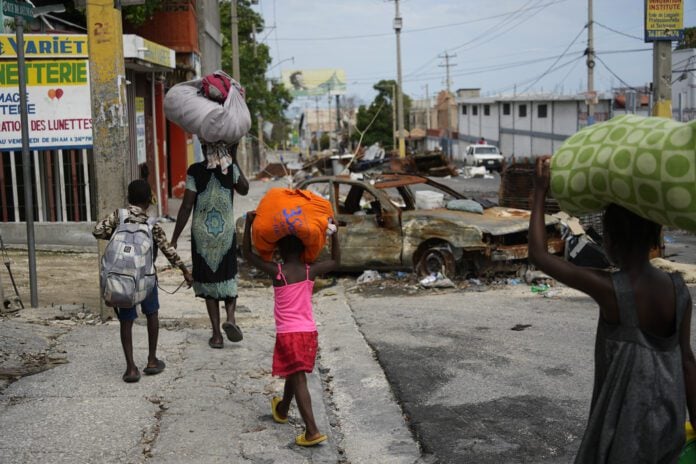
Nearly 6,300 people have fled their homes following an attack by heavily armed gang members in central Haiti that left at least 70 dead, according to the United Nations migration agency.

The International Organization for Migration reported that nearly 90% of those displaced are seeking shelter with relatives, while 12% have found refuge in other locations, including a school.
The attack in Pont-Sondé occurred early Thursday morning, prompting many residents to flee under the cover of night.
The organization reaffirmed its commitment to working alongside regional partners to address Haiti’s severe humanitarian crisis and to pursue a sustainable path toward security and stabilization. The EU intends to utilize all available tools, including targeted sanctions against individuals and entities responsible for such violence, to help restore peace, security, stability, democracy, and the rule of law in Haiti.

The EU underscored the importance of developing long-term solutions that integrate humanitarian efforts, development, and peace initiatives to effectively support the Haitian people.
Gran Grif gang leader Luckson Elan took responsibility for the massacre, saying it was in retaliation for civilians remaining passive while police and vigilante groups killed his soldiers.
The killings are the latest sign of a worsening conflict in Haiti, where armed gangs control most of the capital Port-au-Prince and surrounding areas.

More than 700,000 people — more than half of whom are children — are now internally displaced across Haiti, according to the International Organization for Migration in an October 2 statement. That was an increase of 22% since June











 has condemned the horrific massacre carried out by the "Gran Grif" gang in Pont Sondé, Haiti)