Twelve Juvenile Drug Treatment Courts have been launched across Guyana as an alternative way of dealing with young people caught up in drug use.
The courts, which are spread out in various magisterial districts, are specifically aimed at providing a different course of action for juveniles who come into contact with the law and have been found addicted to or abusing illegal substances.
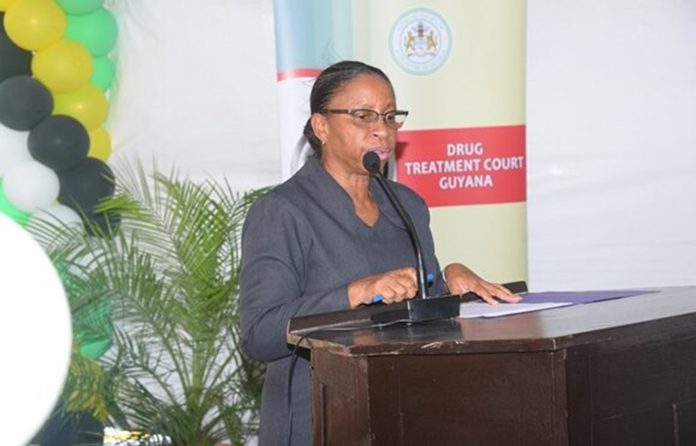
In brief remarks at the opening ceremony at the Georgetown Magistrates’ Court, Acting Chief Justice Roxanne George-Wiltshire said the strategy is important.

“The judiciary…considers it necessary to prepare to engage and treat with children or juveniles who come into contact with the law, and who have substance abuse disorders,” she said, adding that it is better to have offenders placed into programs that can directly address rehabilitation rather than locking them away.
“As in the case of adults, a better response would be to give such children the opportunity to enter into long-term treatment programs and agree to court supervision. This should especially be the case for children because the best practice is that they should not be institutionalized or severely punished for minor offences,” the Chief Justice added.
Delivering the keynote address, Acting Chancellor of the Judiciary, Justice Yonette Cummings-Edwards revealed that the judiciary has seen, over the last two to three years, a significant decline in juvenile offences being committed and the number of cases presented before the courts.

She said those reductions, coupled with the new implementation of the treatment program, will augur well for the continued decline in offenses committed by juveniles across the country.
Cummings-Edwards contended that incarceration has only “compounded” the issues that juveniles face, and the program will provide the court with an opportunity to proffer “compassionate jurisprudence” in their dealings with young offenders.
Meanwhile, UNICEF Representative to Guyana and Suriname, Nicholas Pron shared the organization’s commitment to collaborating with the relevant stakeholders for the overall betterment of children in Guyana.

“UNICEF will continue to provide support and through our fundraising and other efforts. We will seek to ensure that the principle of best interest is made tangible to all children in Guyana,” he said.
The program will target youths under the age of 18 who are charged with minor non-criminal offenses.
The court will pattern the already established adult pilot project, which according to information from the Supreme Court, showed that successful participants are significantly less likely to be repeat offenders, compared to those sentenced with traditional forms of punishment.
CMC/